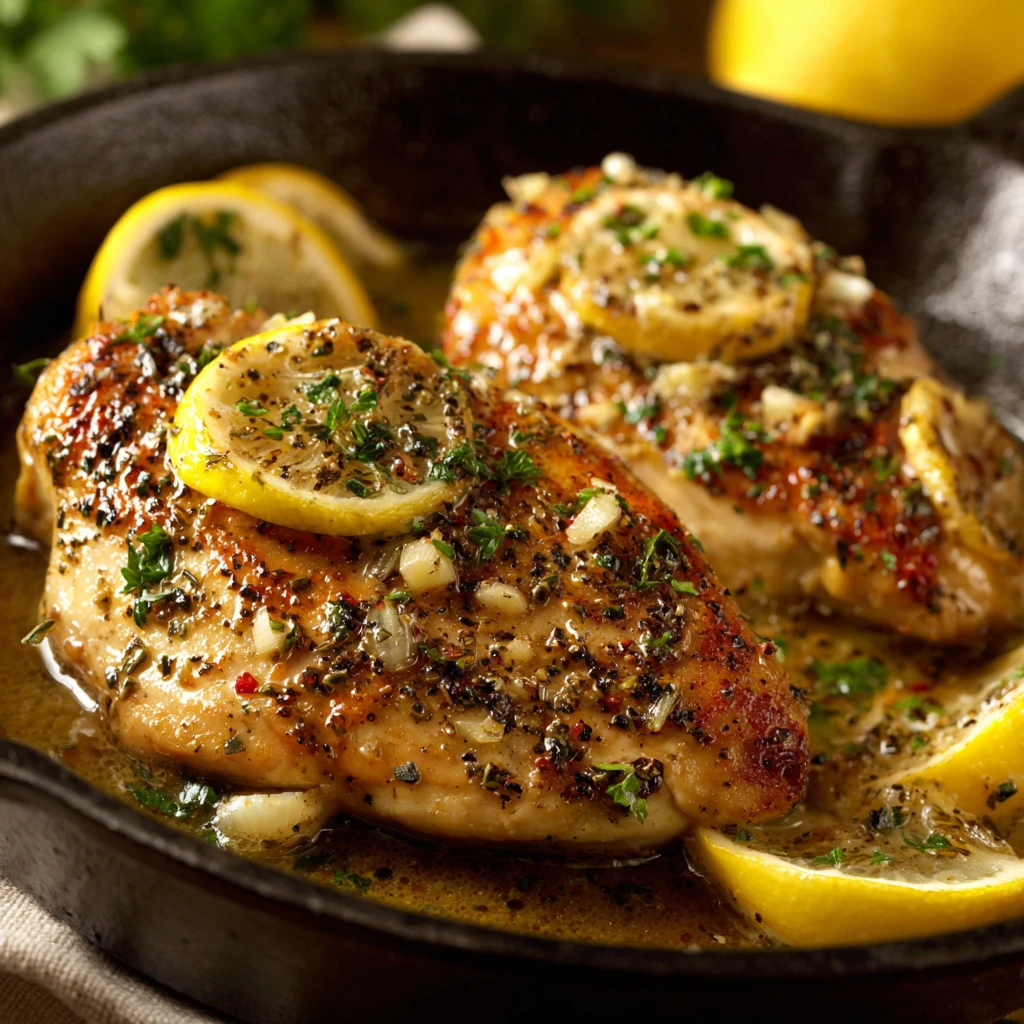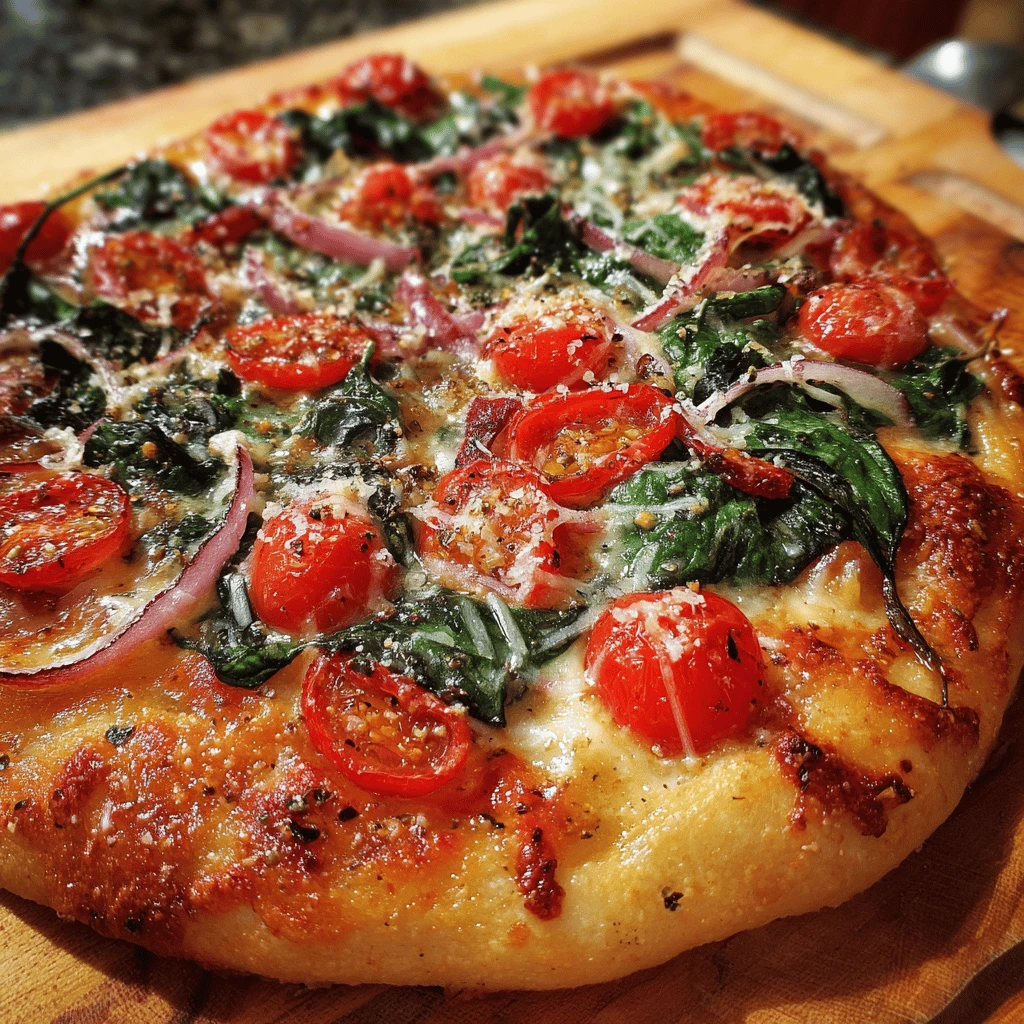
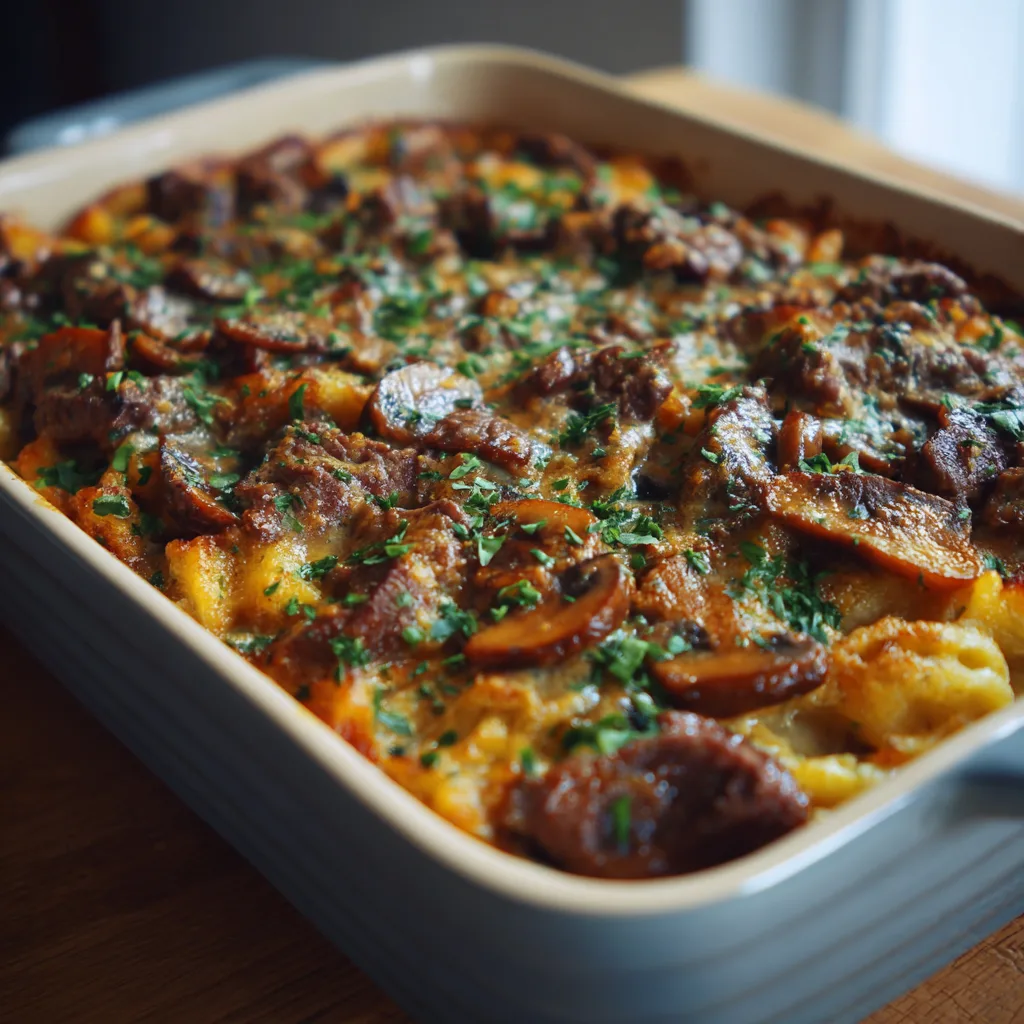
This classic Beef and Mushroom Casserole is the quintessential comfort meal, renowned for its melt-in-your-mouth beef, deeply savory gravy, and earthy mushrooms. Far exceeding a simple stew, this dish transforms inexpensive cuts of meat and humble vegetables into a magnificent, deeply flavored braise through patience and slow cooking. The key lies in layering flavors—from the…
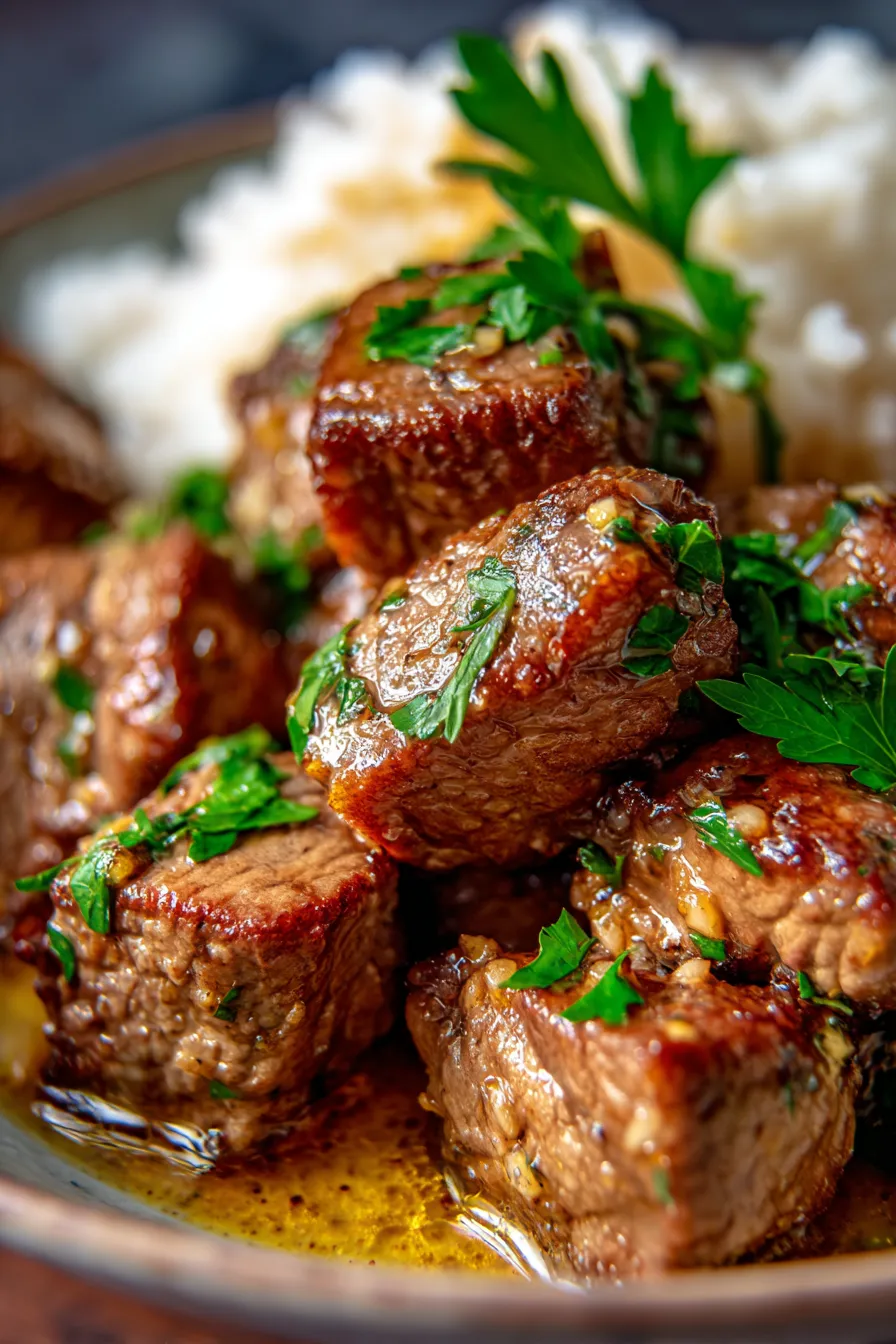
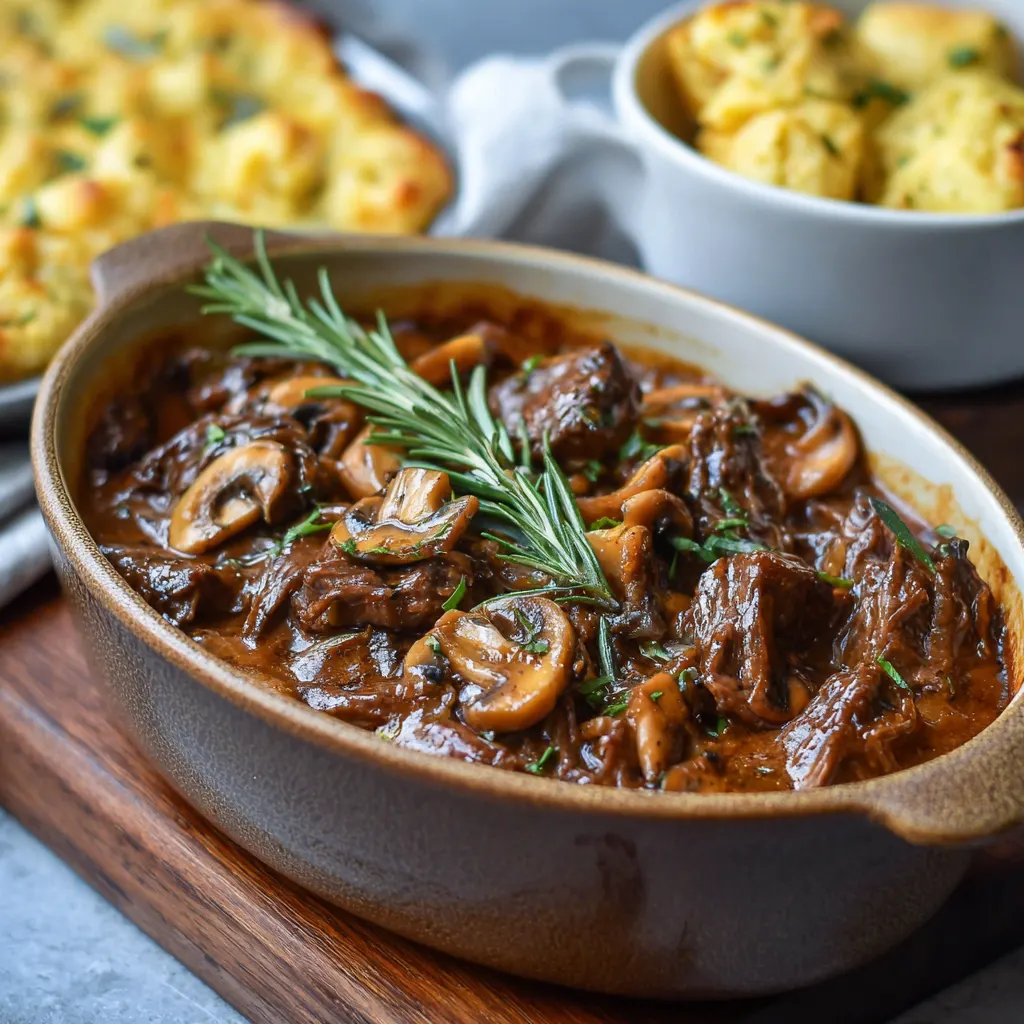
This classic Beef and Mushroom Casserole is the quintessential comfort meal, renowned for its melt-in-your-mouth beef, deeply savory gravy, and earthy mushrooms. Far exceeding a simple stew, this dish transforms inexpensive cuts of meat and humble vegetables into a magnificent, deeply flavored braise through patience and slow cooking. The key lies in layering flavors—from the initial high-heat sear of the beef to the caramelization of the mushrooms and the complex, rich liquid base built with aromatic vegetables and red wine. A true centerpiece for cold-weather dining, this recipe delivers maximum flavor with minimal fuss once the preparation is complete.
Ingredients
For the Beef:
-
2 ½ lbs Boneless Beef Chuck Roast, cut into 1 ½-inch cubes
-
2 Tbsp All-Purpose Flour
-
1 tsp Kosher Salt
-
½ tsp Black Pepper
-
3 Tbsp Olive Oil or high-heat cooking oil (divided)
For the Aromatics and Sauce:
-
2 Tbsp Unsalted Butter
-
1 Large Yellow Onion, diced
-
2 large Carrots, sliced into ½-inch thick rounds
-
2 Celery Ribs, diced (optional)
-
4 Cloves Garlic, minced
-
2 Tbsp Tomato Paste
-
1 cup Dry Red Wine (such as Cabernet Sauvignon or Merlot)
-
3 cups Beef Broth (low sodium)
-
1 Tbsp Worcestershire Sauce
-
1 tsp Dried Thyme
-
½ tsp Dried Rosemary
-
2 Bay Leaves
-
1 lb Mixed Mushrooms (Cremini, Shiitake, or Button), halved or quartered
For Thickening (Optional):
-
1 Tbsp Cornstarch mixed with 2 Tbsp Cold Water (Slurry)
Step-by-Step Instructions
-
Prep the Beef: Pat the beef cubes completely dry with paper towels. In a large bowl, toss the beef with the flour, salt, and pepper until evenly coated, shaking off any excess.
-
Sear the Beef: Heat 1 tablespoon of olive oil in a large ovenproof Dutch oven or heavy-bottomed pot over medium-high heat until shimmering. Brown the beef in batches, ensuring not to overcrowd the pot. Sear on all sides until a deep, dark crust forms, about 6–8 minutes per batch. Transfer the browned beef to a clean plate and set aside, reserving the rendered fat in the pot.
-
Sauté Aromatics: Reduce the heat to medium. Add the butter to the pot, followed by the diced onion, carrots, and celery. Sauté for 5–7 minutes until the vegetables have softened and the onions are translucent. Add the minced garlic, thyme, and rosemary, cooking for 1 minute until fragrant.
-
Build the Flavor Base: Stir in the tomato paste and cook for 1 minute. Pour in the red wine, scraping the bottom of the pot with a wooden spoon to lift all the flavorful brown bits (known as fond). Simmer for 2–3 minutes, allowing the wine to reduce slightly.
-
Simmer and Braise: Return the beef and any accumulated juices to the pot. Add the beef broth, Worcestershire sauce, and bay leaves. The liquid should mostly cover the beef. Bring the liquid to a gentle simmer, then cover the pot with a tight-fitting lid.
-
Slow Cook: Transfer the Dutch oven to a preheated oven set to 325°F (160°C). Cook for 1 ½ to 2 hours, or until the beef is very tender.
-
Add Mushrooms: While the beef is cooking, toss the mushrooms with 1 tablespoon of olive oil, a pinch of salt, and pepper. Roast separately on a sheet pan at 400°F (200°C) for 15 minutes until caramelized, or pan-fry them in a separate skillet until deeply browned. Pro-Tip: Cooking the mushrooms separately ensures they don’t steam in the casserole liquid, maximizing their earthy flavor.
-
Finish and Thicken: Once the beef is tender, remove the pot from the oven. Remove and discard the bay leaves. Stir in the caramelized mushrooms. If you prefer a thicker gravy, stir in the cornstarch slurry and simmer gently on the stovetop for 3–5 minutes until the sauce coats the back of a spoon. Taste and adjust seasoning with additional salt and pepper as needed.
-
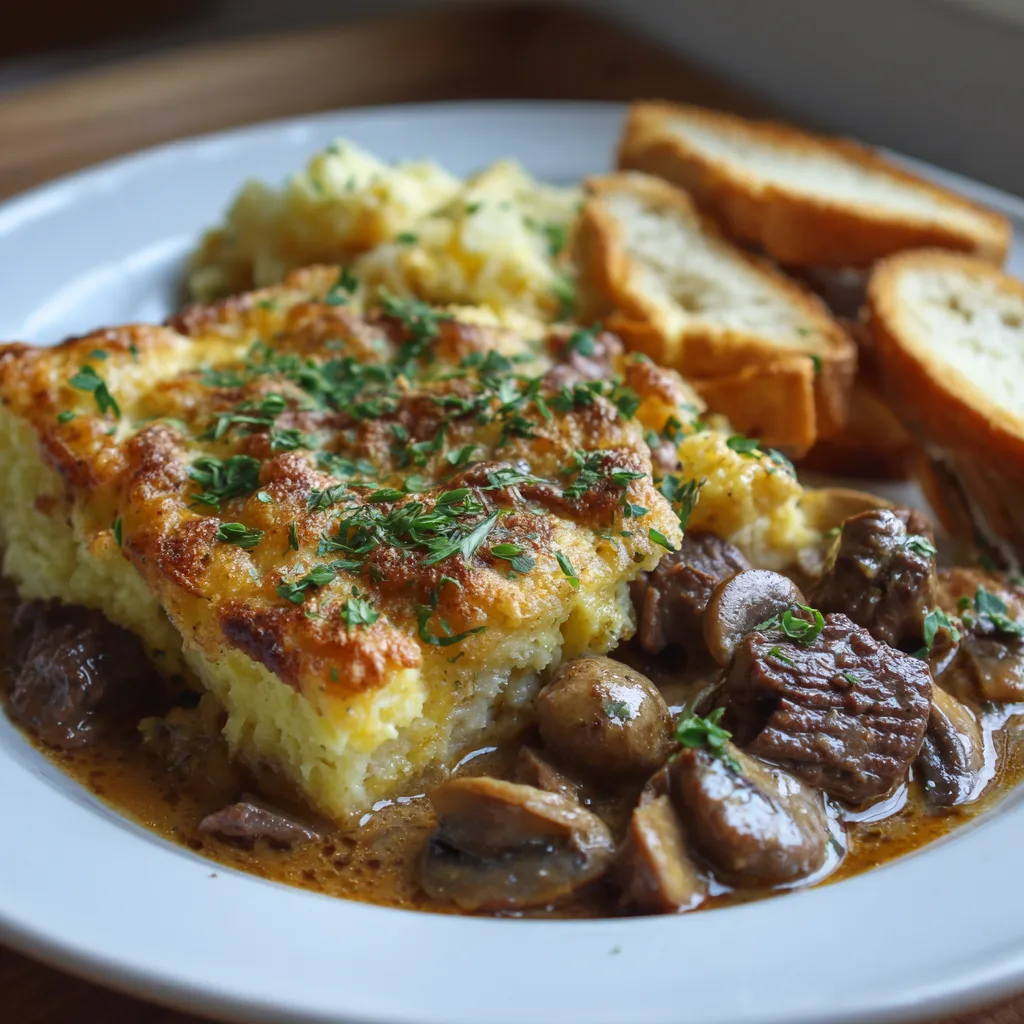
Serve: Let the casserole rest for 10 minutes before serving. Garnish with fresh chopped parsley.
The Science of Searing and Sauce: Building Deep Umami Flavor
The unparalleled depth of flavor in an exceptional Beef and Mushroom Casserole is not accidental; it is a direct result of proper technique, particularly focusing on the Maillard reaction. This non-enzymatic browning is essential for creating the rich, savory complexity—the umami—that defines the dish.
The process begins with the beef. Patting the meat completely dry before dredging in flour and searing is critical. Moisture on the surface prevents browning, instead steaming the meat. When the beef cubes, seasoned and floured, hit the hot oil, the high heat triggers the Maillard reaction, caramelizing the proteins and sugars on the surface. This deep, brown crust is responsible for the majority of the final dish’s robust flavor. Searing in batches is non-negotiable; overcrowding the pan lowers the temperature, preventing the crust from forming and leading to grey, lackluster beef.
After the beef is seared, the next crucial step is deglazing. The dark brown residue left on the bottom of the pot (fond) is pure concentrated flavor. By pouring in the red wine and scraping these bits up, they are dissolved back into the liquid, forming the foundation of the sauce. This step, often overlooked in simpler recipes, is what gives the braising liquid its complex, wine-dark richness.
Finally, the addition of tomato paste, Worcestershire sauce, and potentially a touch of soy or fish sauce (as seen in many professional recipes) introduces additional layers of natural glutamates, boosting the overall umami profile. The slow, gentle cooking process, known as braising, then allows these concentrated flavors to penetrate the connective tissue of the tough chuck roast, melting the collagen into gelatin and rendering the beef incredibly tender while thickening the gravy simultaneously.
Choosing Your Cut: A Guide to the Best Beef for Casseroles
The success of a slow-cooked casserole hinges on using the correct cut of beef. Unlike quick-cooking steaks, braised dishes require meat with a high amount of connective tissue, which breaks down during the long cooking process to yield both tenderness and a rich, unctuous sauce.
Primary Choice: Beef Chuck Roast This is the universally accepted best choice for a beef casserole or stew. Chuck comes from the shoulder and contains substantial marbling and connective tissue (collagen). When subjected to low, moist heat for an extended period, the collagen dissolves into gelatin, which not only tenderizes the meat but also naturally enriches and thickens the gravy. Look for a cut labeled “Chuck Roast” or “Shoulder Clod.” Cut it into uniform 1 to 1 ½-inch cubes for even cooking.
Excellent Alternatives:
-
Stewing Beef: Often a pre-cut mix, but if you can determine the origin is primarily chuck or bottom round, it works well.
-
Beef Shin/Shank: Contains a bone and marrow, which adds incredible richness and depth to the liquid base.
-
Short Ribs (Boneless or Bone-in): While pricier, they offer superior marbling and flavor for a truly decadent casserole.
The Ground Beef Variation: A Weeknight Shortcut For a completely different, faster, and often family-friendly casserole—sometimes referred to as a Beef and Mushroom Country Casserole—ground beef is used. This version skips the long braising time and is usually mixed with a creamy sauce base (like cream of mushroom soup or a sour cream/broth mixture), rice, or egg noodles, and baked uncovered for a quick meal. If using ground beef, select an 85/15 blend for flavor, but always drain the excess fat after browning to prevent the final dish from being greasy.
Perfect Pairings and Presentation
A rich, savory Beef and Mushroom Casserole requires simple, sturdy side dishes that can absorb the luxurious gravy and provide textural contrast. The goal is to balance the richness of the meat and sauce with fresh, neutral, or slightly acidic accompaniments.
The Essential Starch Base: The casserole is typically served over a foundation that captures every drop of the decadent sauce.
-
Mashed Potatoes: Creamy mashed potatoes, often enriched with butter or garlic, are the ultimate classic pairing. Their smooth texture contrasts perfectly with the fork-tender beef.
-
Wide Egg Noodles: A nod to the Beef Stroganoff lineage that many casserole recipes share, these noodles are quick to cook and provide a pleasing chew.
-
Rice: Simple white rice or a wild rice blend offers a lighter, fluffier option to absorb the gravy.
-
Polenta or Grits: For a more rustic, Southern European feel, soft-cooked polenta or creamy grits make an excellent base.
The Balancing Act: Greens and Vegetables: To cut through the richness, serve a simple side of bright, fresh green vegetables.
-
Garlic Green Beans: Sautéed quickly with garlic and olive oil.
-
Roasted Asparagus: Tossed with a little lemon zest after roasting.
-
Simple Side Salad: A mixed greens salad with a light vinaigrette (lemon or apple cider vinegar-based) adds the necessary acidic lift and crunch.
Wine Pairing: The best wine to pair with a Beef and Mushroom Casserole is the one you used to make it. A dry, medium-to-full-bodied red wine like Merlot, Cabernet Sauvignon, or Pinot Noir will complement the deep, earthy flavors of the beef and mushrooms without overpowering them. For a non-alcoholic option, a cranberry or cherry juice mixed with sparkling water provides a fruity, tart balance.
Time-Saving Strategies and Make-Ahead Tips
One of the great advantages of a braised casserole is that the flavors deepen significantly after resting, making it an ideal candidate for meal prepping.
The Make-Ahead Advantage (The “Day-Two” Flavor): This casserole is unequivocally better on the second day. Cooling the dish allows the sauce to solidify and the fat to congeal, which locks the flavor compounds back into the meat and vegetables. When reheated, the beef is even more tender and the gravy is more concentrated.
-
Storage: Once cooled, store the entire casserole in an airtight container in the refrigerator for up to 3–4 days.
-
Reheating: Reheat gently on the stovetop over low heat, or in a 300°F (150°C) oven, covered, until piping hot throughout. Adding a splash of extra beef broth may be necessary if the sauce has become too thick.
Freezing for Future Meals: A Beef and Mushroom Casserole freezes beautifully, making it perfect for batch cooking.
-
Freezing: Cool the casserole completely, then transfer it to a freezer-safe, airtight container, leaving about an inch of headspace for expansion. It can be frozen for up to 3 months. Note: If you included potatoes in your initial braise, they may change texture slightly after freezing and thawing, becoming a bit grainy.
-
Thawing: Thaw overnight in the refrigerator before reheating.
Alternative Cooking Methods (Saving Time): For weeks when two hours of oven time is unavailable, leverage kitchen appliances to achieve similar results faster:
-
Slow Cooker (Crockpot): Complete steps 1–4 (searing the beef and sautéing aromatics) on the stovetop for maximum flavor development. Transfer the beef and liquid mixture to the slow cooker, setting it on LOW for 6–8 hours or HIGH for 3–4 hours. Add the separately cooked mushrooms 30 minutes before serving.
-
Instant Pot/Pressure Cooker: Perform steps 1–4 using the “Sauté” function. Once all ingredients and liquid are combined, seal the lid and cook on HIGH pressure for 25–35 minutes (depending on the size of the beef cubes), followed by a 10-15 minute Natural Pressure Release. Stir in the separately cooked mushrooms and thicken the sauce using the “Sauté” function if desired.