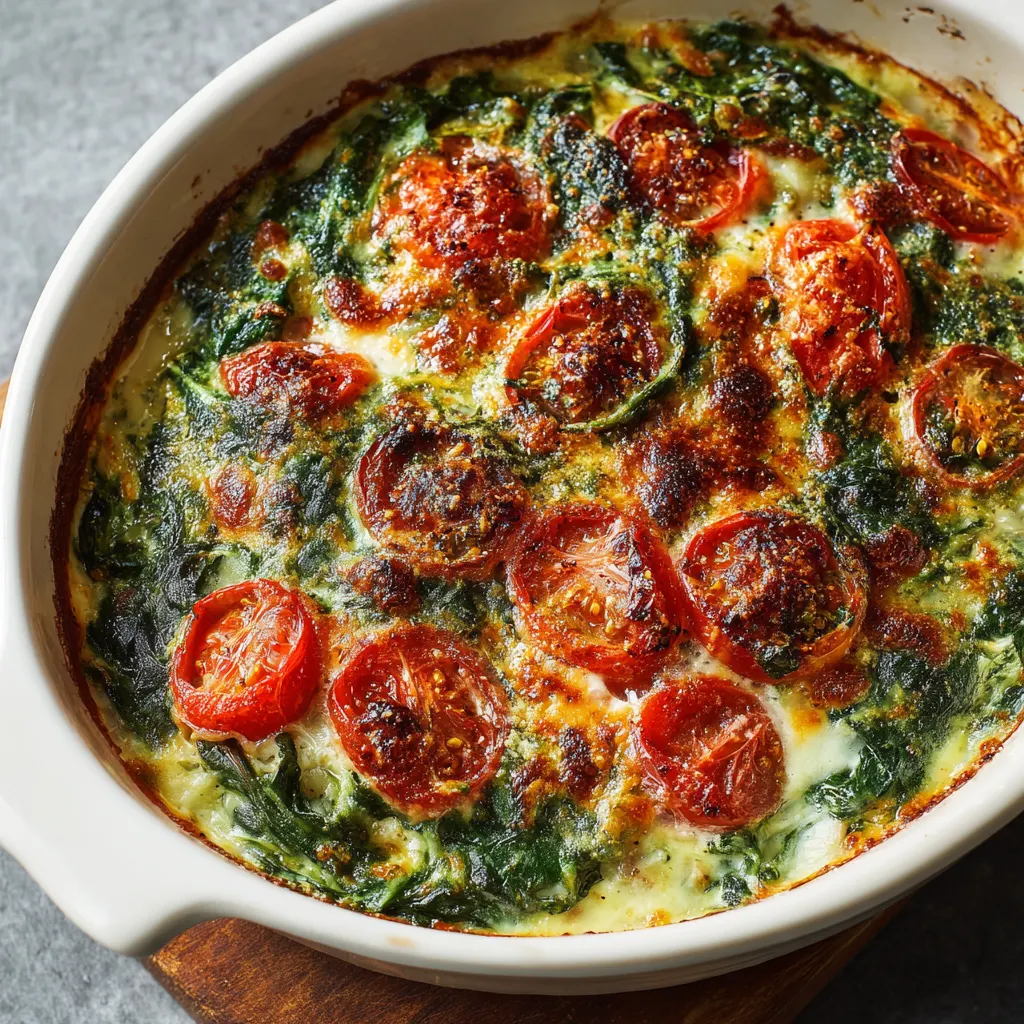
The Gratin is a centuries-old culinary technique—a method of baking a dish with a browned, often cheesy crust—and when applied to the vibrant flavors of spinach and tomato, it creates a side dish or main course that is both deeply comforting and surprisingly elegant. This dish transforms humble garden vegetables into a rich, creamy, and…
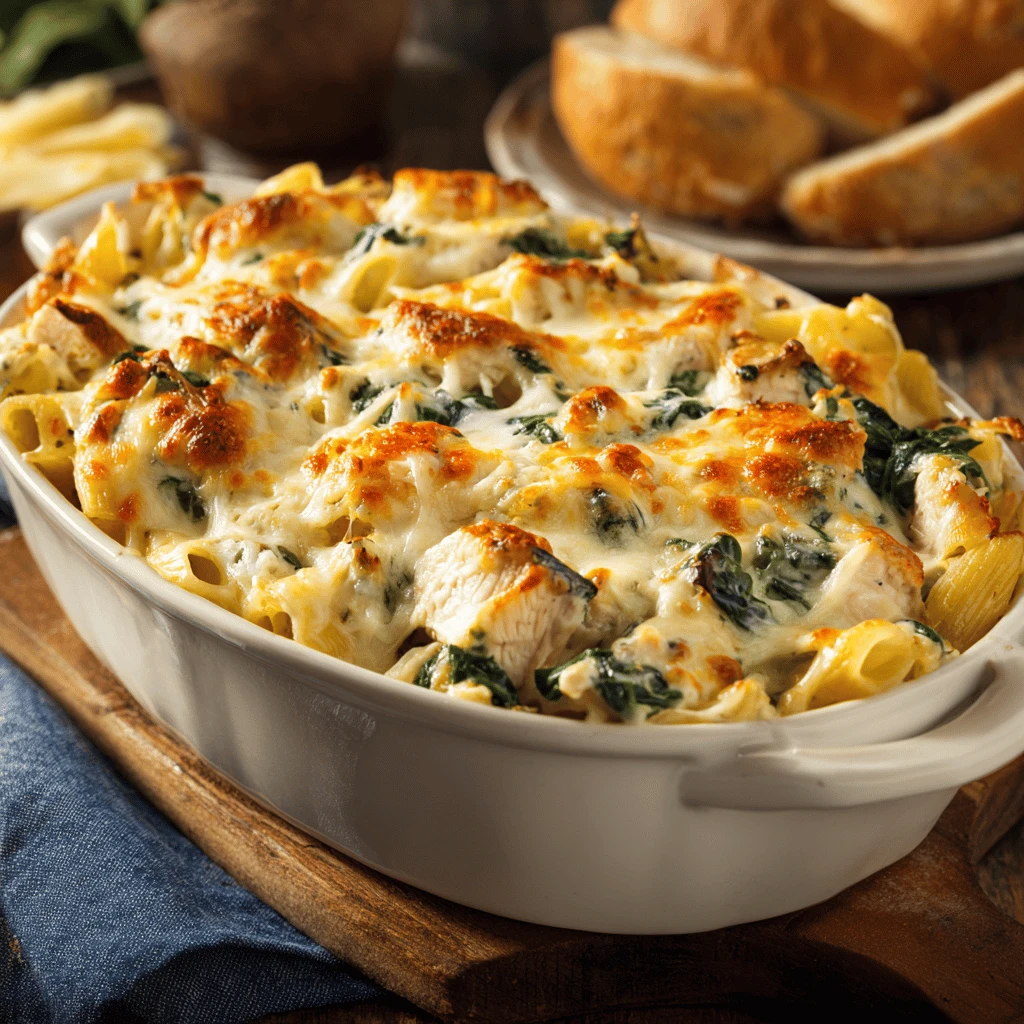
The Gratin is a centuries-old culinary technique—a method of baking a dish with a browned, often cheesy crust—and when applied to the vibrant flavors of spinach and tomato, it creates a side dish or main course that is both deeply comforting and surprisingly elegant. This dish transforms humble garden vegetables into a rich, creamy, and flavorful experience, achieving the perfect balance between the savory depth of wilted greens and the bright acidity of ripe tomatoes, all locked beneath a golden, crisp layer of melted cheese and breadcrumbs. It is the definitive way to elevate a simple meal and an ideal way to utilize summer’s bounty or winter’s best frozen produce.
Ingredients
For the Gratin Base
-
1 tablespoon olive oil
-
1 medium yellow onion, finely diced
-
3 cloves garlic, minced
-
2 (10-ounce) packages frozen chopped spinach, thawed and completely drained (or 1.5 lbs fresh spinach, wilted and drained)
-
1 teaspoon dried oregano
-
½ teaspoon ground nutmeg
-
Kosher salt and freshly ground black pepper to taste
-
1 large tomato, or 1 cup cherry tomatoes, thinly sliced
For the Creamy Sauce (Béchamel Base)
-
2 tablespoons unsalted butter
-
2 tablespoons all-purpose flour
-
1 ½ cups whole milk or half-and-half, warmed
-
¼ cup freshly grated Parmesan cheese, plus more for topping
For the Topping
-
1 cup shredded Gruyère cheese (or Monterey Jack), divided
-
½ cup Panko breadcrumbs (or traditional breadcrumbs)
-
1 tablespoon melted butter or olive oil
Step-by-Step Instructions
-
Prepare and Drain the Spinach: The most critical step for preventing a watery gratin is moisture removal. If using frozen spinach, thaw it completely. Place the spinach in a fine-mesh sieve or a double layer of cheesecloth and squeeze firmly until no more liquid runs out. The volume will reduce significantly. Set aside.
-
Sauté Aromatics: Preheat the oven to 375°F (190°C). Grease a 1.5 to 2-quart shallow gratin or casserole dish. In a large skillet, heat 1 tablespoon of olive oil over medium heat. Add the diced onion and sauté until translucent, about 5 minutes. Add the minced garlic and cook for 1 minute until fragrant.
-
Season the Spinach: Add the thoroughly drained spinach to the skillet with the onions and garlic. Stir well. Mix in the oregano, nutmeg, and season generously with salt and pepper. Cook for 2-3 minutes, stirring constantly, to ensure all flavors are incorporated and any residual moisture evaporates. Remove the spinach mixture from the heat and transfer it to the prepared gratin dish, spreading it into an even layer.
-
Make the Béchamel: In the same skillet (or a small saucepan), melt the 2 tablespoons of butter over medium heat. Whisk in the flour to create a roux, cooking for 1–2 minutes until lightly golden and nutty-smelling (do not brown). Gradually whisk in the warm milk or half-and-half until the sauce is smooth. Continue cooking, stirring constantly, until the sauce thickens enough to coat the back of a spoon (about 5–7 minutes).
-
Finish the Sauce: Remove the Béchamel from the heat and stir in the ¼ cup of grated Parmesan cheese, along with extra salt, pepper, and a pinch more nutmeg if desired.
-
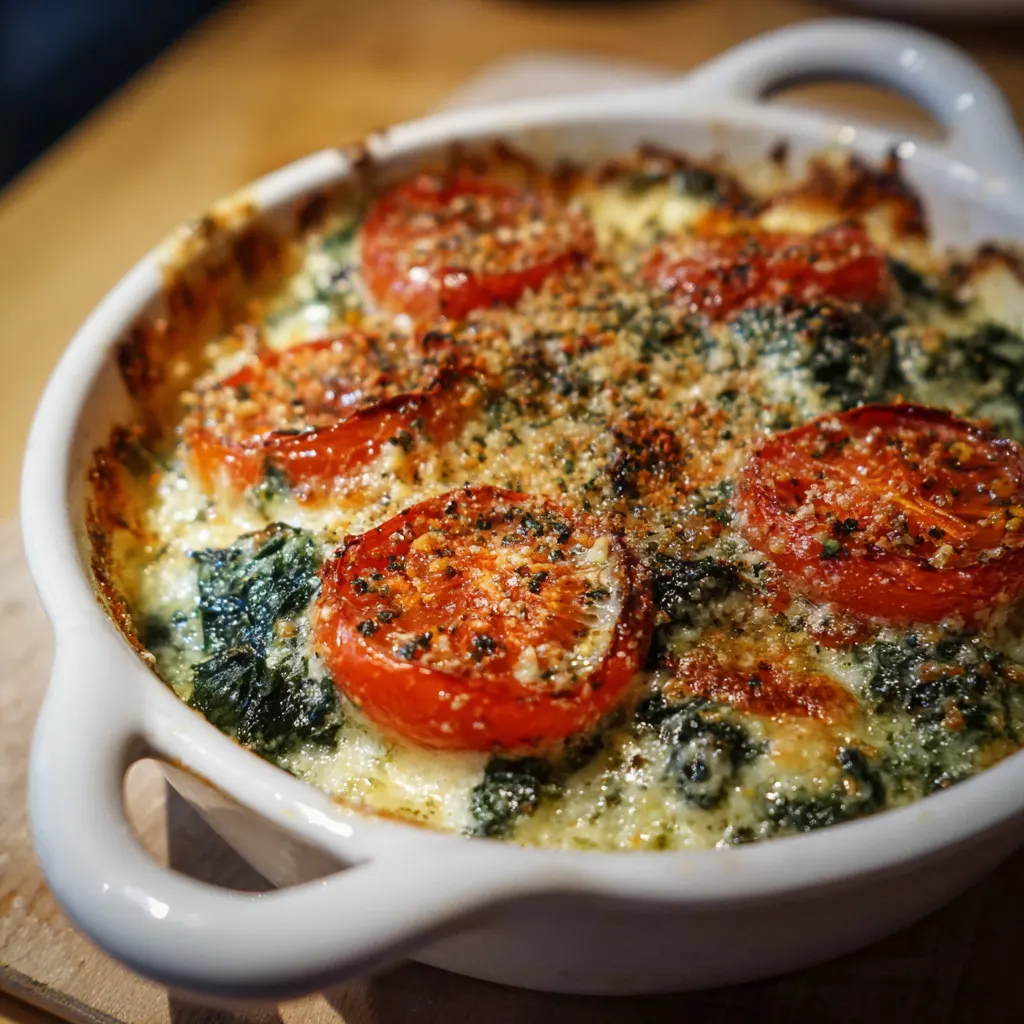
Assemble the Gratin: Pour the creamy sauce evenly over the spinach mixture in the dish. Gently arrange the tomato slices in a single layer over the sauce. Sprinkle the entire surface evenly with the 1 cup of shredded Gruyère cheese.
-
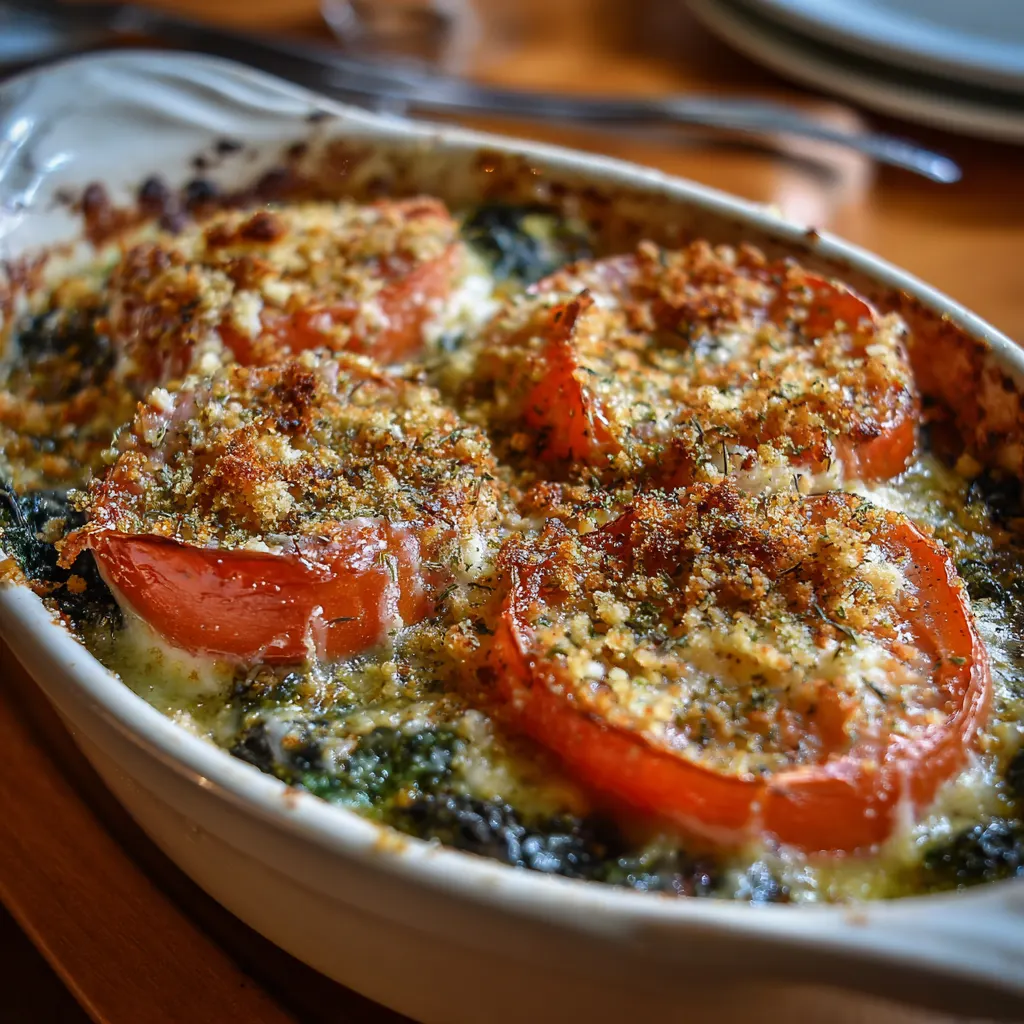
Create the Crust: In a small bowl, toss the Panko breadcrumbs with 1 tablespoon of melted butter or olive oil. Sprinkle this mixture evenly over the cheese.
-
Bake: Bake in the preheated oven for 25–35 minutes, or until the sauce is hot and bubbling, and the topping is deeply golden brown and crispy. If the top browns too quickly, cover loosely with foil for the remainder of the baking time.
-
Rest and Serve: Allow the gratin to rest for 5–10 minutes after removing it from the oven. This crucial step allows the sauce to set, ensuring a clean, creamy slice when serving.
The Art of the Creamy Base: Mastering the Gratin Texture
The defining characteristic of a successful gratin is the contrast between the molten, creamy filling and the crisp, savory crust. This texture relies entirely on careful moisture management. When combining high-water content vegetables like spinach and tomatoes with a milk or cream-based sauce, excess liquid is the primary enemy.
Combating Watery Spinach
Spinach, whether fresh or frozen, releases a large volume of water when cooked. If this moisture is not removed, it will leach into the sauce during baking, resulting in a thin, soupy, and unappetizing dish. The best practice, as derived from classic recipes, is a thorough draining process:
-
Frozen Spinach: Thaw completely. Transfer to a colander and gently press. For the most effective removal, place the wilted spinach in a clean kitchen towel or cheesecloth and twist tightly to physically squeeze out the liquid. This significantly concentrates the flavor.
-
Fresh Spinach: Blanch or sauté the spinach first until fully wilted. Once cool enough to handle, follow the same method of squeezing the greens dry using a towel or cheesecloth.
Choosing Your Creamy Binder
While a simple mixture of cream and cheese can suffice, the classic preparation often relies on a roux-based sauce for superior stability and flavor absorption:
-
Béchamel or Mornay: The French technique of cooking flour in butter (a roux) before adding milk (Béchamel) creates a stable emulsion that resists separating. Adding cheese (Mornay) further stabilizes the sauce and imparts a deeper, savory flavor, complemented perfectly by a pinch of nutmeg. This method provides the richest, most dependable texture.
-
Cream and Egg: Some recipes forgo the roux, relying instead on heavy cream, eggs, and cheese. This yields a texture closer to a dense casserole or quiche filling, which is equally delicious but less prone to having a distinct flowing sauce. If using this method, ensure the eggs are well-whisked into the dairy for binding.
Selecting the Star Ingredients: Spinach, Tomato, and the Perfect Gratin Cheese
Optimizing a spinach and tomato gratin means selecting ingredients that work synergistically, providing complementary textures and flavors.
Spinach: Focus on Density
For maximum flavor and ease of use, frozen chopped spinach (thawed and squeezed dry) is often preferred as it is already compacted and ready to be incorporated into the sauce. If using fresh spinach, opt for baby spinach which wilts quickly and has fewer tough stems. Remember the volume difference: roughly 1 to 1.5 pounds of fresh spinach is needed to yield the equivalent of one 10-ounce package of frozen spinach after wilting and draining.
Tomatoes: Balancing Acidity and Moisture
The best tomatoes for gratin are firm, ripe, and relatively low in seeds, which are the main source of water.
-
Slicing: Use firm, large varieties like Roma, Beefsteak, or vine-ripened tomatoes, sliced about ¼ inch thick. If using very juicy varieties, you may consider deseeding them before slicing, or even roasting them lightly beforehand to remove some moisture and concentrate their sweetness.
-
Cherry Tomatoes: Halved cherry or grape tomatoes offer bursts of intense sweetness and generally release less liquid than larger, softer varieties, making them an excellent choice. Layering them on top, rather than mixing them into the base, preserves their shape and allows their flavor to shine.
The Essential Cheese Blend
The perfect gratin crust uses a blend of cheeses: one for flavor and one for the ideal melt and golden crust.
-
Melting Cheese (Gruyère, Monterey Jack, Fontina): These cheeses have a high moisture and fat content, melting into a luxurious, gooey blanket. Gruyère is the classic choice, offering a nutty, earthy depth that pairs beautifully with spinach.
-
Aromatic Cheese (Parmesan or Pecorino Romano): This provides the sharp, salty, umami kick essential for balancing the richness of the cream. It often forms the final golden-brown crust.
-
Mozzarella (Optional): While delicious, using too much pure mozzarella can result in a rubbery texture; it is best used sparingly in combination with a better melting cheese like Gruyère.
For the best results, always grate cheese from a solid block, as pre-shredded cheese often contains starches that inhibit a smooth, velvety melt.
Flavor Building and Customization: Beyond the Classic
While the basic gratin is simple perfection, its structure makes it an excellent canvas for customization, allowing for seasonal adjustments or dietary adaptations.
Enhancing the Base Aromatics
Beyond the standard onion and garlic, these elements boost the dish’s complexity:
-
Nutmeg: Essential when using a Béchamel or cream sauce, a small pinch of fresh or ground nutmeg enhances the dairy’s richness without dominating the flavor profile.
-
Herbs: Oregano provides an immediate Mediterranean warmth. Fresh Basil or Tarragon stirred in just before baking adds a bright, fresh finish.
-
Heat: A small dash of cayenne pepper or a pinch of red pepper flakes adds a welcome warmth that cuts through the creaminess.
-
Acidity: A teaspoon of lemon zest or a few drops of white wine vinegar stirred into the sauce can prevent the dish from tasting heavy.
Variations and Add-Ins
To transform the gratin from a side dish into a substantial main course, consider adding protein or other vegetables:
-
Protein Boost: Cooked and cubed ham, crumbled bacon, sautéed mushrooms (sliced and dried of their liquid), or shredded chicken can be layered into the spinach base. Sautéed white beans (cannellini or great northern) create a satisfying vegetarian meal.
-
Breadcrumb Alternatives: For those seeking a low-carb alternative, finely ground almond flour or crushed pork rinds can replace traditional breadcrumbs. For a crunchier crust, panko breadcrumbs are superior to standard ones. For a rustic French texture, toss stale bread cubes with olive oil and layer them under the spinach mixture to absorb the cooking juices.
Dietary Adjustments
-
Gluten-Free: Substitute the all-purpose flour in the Béchamel with an equal measure of gluten-free flour blend or a binder like cornstarch (though cornstarch yields a slightly glossy texture). Ensure the breadcrumbs are also gluten-free.
-
Vegan: Use a dairy-free butter substitute and full-fat oat or soy milk for the Béchamel. Nutritional yeast and a quality vegan Parmesan substitute can provide the desired cheesy flavor and savory depth.
Serving, Pairing, and Preparation Tips
The versatility of the Spinach and Tomato Gratin allows it to serve multiple roles, from a holiday centerpiece to an easy weeknight side. Proper preparation ensures success, and correct storage maintains quality.
Preparation and Make-Ahead
The gratin is a fantastic dish for meal prepping, as it can be assembled entirely ahead of time.
-
Prep Time: Follow the recipe through the assembly (Step 7), but stop before baking.
-
Storage: Cover the gratin dish tightly with plastic wrap or foil and refrigerate for up to 24 hours.
-
Baking Cold: If baking directly from the refrigerator, allow the dish to sit at room temperature for 30 minutes while the oven preheats. You will need to add 10–15 minutes to the total baking time to ensure the center is heated through and bubbling.
Crucial Tip: Never put the breadcrumb topping on until just before baking, as moisture in the refrigerator will turn the crumbs soggy, defeating the purpose of the crisp crust.
Serving Suggestions
The Gratin pairs well with clean, simple flavors that contrast its richness:
-
Protein: Serve alongside grilled or roasted lean protein, such as pan-seared chicken breast, grilled salmon, or roast pork tenderloin.
-
Starch/Bread: A piece of crusty sourdough or French baguette is perfect for soaking up any creamy sauce remaining at the bottom of the dish.
-
Salad: A simple, sharp green salad dressed with a bright vinaigrette (lemon juice and olive oil) provides a necessary palate cleanser to balance the creamy, savory intensity of the gratin.
Storage and Reheating
Leftovers store well and can often be repurposed creatively.
-
Refrigeration: Store cooled leftovers in an airtight container in the refrigerator for up to 3 days.
-
Reheating: Reheat individual portions in a microwave until warmed through, though the crust will lose some crunch. For best results, place the gratin back into a 350°F (175°C) oven or toaster oven for 10–15 minutes to re-crisp the topping.
-
Repurposing: Leftover gratin can be mixed into a bowl of pasta or served cold as a flavorful, cheesy spread for sandwiches.