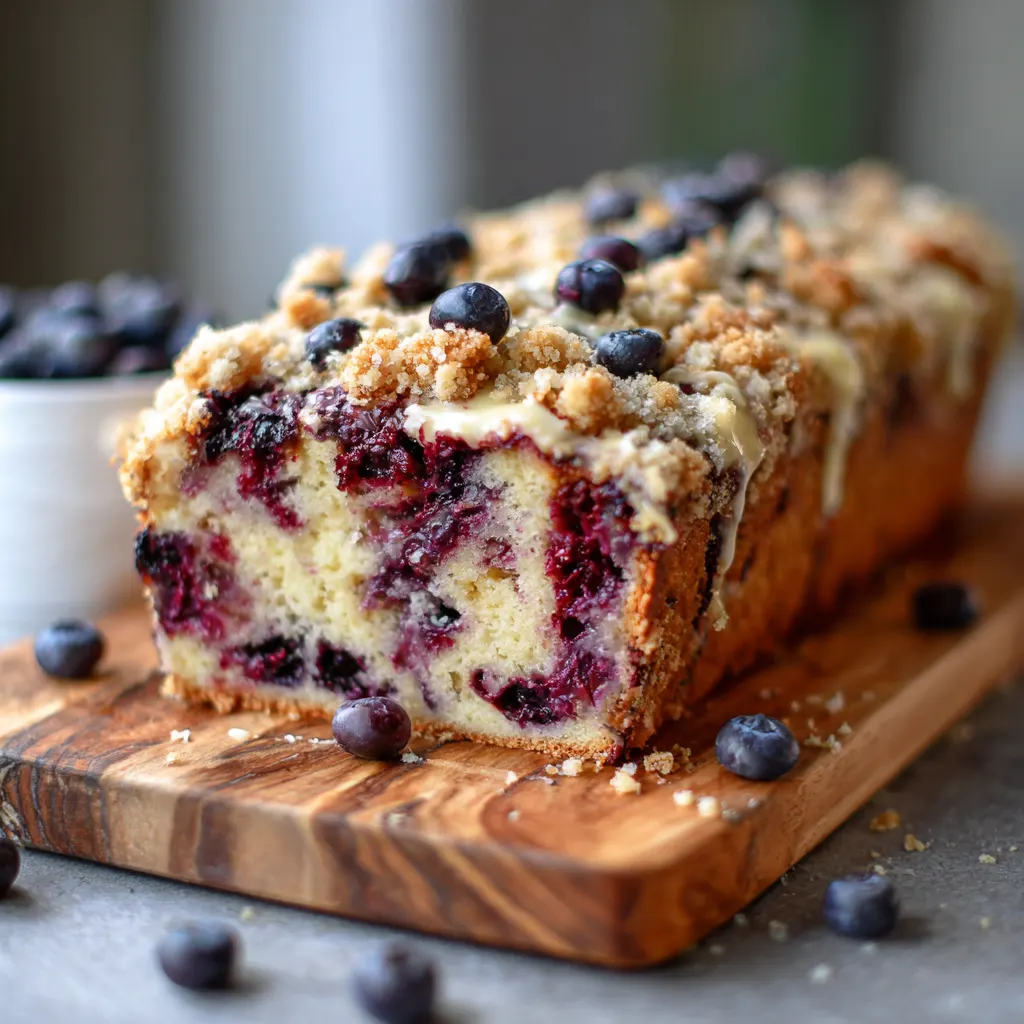
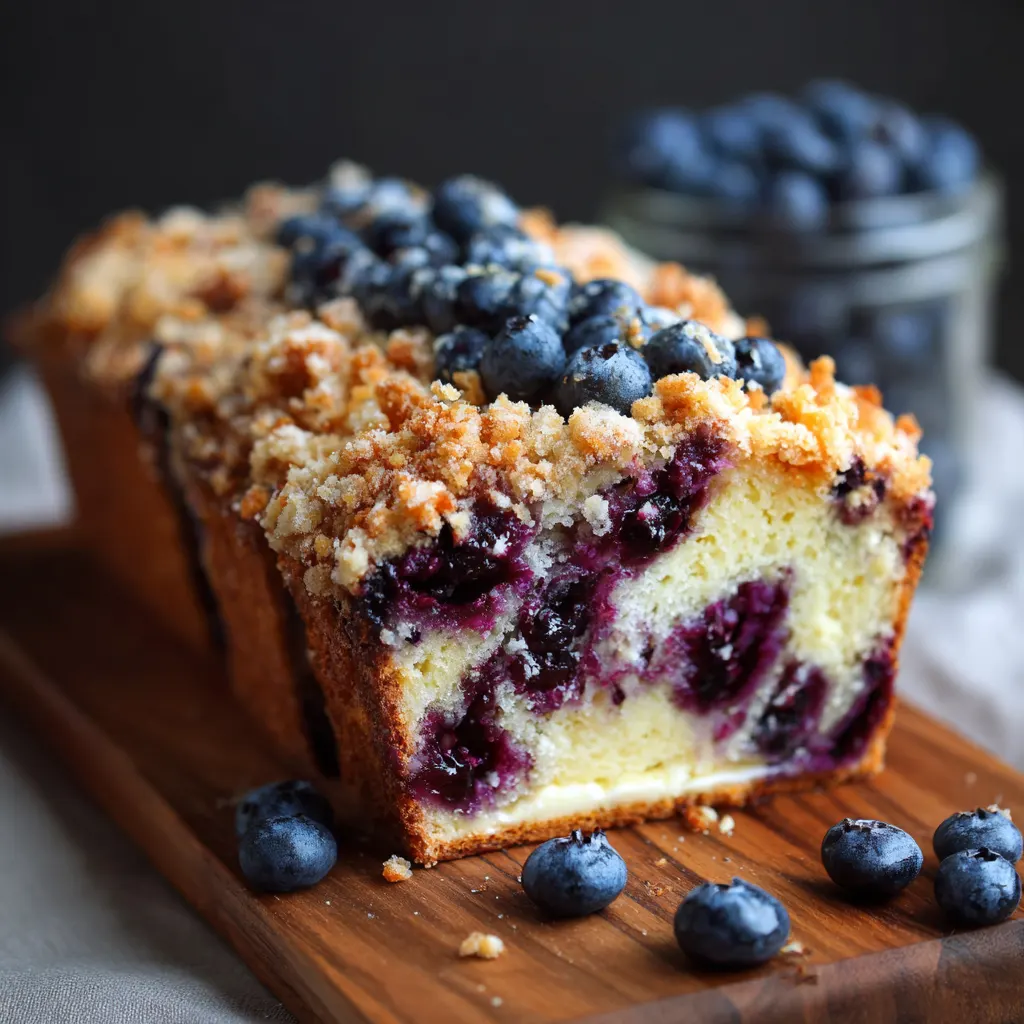
This extraordinary bake merges the comforting simplicity of a quick bread with the indulgent richness of classic cheesecake, all crowned by a spiced, buttery streusel. More than just a simple breakfast loaf, Blueberry Cheesecake Crumble Bread is a textural masterpiece—a moist, tender cake studded with juicy berries, a creamy, slightly tart ribbon of filling, and…
This extraordinary bake merges the comforting simplicity of a quick bread with the indulgent richness of classic cheesecake, all crowned by a spiced, buttery streusel. More than just a simple breakfast loaf, Blueberry Cheesecake Crumble Bread is a textural masterpiece—a moist, tender cake studded with juicy berries, a creamy, slightly tart ribbon of filling, and a perfect crunch on top. It stands as a sophisticated yet approachable dessert or brunch centerpiece, delivering a trifecta of flavor profiles that are universally adored.
Ingredients
For the Loaf Batter
-
2 cups All-Purpose Flour (plus 1 tbsp for berries)
-
1 ½ tsp Baking Powder
-
½ tsp Baking Soda
-
½ tsp Salt
-
¾ cup Granulated Sugar
-
½ cup Unsalted Butter, melted and slightly cooled
-
2 large Eggs
-
½ cup Full-Fat Greek Yogurt or Sour Cream
-
¼ cup Milk (whole milk preferred)
-
1 ½ tsp Vanilla Extract
-
1 tbsp Lemon Zest
-
1 ½ cups Fresh or Frozen Blueberries
For the Cheesecake Swirl
-
8 oz Full-Fat Cream Cheese, softened to room temperature
-
¼ cup Granulated Sugar
-
1 large Egg Yolk (reserve the white for another use)
-
1 tsp Vanilla Extract
-
1 tbsp Lemon Juice
For the Cinnamon Crumble Topping
-
½ cup All-Purpose Flour
-
¼ cup Packed Light Brown Sugar
-
½ tsp Ground Cinnamon
-
¼ tsp Salt
-
4 tbsp Unsalted Butter, cold and cut into small cubes
For the Optional Lemon Glaze
-
1 cup Powdered Sugar
-
2–3 tbsp Fresh Lemon Juice (or milk, for a milder flavor)
Step-by-Step Instructions
1. Prepare the Pan and Oven Preheat the oven to 350°F (175°C). Grease and line a 9×5-inch loaf pan with parchment paper, allowing for an overhang on the long sides for easy removal.
2. Make the Crumble Topping In a medium bowl, combine the flour, brown sugar, cinnamon, and salt. Add the cold, cubed butter. Use your fingers or a pastry blender to cut the butter into the dry ingredients until the mixture resembles coarse, pea-sized crumbs. Set aside and keep chilled.
3. Prepare the Cheesecake Swirl In a separate small bowl, use an electric mixer (or whisk vigorously) to beat the softened cream cheese until completely smooth. Add the sugar, egg yolk, vanilla extract, and lemon juice. Beat until the mixture is uniform and creamy, with no lumps. Set aside.
4. Mix the Loaf Batter In a small bowl, whisk together the 2 cups of flour, baking powder, baking soda, and salt. In a large mixing bowl, whisk together the melted butter and granulated sugar until combined. Add the eggs, Greek yogurt, milk, vanilla, and lemon zest, whisking until smooth. Gradually add the dry ingredients to the wet ingredients, mixing only until just combined. Do not overmix. In a separate small bowl, toss the blueberries with the remaining 1 tablespoon of flour—this prevents them from sinking. Gently fold the floured blueberries into the batter.
5. Assemble the Loaf Pour half of the loaf batter (about 1 ½ cups) into the prepared pan and spread it evenly. Spoon the entire cheesecake swirl mixture over the batter. Carefully spread the cheesecake layer, taking care not to push it all the way to the edges, as it will spread during baking. Pour the remaining loaf batter over the cheesecake layer. If necessary, gently spread the top layer using the back of a spoon to cover the cheesecake, but do not aggressively mix. Finally, sprinkle the chilled crumble topping evenly over the surface of the loaf.
6. Bake and Cool Bake for 60 to 75 minutes. The loaf is done when the top is golden brown and a toothpick inserted into the center of the bread portion (not the cheesecake swirl) comes out clean or with moist crumbs attached. If the top begins to brown too quickly, loosely tent the pan with aluminum foil for the last 15-20 minutes of baking. Let the loaf cool in the pan for at least 20 minutes before using the parchment overhang to lift it out and transfer it to a wire rack. Allow it to cool completely before slicing and glazing.
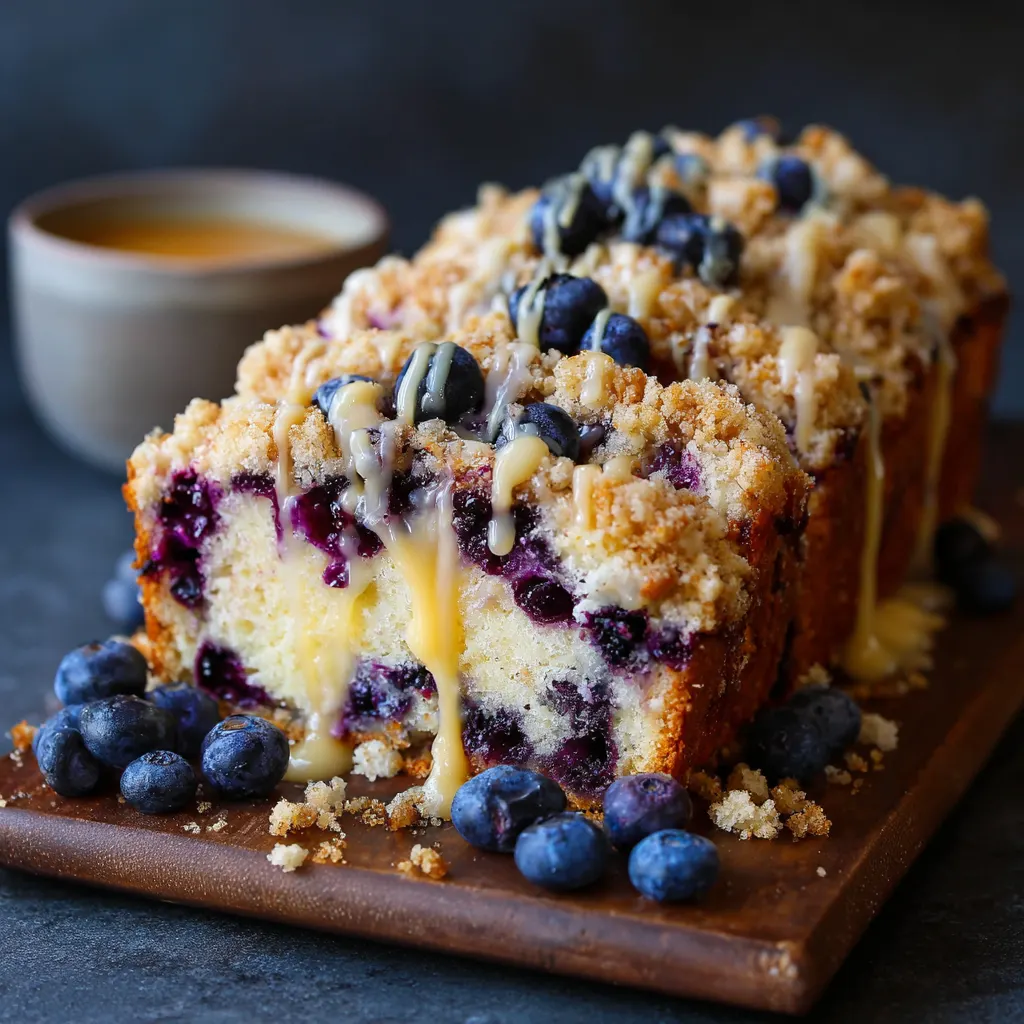
7. Glaze (Optional) Whisk together the powdered sugar and 2 tablespoons of lemon juice until smooth. Add the remaining lemon juice one teaspoon at a time until the desired drizzling consistency is reached. Drizzle over the completely cooled loaf just before serving.
The Art of Three Layers: Mastering the Components
The success of this bread lies in the structural integrity and flavor contrast of its three distinct layers: the moist cake, the creamy swirl, and the crunchy topping. Achieving perfection requires attention to detail for each component.
The Tender Blueberry Loaf
This bread batter acts as the structural foundation, needing to be tender yet sturdy enough to hold the dense cheesecake layer. The inclusion of yogurt (Greek or sour cream) is a critical optimization, adding both moisture and a subtle tanginess that complements the lemon and cheesecake. For a light and fluffy crumb, ensure that the butter is melted but only slightly cooled, and that the dry ingredients are mixed with the wet until just combined. Overmixing the batter develops gluten, resulting in a tough, dense loaf rather than a tender, cake-like crumb. Tossing the blueberries in flour is a non-negotiable step to prevent them from sinking entirely to the bottom of the pan during baking.
The Decadent Cheesecake Swirl
The cheesecake component is designed to be a soft, creamy ribbon that runs through the center. Unlike a traditional cheesecake that requires low, slow baking, this swirl must set within the quick bread’s baking time. The key is using room-temperature cream cheese, which mixes smoothly with no lumps. Using only an egg yolk (or a small amount of egg) provides richness and helps the filling set, keeping it soft and gooey rather than fully solidifying into a firm layer. The lemon juice is vital here, cutting through the richness of the cream cheese and brightening the overall flavor.
The Signature Cinnamon Crumble
The crumble topping, also known as streusel, provides the essential textural contrast. For the best result, the butter must be cold and cubed. Working the cold butter into the dry mixture with a pastry cutter or your fingertips prevents the formation of a paste, instead creating distinct, pea-sized crumbs that bake up crunchy and golden. For an optimized flavor profile, include both granulated and brown sugar, as the molasses in the brown sugar deepens the complexity and aids in browning. If you prefer a richer topping, consider replacing a tablespoon of flour with finely chopped pecans or almonds, as seen in some regional variations.
Baking Science and Expert Tips for the Perfect Loaf
Baking a multi-layered bread requires specific techniques to ensure all elements cook evenly and set properly. These professional tips will help troubleshoot common issues.
Temperature is Everything
Ensure all dairy ingredients—the cream cheese, eggs, and yogurt—are at room temperature before mixing. This emulsifies the batter correctly, resulting in a homogenous texture that prevents separation in the oven. For the crumble, however, the butter must be cold to maintain its structure. The 350°F (175°C) oven temperature is standard for quick bread, promoting rise and setting the cake before the cheesecake can liquefy.
The Importance of the Cooling Process
One of the most frequent errors with cheesecake-swirled quick breads is slicing them too soon. The cheesecake layer needs residual heat to finish setting after being removed from the oven. Allowing the loaf to cool in the pan for 20 minutes and then fully cooling it on a wire rack (ideally 1–2 hours) is crucial. Slicing too early will result in a messy, gooey center that doesn’t hold its shape, even if the surrounding bread is fully baked.
Troubleshooting Uneven Baking
Quick breads baked in a deep loaf pan can often overbake on the edges while the center remains wet. If the top of the loaf begins to reach your desired color (usually around the 35–40 minute mark) but the internal temperature is not yet reached, loosely tent the pan with aluminum foil. This blocks the direct radiant heat, allowing the center to catch up without burning the crumble. To check for doneness, aim for an internal temperature of 200–205°F (93–96°C) in the bread portion, avoiding the cream cheese swirl.
Flavor Variations and Customization
While the classic lemon and blueberry combination is a time-tested winner, this recipe is highly adaptable.
Berry and Fruit Substitutions
The robust flavor of the cheesecake swirl works beautifully with various seasonal fruits:
-
Raspberry Cheesecake Crumble: Swap blueberries for raspberries, increasing the sugar in the cheesecake swirl slightly if the raspberries are tart.
-
Strawberry Rhubarb Swirl: Use diced strawberries and finely chopped rhubarb in the batter, perhaps adding a touch of cardamom to the crumble topping for warmth.
-
Peach Cobbler Bread: Substitute fresh peaches for blueberries and add a touch of almond extract to the bread batter for a summer twist.
Spice and Extract Enhancements
To deepen the flavor profile, small adjustments can make a big difference:
-
Add Almond Notes: Incorporate 1/2 teaspoon of almond extract into both the bread batter and the cheesecake swirl for a complementary, marzipan-like flavor.
-
Use Oats in the Crumble: For a heartier, more “breakfast-friendly” crunch, replace ¼ cup of the flour in the crumble topping with old-fashioned rolled oats.
-
Spice the Batter: For a warming autumn loaf, add ½ teaspoon of nutmeg and ¼ teaspoon of allspice to the main flour mixture.
Alternative Baking Formats
This quick bread recipe can be adapted to other shapes and sizes with slight adjustments to the baking time:
-
Muffins: Layer the batter and swirl mixture into 12 muffin cups (filled about two-thirds full) and top with crumble. Bake for 20–25 minutes.
-
Crumble Bars: Doubling the recipe and baking it in a 9×13-inch pan yields structured bars. Reduce the baking time to approximately 40–50 minutes. The bars will also require chilling to set the cheesecake layer completely before cutting.
Serving, Glazing, and Storage
How you present and preserve your loaf is the final step in culinary optimization.
Glazing for Presentation and Flavor
While the crumble offers ample sweetness, a simple glaze provides a beautiful aesthetic and a final punch of flavor:
-
Classic Lemon Glaze: Made with powdered sugar and fresh lemon juice, this glaze adds a necessary brightness and is traditional for blueberry breads.
-
Cream Cheese Glaze: For even more richness, whisk 2 ounces of softened cream cheese with ½ cup of powdered sugar and 1 tablespoon of milk. This thicker glaze mimics the filling and creates a beautiful, opulent finish. Always glaze the bread only after it has cooled completely to prevent the glaze from running off or melting.
Pairing and Presentation
This bread is versatile. Serve it:
-
For Brunch: Sliced thick and served alongside fresh fruit and a dark, robust coffee.
-
As Dessert: Warmed slightly (30 seconds in the microwave) and paired with a scoop of vanilla bean ice cream or fresh whipped cream.
-
With Beverages: Its sweet and tangy profile pairs perfectly with a citrusy Earl Grey tea, a spiced chai latte, or a cold glass of milk.
Storage and Preservation
Due to the cream cheese filling, this loaf cannot be stored at room temperature for more than a few hours, especially in warmer climates.
-
Refrigeration: The bread should be stored in an airtight container in the refrigerator. It will keep well for up to 5 days. Chilling the loaf also improves its sliceability.
-
Freezing: This bread freezes exceptionally well. Cool it completely, then wrap the entire loaf or individual slices tightly in plastic wrap, followed by a layer of aluminum foil. It can be frozen for up to 3 months. Thaw overnight in the refrigerator or briefly warm individual slices in the microwave before serving.