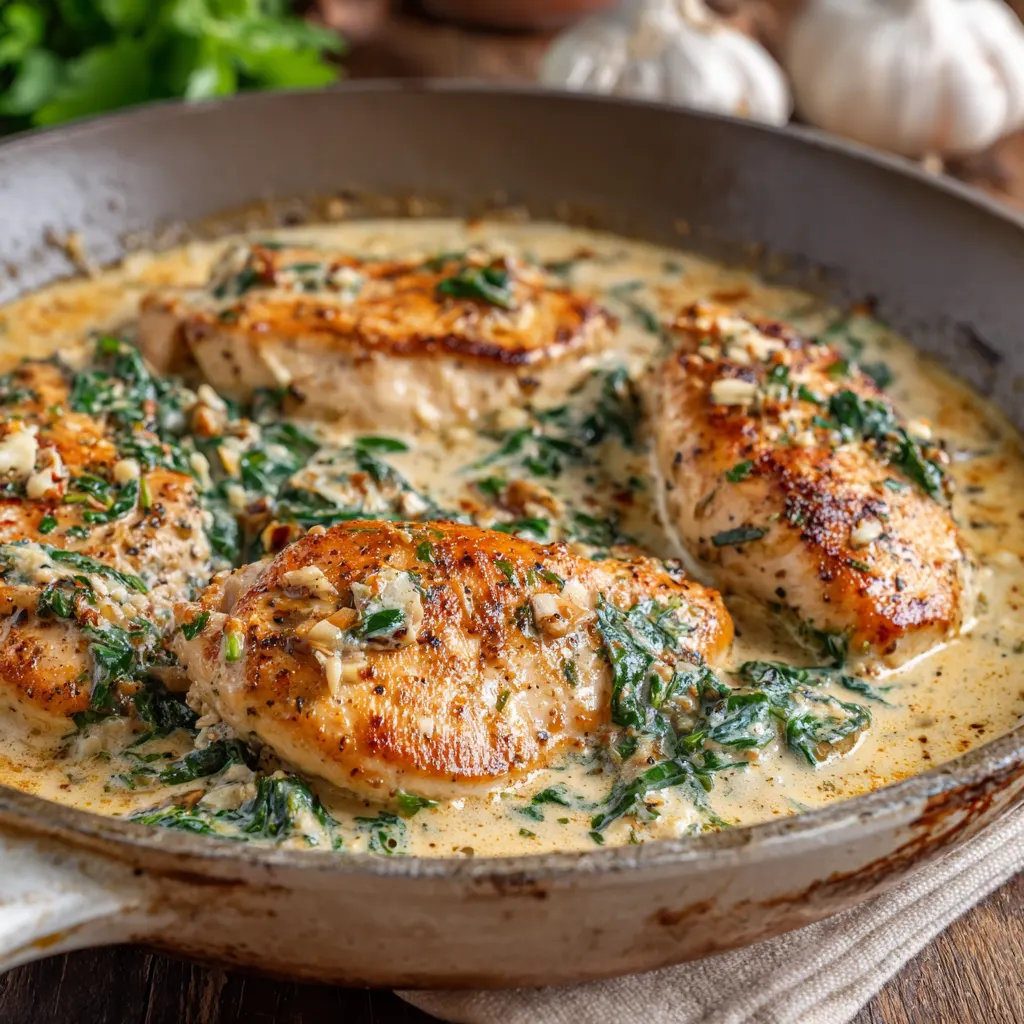
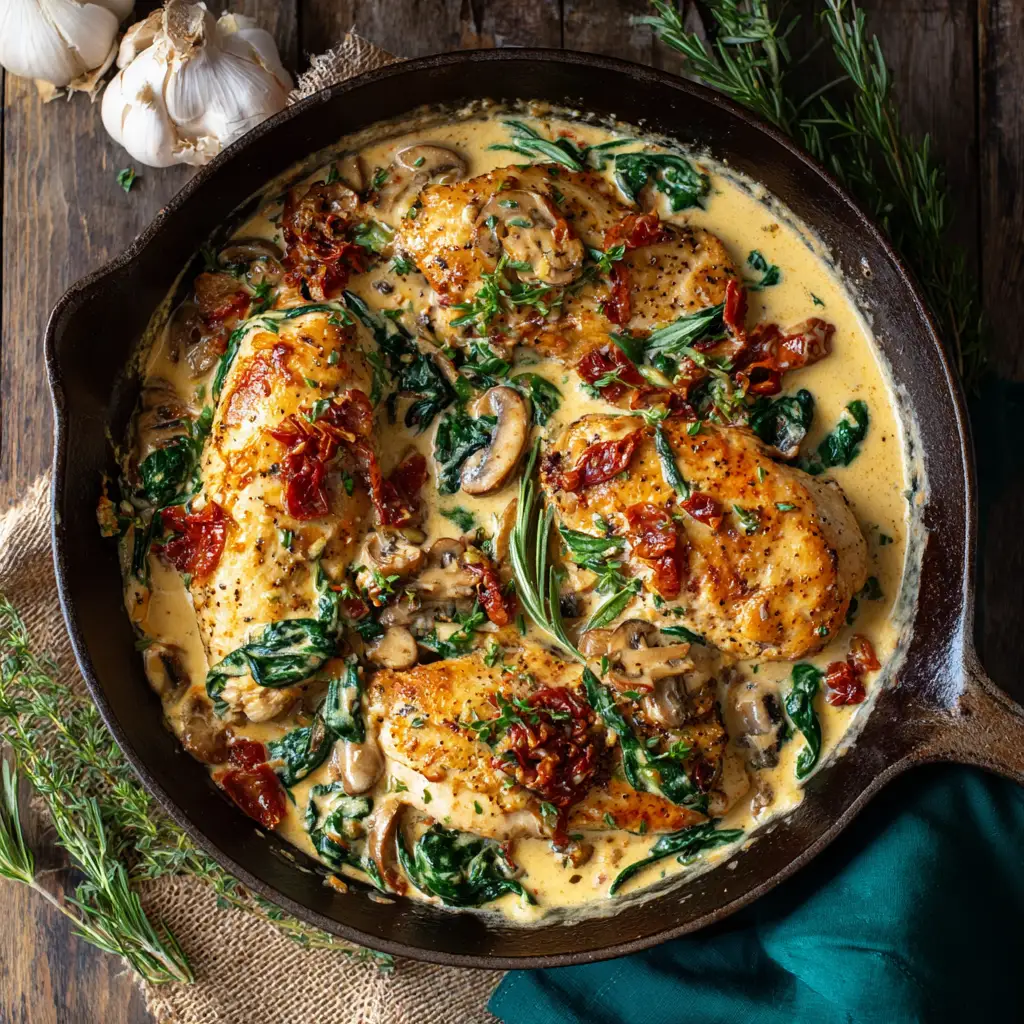
Creamy Tuscan Garlic Chicken is the ultimate weeknight hero—a dish that manages to taste complex and luxurious, yet requires minimal effort and time. This iconic one-pan meal transforms simple chicken breasts into tender, golden cutlets swimming in a rich, garlicky Parmesan cream sauce, vibrant with the classic Italian flavors of sun-dried tomatoes and fresh spinach….
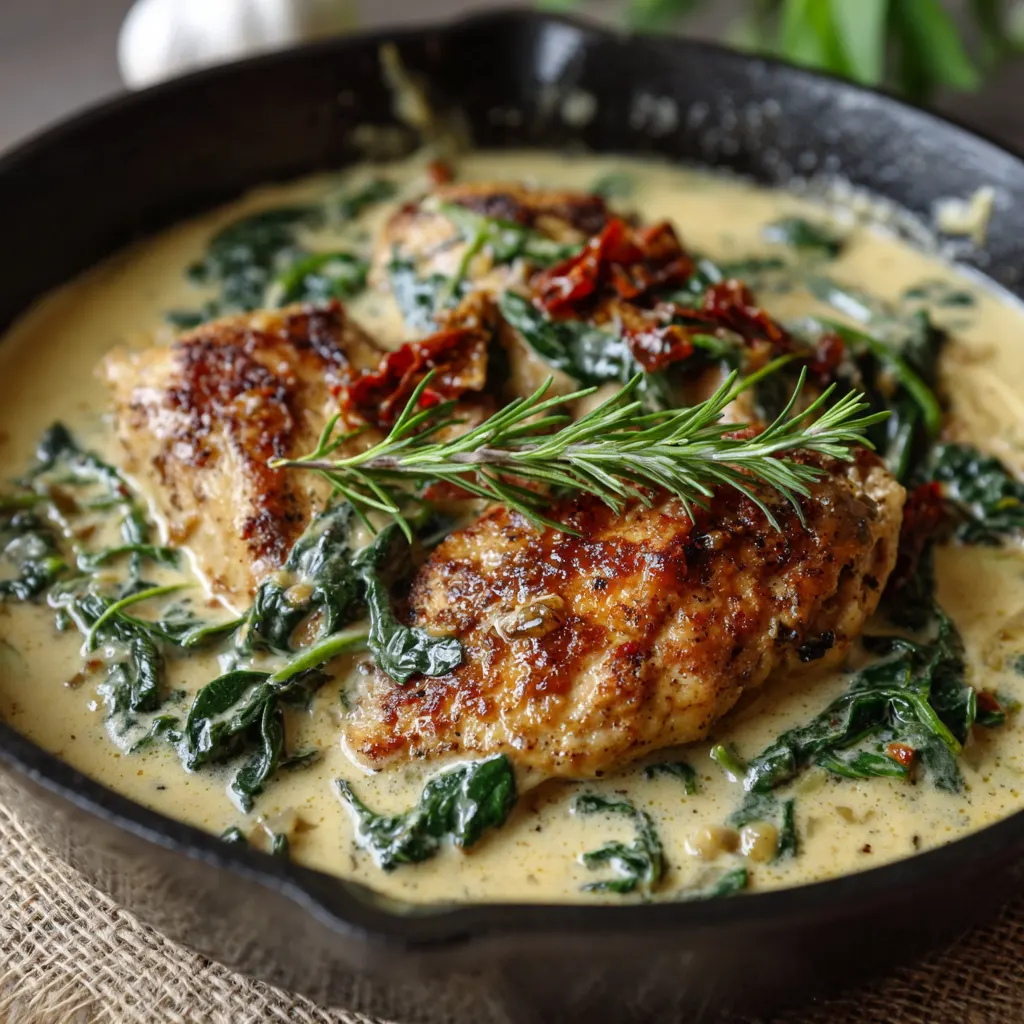
Creamy Tuscan Garlic Chicken is the ultimate weeknight hero—a dish that manages to taste complex and luxurious, yet requires minimal effort and time. This iconic one-pan meal transforms simple chicken breasts into tender, golden cutlets swimming in a rich, garlicky Parmesan cream sauce, vibrant with the classic Italian flavors of sun-dried tomatoes and fresh spinach. Inspired by the simple, fresh ingredients of Tuscany, this recipe delivers restaurant-quality comfort food in about 30 minutes, making it elegant enough for entertaining but quick enough for a busy Tuesday. Follow this definitive guide to master the technique and bring this irresistible dish to your table tonight.
Ingredients
For the Chicken:
-
1.5 lbs boneless, skinless chicken breasts (about 3-4 breasts), sliced horizontally into thinner cutlets
-
1 teaspoon Italian seasoning
-
1 teaspoon kosher salt, divided
-
½ teaspoon black pepper, divided
-
2 tablespoons olive oil, divided
-
1 tablespoon unsalted butter
For the Creamy Tuscan Sauce:
-
4–6 cloves garlic, minced (use fresh for the best flavor)
-
½ cup chicken broth (low-sodium preferred)
-
1 cup heavy cream (or heavy whipping cream)
-
½ cup freshly grated Parmesan cheese
-
½ cup julienned sun-dried tomatoes, drained (oil-packed preferred)
-
2 cups fresh baby spinach, packed
-
Fresh basil or parsley, chopped (for garnish)
Instructions
1. Prepare and Sear the Chicken: Slice the chicken breasts horizontally to create thin, even cutlets. Pat the chicken dry completely to ensure a proper sear. Season both sides generously with Italian seasoning, ½ teaspoon of salt, and ¼ teaspoon of pepper. Heat 1 tablespoon of olive oil and the butter in a large, oven-safe skillet over medium-high heat. Once shimmering, add the chicken cutlets (work in batches if necessary to avoid crowding the pan). Sear for 3–5 minutes per side until golden brown and cooked through (internal temperature of 165°F). Remove the chicken from the skillet and set aside on a clean plate.
2. Sauté Aromatics and Deglaze: Reduce the heat to medium. Add the remaining 1 tablespoon of olive oil to the skillet, along with any remaining chicken fat/drippings (this is where the flavor is). Add the minced garlic and sauté for 30–60 seconds, until fragrant. Be careful not to burn the garlic. Pour in the chicken broth and use a wooden spoon to scrape up all the browned bits (fond) from the bottom of the pan—this deglazing step adds immense depth to the final sauce.
3. Build and Thicken the Cream Sauce: Stir in the heavy cream and the remaining salt and pepper. Bring the mixture to a gentle simmer. Once simmering, stir in the freshly grated Parmesan cheese. Continue to simmer for 3–5 minutes, stirring occasionally, until the sauce has thickened slightly. Do not allow the sauce to come to a vigorous boil, as this can cause the cream to split.
4. Introduce the Tuscan Vegetables: Add the drained sun-dried tomatoes and the packed baby spinach to the simmering sauce. Stir continuously until the spinach has completely wilted down, which should only take 1–2 minutes.
5. Finish and Serve: Return the seared chicken cutlets and any accumulated resting juices back into the skillet. Gently nestle them into the creamy sauce. Let everything simmer together for 1–2 minutes to ensure the chicken is warmed through and coated in the sauce. Garnish generously with fresh basil or parsley and serve immediately.
The Defining Flavor Profile: Why Tuscan is Timeless
The appeal of Creamy Tuscan Garlic Chicken lies in its signature combination of vibrant, sun-drenched ingredients set against a comforting, savory background. To truly appreciate this dish, it helps to understand the roles of its core components, which are essential to authentic Italian-American “Tuscan” cooking.
The Trio of Tuscan Essentials
-
Sun-Dried Tomatoes: These are the flavor powerhouse of the dish. They provide an intense, sweet-tart, and slightly chewy burst of umami that cuts through the richness of the cream. For the best flavor, most recipes recommend using oil-packed, julienned sun-dried tomatoes, ensuring they are well-drained before adding them to the sauce.
-
Fresh Garlic: While garlic powder is sometimes used for a foundational flavor boost, fresh, minced garlic is non-negotiable for the sauce’s aromatic base. It’s crucial to sauté the garlic until just fragrant (about one minute) to release its oils without letting it burn, which would turn it bitter.
-
Spinach: Included for color, nutrition, and a slight earthy freshness, baby spinach wilts quickly into the sauce. It provides a necessary counterbalance to the fatty cream and rich chicken, rounding out the flavor profile. Because spinach wilts drastically, don’t be afraid to add a seemingly large amount—it will shrink down to a small volume.
Choosing the Right Cream and Cheese
The sauce quality hinges on two dairy choices:
-
Heavy Cream: Stick to full-fat heavy cream or heavy whipping cream. Lower-fat alternatives like half-and-half or milk have a high water content and lower fat stability, which makes the sauce prone to splitting or becoming watery when simmering, especially after adding acidic elements like tomatoes.
-
Freshly Grated Parmesan: This is critical for achieving a velvety, smooth sauce. Pre-shredded or pre-grated Parmesan often contains anti-caking agents (like cellulose) which prevent the cheese from melting properly, leading to a grainy or clumpy sauce. Buying a block of Parmesan and grating it just before use ensures perfect melt and texture.
Mastering the Technique: Expert Tips for a Perfect Skillet Result
While Creamy Tuscan Garlic Chicken is an easy recipe, following a few technical steps ensures the chicken is juicy, the sauce is creamy, and the entire dish is flawless every time.
The Art of the Sear
The first and most important step is achieving a beautiful, golden-brown sear on the chicken. This creates a deep layer of flavor (the Maillard reaction) that becomes the backbone of the entire dish.
-
Pounding or Slicing: To ensure even cooking and prevent the chicken from drying out, always use thin-cut chicken breasts. Pounding thick breasts to a uniform ½-inch thickness, or slicing them horizontally into cutlets, drastically reduces the cooking time and guarantees they finish cooking right as the sauce is ready.
-
Pat it Dry: Moisture is the enemy of searing. Always pat the chicken thoroughly dry with paper towels before seasoning. Excess surface moisture will cause the chicken to steam instead of sear, resulting in a pale, rubbery exterior.
-
Use High Heat (Initially): Start with medium-high heat and a combination of olive oil and butter. The oil has a high smoke point, while the butter adds a rich, nutty flavor.
Sauce Stability and Thickness
The consistency of the Parmesan cream sauce defines the dish. It should be luscious and coating, not thin or curdled.
-
Manage Heat After Cream Addition: Once the heavy cream and Parmesan are added, immediately reduce the heat to a gentle simmer. High, rolling boils can cause the fat and proteins in the heavy cream to separate, resulting in a grainy or split sauce.
-
Deglaze Thoroughly: The deglazing step—using chicken broth to scrape up the browned bits left after searing the chicken—is essential. These caramelized bits (called “fond”) contain concentrated savory flavors that thicken and enrich the sauce naturally.
-
Use Room Temperature Ingredients (Optional but Recommended): Allowing the chicken breasts to sit out for 10–15 minutes before cooking, and ensuring the cream is not ice-cold when added, can help maintain an even temperature in the pan and contribute to a more stable sauce emulsification.
Flavor Enhancements and Variations
While the classic recipe is perfect, minor adjustments can tailor the dish to your preference:
-
A Touch of Acidity: For a brighter flavor that cuts the richness, a squeeze of fresh lemon juice or a splash of dry white wine (like Pinot Grigio) added during the deglazing step works wonders.
-
Adding Heat: A small pinch of red pepper flakes stirred into the sauce with the garlic provides a subtle but noticeable kick.
-
Vegetable Additions: Sliced white mushrooms or chopped yellow onion sautéed with the garlic and sun-dried tomatoes are popular additions found in many renditions of this recipe.
Serving Suggestions and Perfect Pairings
The rich, savory, and highly flavorful nature of Creamy Tuscan Garlic Chicken makes it incredibly versatile, pairing well with a wide variety of sides that are capable of soaking up the irresistible sauce.
Sides to Complement the Creaminess
The best side dishes provide a textural and flavor contrast to the main dish, or simply act as a vehicle for the sauce.
-
Classic Pasta: The most popular pairing. Long pasta shapes like fettuccine, linguine, or spaghetti are ideal for coating in the sauce, as are shorter shapes like penne or gnocchi.
-
Grains and Starches:
-
White Rice or Brown Rice: Simple, absorbent, and comforting.
-
Creamy Polenta: A classic Italian accompaniment that offers a soft, rich texture.
-
Mashed Potatoes: Instant Pot or classic mashed potatoes are excellent for absorbing the garlicky cream.
-
-
The Essential Bread: A large chunk of crusty bread or sourdough is a must for soaking up every last bit of sauce, known affectionately as fare la scarpetta (making a little shoe).
Low-Carb and Keto-Friendly Options
This dish is naturally adaptable for lower-carbohydrate diets, as the main components (chicken, cream, cheese, spinach, tomatoes) fit the requirements.
-
Cauliflower Rice: A savory substitute for traditional rice.
-
Zucchini Noodles (Zoodles) or Spaghetti Squash: These provide a vegetable base that holds up well to the sauce.
-
Steamed Asparagus or Green Beans: Simple steamed or roasted green vegetables offer a light, crisp texture that contrasts the richness.
Wine and Drink Pairings
To balance the richness of the heavy cream and Parmesan, choose a crisp, dry white wine with high acidity.
-
Sauvignon Blanc: Its high acidity and citrus notes perfectly cut through the creamy texture.
-
Pinot Grigio: A lighter, crisp choice that complements the dish without overpowering it.
-
Chardonnay (Unoaked): Look for an unoaked version to avoid adding too much competing oak flavor.
Storage, Freezing, and Reheating for Meal Prep
One of the great advantages of Creamy Tuscan Garlic Chicken is its suitability for meal prepping, allowing you to enjoy this dish multiple times throughout the week with minimal effort.
Refrigeration and Storage
The dish keeps exceptionally well when stored correctly.
-
Refrigeration: Store leftovers in a shallow, airtight container in the refrigerator for up to 3 to 4 days. The sauce may thicken considerably as it cools, but this is normal.
Freezing for Later
While dairy-based sauces can sometimes change texture after freezing and thawing, this dish generally freezes well, though the cream may lose a bit of its original silky texture.
-
Freezing Method: Allow the dish to cool completely. Transfer the chicken and sauce to a freezer-safe, airtight container, ensuring there is minimal air space at the top (which helps prevent freezer burn). The dish can be frozen for up to 1 month.
-
Thawing: Thaw the meal completely overnight in the refrigerator before reheating.
Reheating Safely and Effectively
The key to reheating is gentle heat to prevent the cream sauce from splitting.
-
Stovetop Method (Recommended): Transfer the leftovers to a saucepan or skillet. Reheat gently over low-medium heat, stirring occasionally. If the sauce is too thick, stir in a splash of chicken broth or heavy cream until it reaches your desired consistency. Cook until piping hot throughout.
-
Microwave Method: Reheat in short bursts (60–90 seconds at a time) on a medium power setting, stirring between bursts, until warmed through. Avoid high heat and long continuous cooking, as this increases the risk of the sauce breaking.