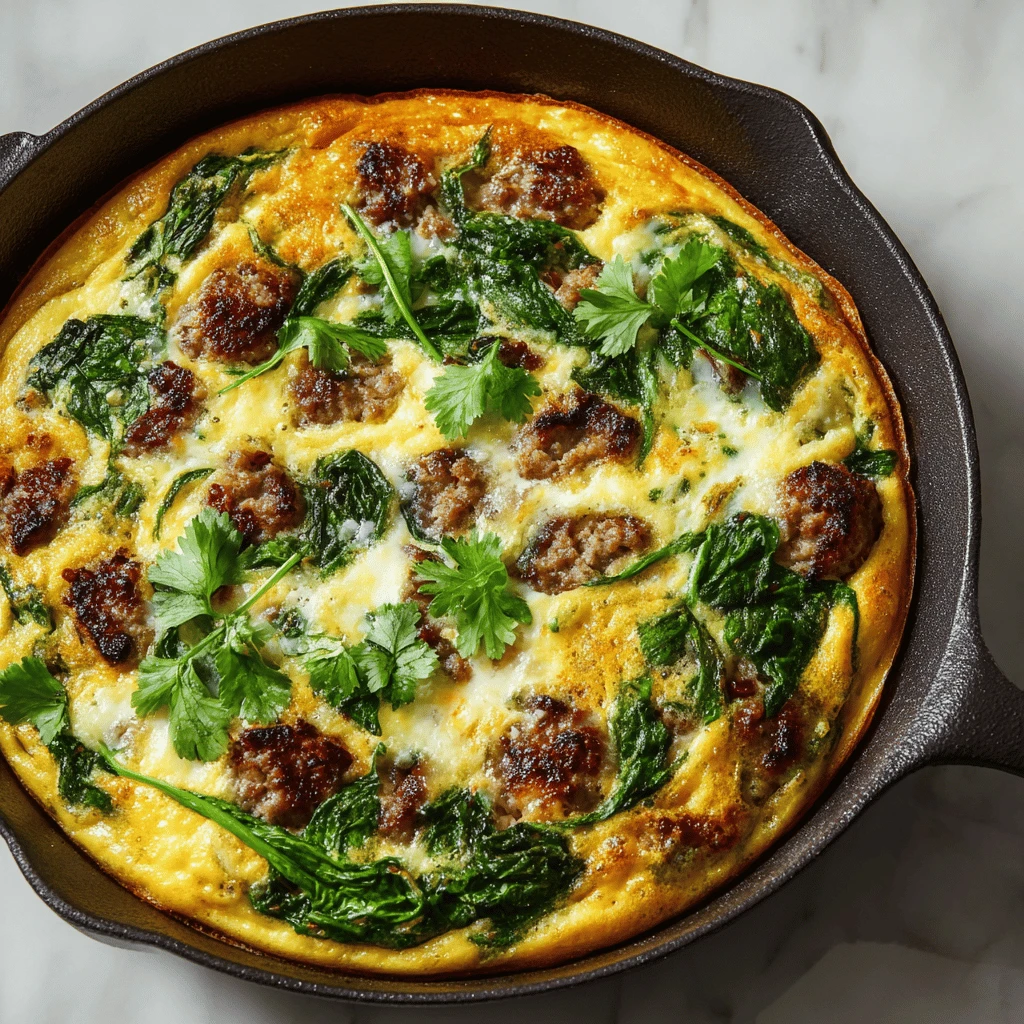
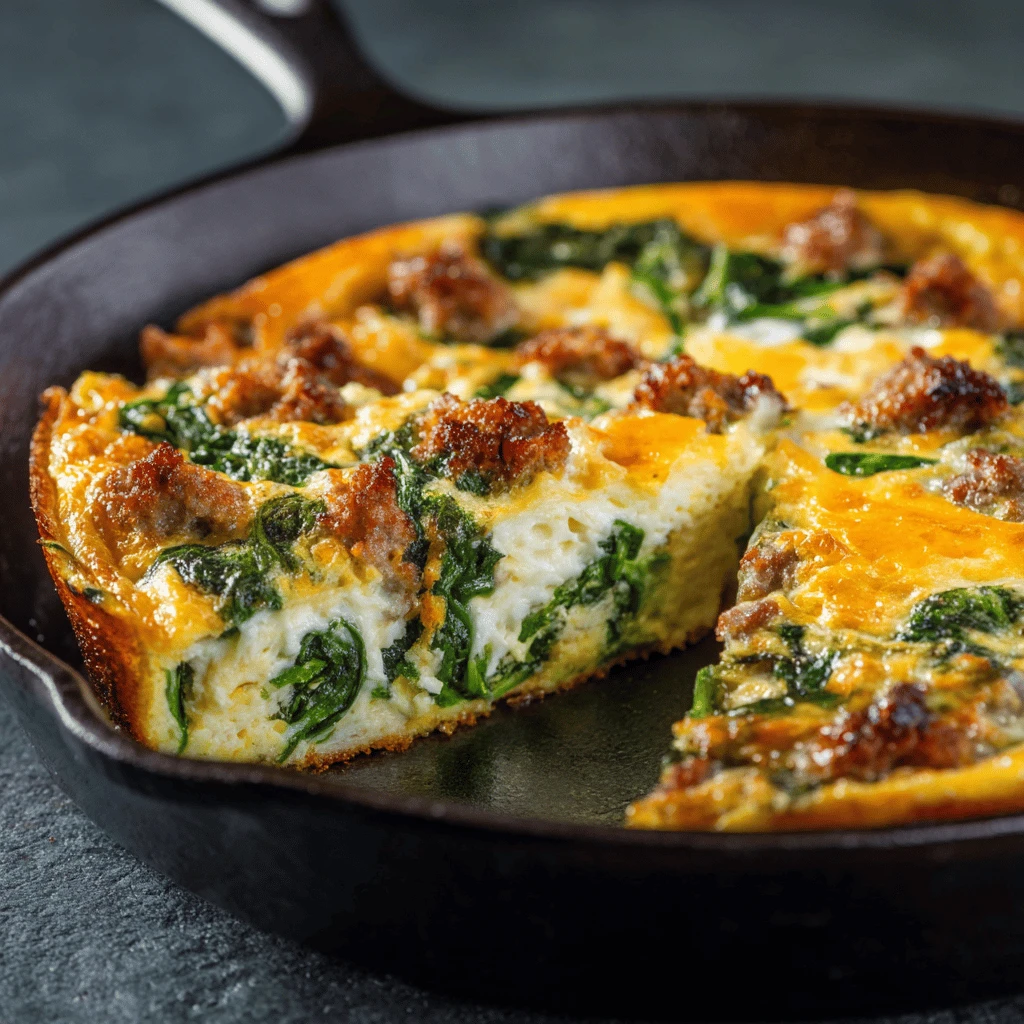
Spinach and Sausage Frittata Frittatas are the unsung heroes of brunch, lunch, and even dinner. They’re versatile, customizable, and incredibly satisfying. This Spinach and Sausage Frittata recipe is a prime example of how simple ingredients can come together to create a culinary masterpiece. Packed with protein and nutrients, this frittata is a delightful way to…
Spinach and Sausage Frittata
Frittatas are the unsung heroes of brunch, lunch, and even dinner. They’re versatile, customizable, and incredibly satisfying. This Spinach and Sausage Frittata recipe is a prime example of how simple ingredients can come together to create a culinary masterpiece. Packed with protein and nutrients, this frittata is a delightful way to start your day or fuel your afternoon.
The Perfect Spinach and Sausage Frittata: A Step-by-Step Guide
Making the perfect Spinach and Sausage Frittata isn’t rocket science, but a few key techniques will elevate your frittata from good to great.
Choosing Your Ingredients
The quality of your ingredients directly impacts the final flavor. Opt for fresh, vibrant spinach, flavorful sausage, and high-quality eggs.
- Sausage: Italian sausage, either sweet or hot, works best. Remove the sausage from its casing for easier browning. You could use turkey or chicken sausage for a lighter option.
- Spinach: Fresh spinach is preferable, but frozen spinach can be used in a pinch. If using frozen, make sure to thaw it completely and squeeze out any excess water.
- Eggs: Use large, fresh eggs for the best texture and flavor.
- Cheese: Cheese adds richness and flavor. Parmesan, mozzarella, or Gruyère are excellent choices.
- Aromatics: Onion and garlic form the flavor base of this frittata. Dice them finely for even cooking.
- Dairy: A splash of milk or cream adds moisture and richness to the eggs.
- Oil: Olive oil is the best option for sautéing the vegetables and sausage.
Preparing the Sausage and Spinach
Properly preparing the sausage and spinach is crucial for the overall texture and flavor of the frittata.
1. Sausage: Brown the sausage in a skillet over medium heat. Break it up with a spoon as it cooks. Drain any excess grease. Overcooking the sausage will make it tough so do not overcook.
2. Spinach: If using fresh spinach, wash it thoroughly and chop coarsely. If using frozen spinach, thaw it completely and squeeze out any excess water.
3. Aromatics: Sauté the diced onion and garlic in the same skillet used for the sausage until softened. Add the spinach to the skillet and cook until wilted.
Combining the Ingredients
Combining the ingredients is where the magic happens. This is where all the individual elements blend to create the perfect base for your frittata.
1. Whisk the Eggs: In a large bowl, whisk together the eggs, milk or cream, salt, and pepper until well combined.
2. Add the Fillings: Add the cooked sausage, spinach, and aromatics to the egg mixture. Stir to combine.
3. Cheese: Add cheese to the mixture. Again, stir to combine.
Cooking the Frittata: Stovetop to Oven Method
This stovetop-to-oven method ensures the frittata is cooked evenly and has a beautifully browned top.
1. Preheat Oven: Preheat your oven to 350°F (175°C).
2. Oven Safe Skillet: Make sure you’re using an oven-safe skillet. Cast iron skillets work especially well for frittatas.
3. Start on the Stovetop: Heat a tablespoon of olive oil in the skillet over medium heat. Pour the egg mixture into the skillet.
4. Cook on the Stovetop: Cook the frittata on the stovetop for about 5-7 minutes, or until the edges are set.
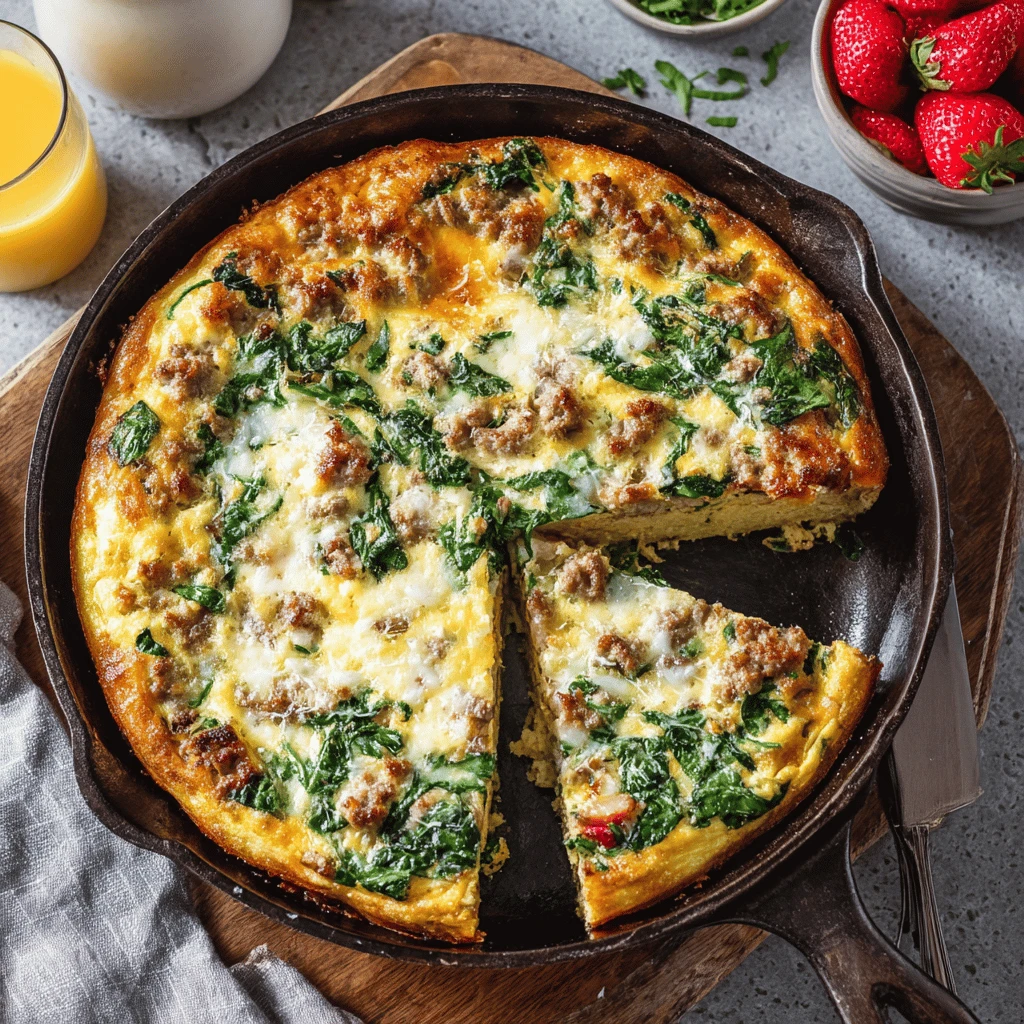
5. Transfer to the Oven: Transfer the skillet to the preheated oven and bake for 15-20 minutes, or until the frittata is set in the center and lightly golden brown on top.
6. Rest: Remove the frittata from the oven and let it rest for a few minutes before slicing and serving. This allows the frittata to set properly and makes it easier to slice.
Serving and Storing Your Frittata
Frittatas are incredibly versatile and can be served warm or cold.
- Serving Suggestions: Serve the Spinach and Sausage Frittata with a side salad, crusty bread, or a simple fruit salad. It’s perfect for brunch, lunch, or a light dinner.
- Storage: Store leftover frittata in an airtight container in the refrigerator for up to 3 days.
- Reheating: Reheat the frittata in the microwave, oven, or skillet.
- Freezing: You can freeze the frittata for up to 2 months. Wrap it tightly in plastic wrap and then in foil. Thaw it in the refrigerator overnight before reheating.
Variations and Customizations
One of the best things about frittatas is their versatility. Feel free to experiment with different ingredients and flavor combinations.
Vegetarian Options
To make this frittata vegetarian, simply omit the sausage and add more vegetables.
- Mushrooms: Sautéed mushrooms add a rich, earthy flavor.
- Bell Peppers: Diced bell peppers add color and sweetness.
- Zucchini: Diced zucchini adds a mild flavor and creamy texture.
- Tomatoes: Cherry tomatoes or sun-dried tomatoes add a burst of acidity.
Different Cheeses and Meats
Explore different cheese and meat combinations for unique flavor profiles.
- Cheese: Feta cheese adds a salty, tangy flavor. Goat cheese adds a creamy, tangy flavor. Cheddar cheese adds a sharp, savory flavor.
- Meat: Bacon adds a smoky, savory flavor. Ham adds a salty, savory flavor. Chorizo adds a spicy, smoky flavor.
Adding Herbs and Spices
Herbs and spices can elevate the flavor of your frittata even further.
- Fresh Herbs: Fresh basil, parsley, chives, or thyme add a bright, herbaceous flavor.
- Spices: Red pepper flakes add a touch of heat. Paprika adds a smoky, sweet flavor. Nutmeg adds a warm, nutty flavor.
Health Benefits of Spinach and Sausage Frittata
Beyond its delicious taste, this frittata offers a variety of health benefits.
Nutritional Value
This Spinach and Sausage Frittata is packed with nutrients, making it a healthy and satisfying meal.
- Protein: Eggs and sausage are excellent sources of protein, which is essential for building and repairing tissues.
- Vitamins and Minerals: Spinach is rich in vitamins A, C, and K, as well as iron and antioxidants.
- Healthy Fats: Eggs and cheese provide healthy fats, which are important for brain function and hormone production.
Benefits of Key Ingredients
Each ingredient in this frittata contributes to its overall health benefits.
- Spinach: Supports healthy vision, immune function, and bone health.
- Sausage: Provides protein and energy. Choose lean sausage options to reduce fat content.
- Eggs: A complete protein source, rich in choline and essential nutrients.
Making it Healthier
Several adjustments can be made to the recipe to enhance its health profile.
- Use Lean Sausage: Choose turkey or chicken sausage to reduce fat content.
- Add More Vegetables: Increase the amount of spinach and other vegetables to boost nutrient intake.
- Use Low-Fat Cheese: Opt for low-fat cheese options to reduce fat content.
- Control Portion Sizes: Be mindful of portion sizes to manage calorie intake.
Troubleshooting Common Frittata Problems
Even with the best recipe, things can sometimes go wrong. Here are some common frittata problems and how to fix them.
Soggy Frittata
A soggy frittata is usually caused by excess moisture.
- Solution: Make sure to squeeze out any excess water from the spinach before adding it to the egg mixture. Also, don’t overcrowd the skillet.
Dry Frittata
A dry frittata is usually caused by overcooking.
- Solution: Reduce the cooking time and temperature. Also, add a splash of milk or cream to the egg mixture to add moisture.
Burning
Burning is usually caused by cooking at too high a temperature.
- Solution: Reduce the cooking temperature and keep an eye on the frittata while it’s cooking.
Uneven Cooking
Uneven cooking is usually caused by an unevenly heated skillet or oven.
- Solution: Make sure your skillet and oven are properly preheated. Rotate the skillet in the oven halfway through cooking to ensure even cooking.
Frequently Asked Questions (FAQ)
- Can I make a frittata ahead of time? Yes, frittatas can be made ahead of time and stored in the refrigerator for up to 3 days. They are perfect for meal prepping.
- Can I freeze a frittata? Yes, you can freeze frittatas for up to 2 months. Wrap them tightly in plastic wrap and then in foil. Thaw them in the refrigerator overnight before reheating.
- What is the difference between a frittata and an omelet? A frittata is cooked slowly over low heat, while an omelet is cooked quickly over high heat. A frittata is also thicker and more substantial than an omelet.
- Can I use frozen spinach in a frittata? Yes, you can use frozen spinach in a frittata. Just be sure to thaw it completely and squeeze out any excess water.
- What kind of skillet should I use for a frittata? An oven-safe skillet, such as a cast iron skillet or a non-stick skillet, is best for making frittatas.
- How do I know when the frittata is done? The frittata is done when the center is set and lightly golden brown on top. A toothpick inserted into the center should come out clean.
- Can I add other vegetables to a frittata? Absolutely! Frittatas are a great way to use up leftover vegetables. Feel free to add any vegetables you like, such as mushrooms, bell peppers, zucchini, or tomatoes.