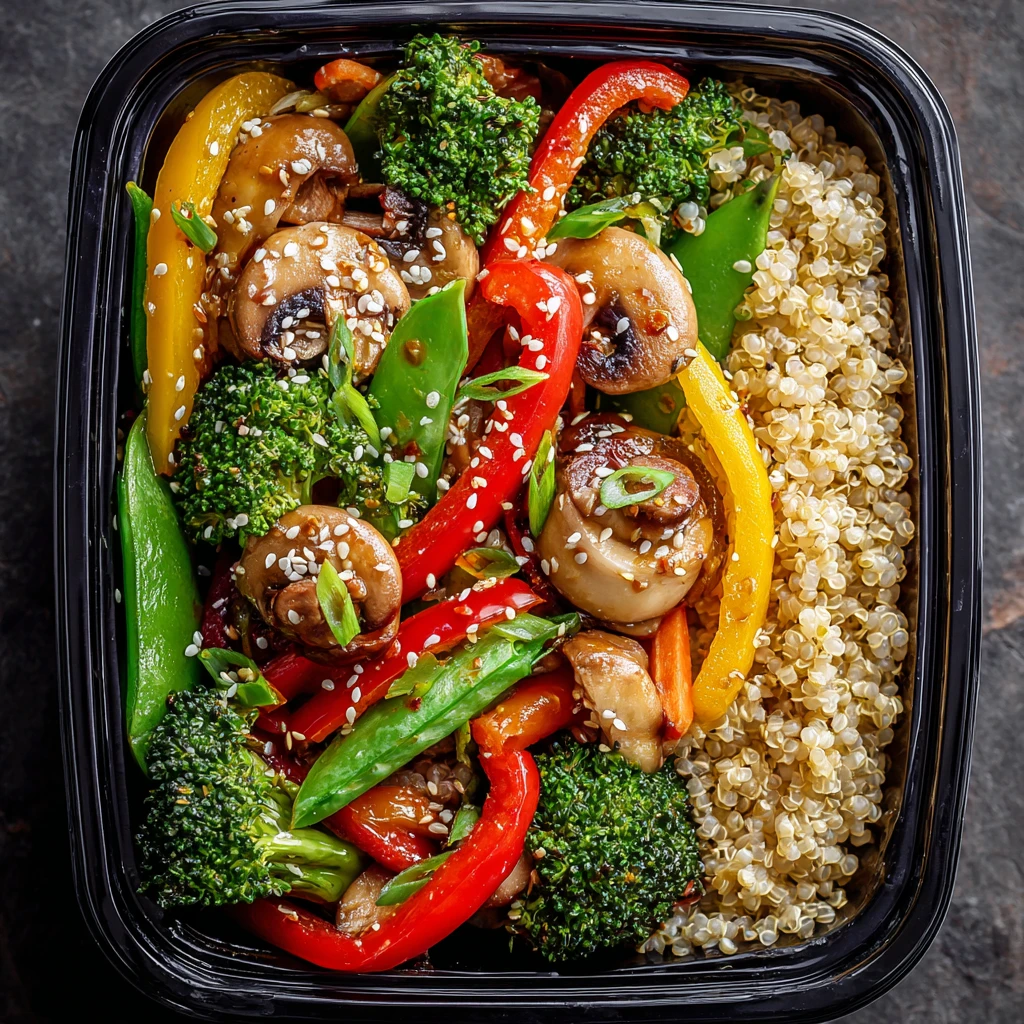
Asian Veggie Stir-Fry Meal Prep Ingredients 1 tbsp sesame oil 1 red bell pepper, sliced 1 yellow bell pepper, sliced 1 cup broccoli florets 1 cup snap peas 1 cup sliced carrots 1/2 cup sliced mushrooms 2 cloves garlic, minced 1 inch ginger, grated 1/4 cup low-sodium soy sauce 2 tbsp rice vinegar 1 tbsp…
Asian Veggie Stir-Fry Meal Prep
Ingredients
- 1 tbsp sesame oil
- 1 red bell pepper, sliced
- 1 yellow bell pepper, sliced
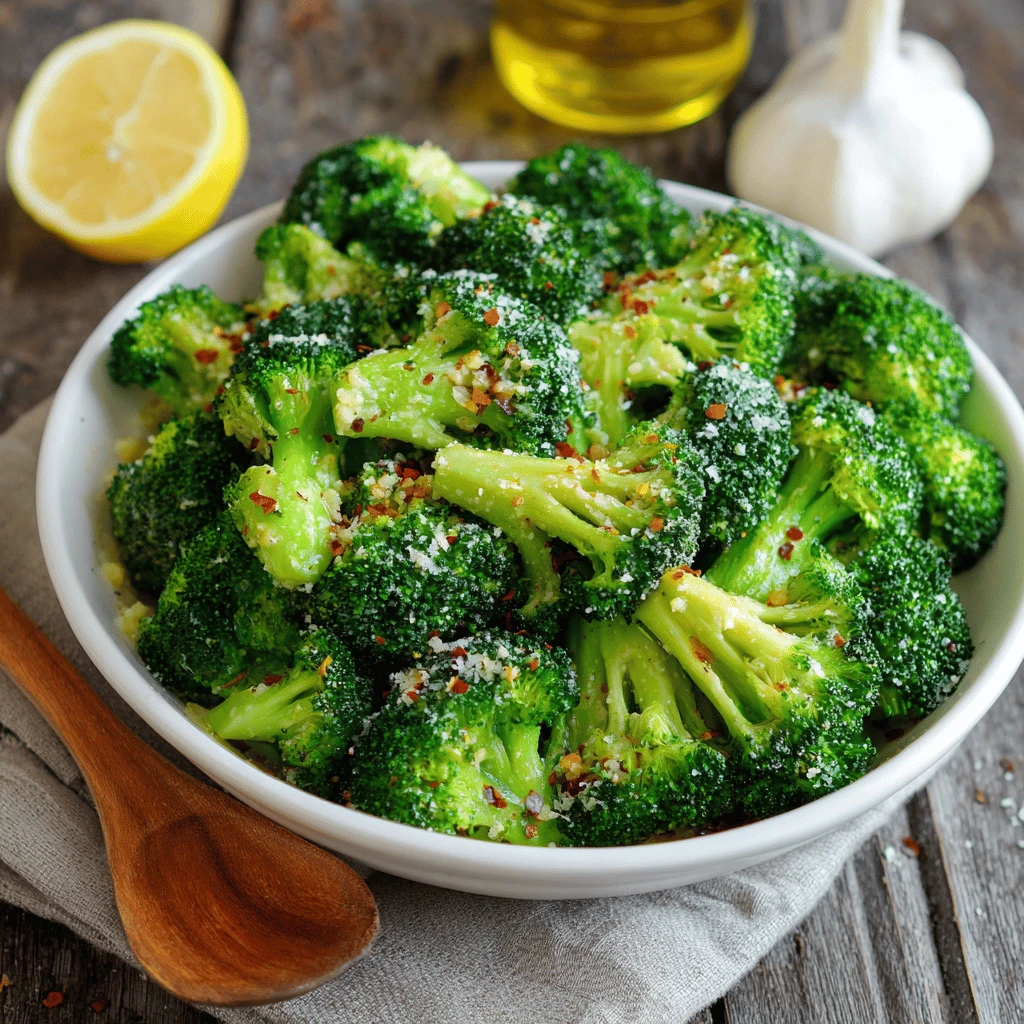
- 1 cup broccoli florets
- 1 cup snap peas
- 1 cup sliced carrots
- 1/2 cup sliced mushrooms
- 2 cloves garlic, minced
- 1 inch ginger, grated
- 1/4 cup low-sodium soy sauce
- 2 tbsp rice vinegar
- 1 tbsp honey or maple syrup
- 1 tsp cornstarch
- 1/4 tsp red pepper flakes (optional)
- Cooked quinoa or brown rice, for serving
- Sesame seeds, for garnish (optional)
- Green onions, chopped, for garnish (optional)
Step-by-Step
1. Prepare all your vegetables by washing and chopping them into bite-sized pieces. This will save you time during the actual cooking process.
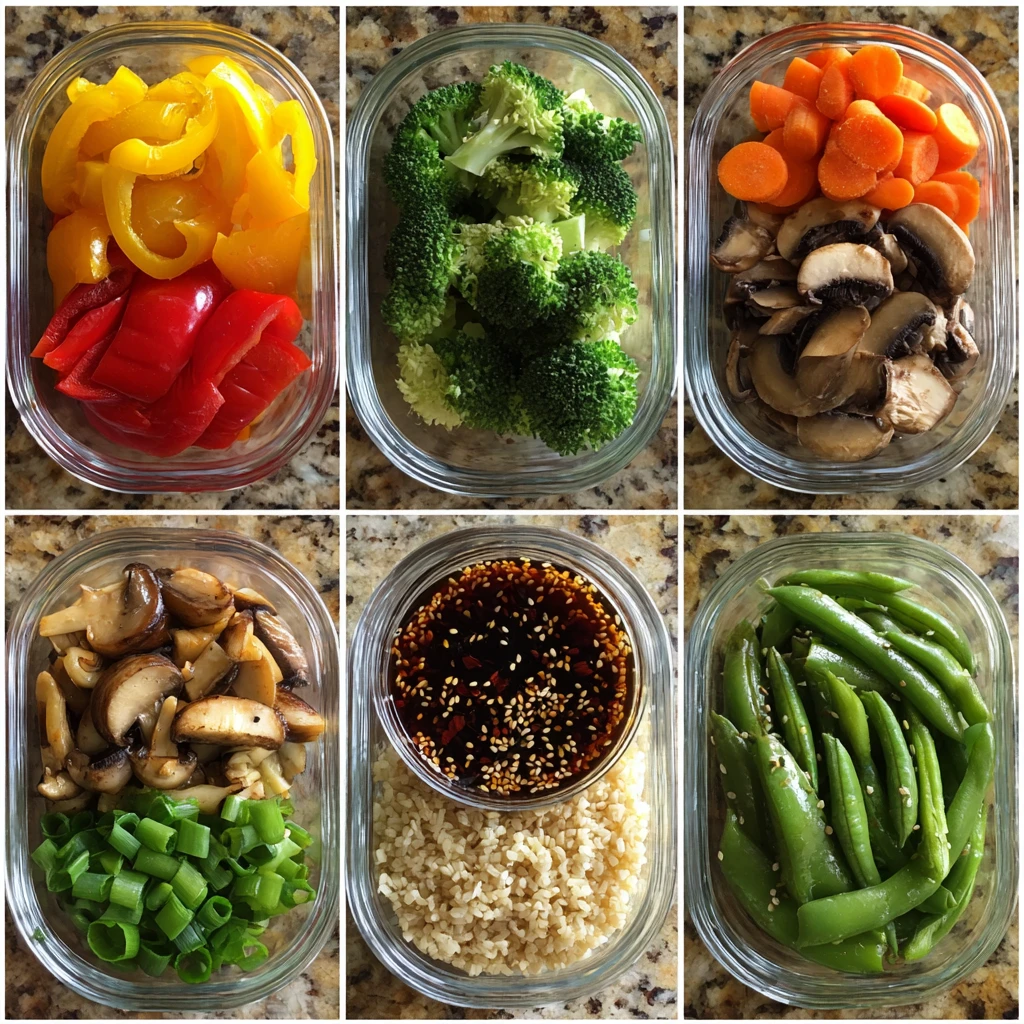
2. In a small bowl, whisk together the soy sauce, rice vinegar, honey/maple syrup, cornstarch, and red pepper flakes (if using). This is your stir-fry sauce.
3. Heat the sesame oil in a large wok or skillet over medium-high heat.
4. Add the garlic and ginger to the hot oil and stir-fry for about 30 seconds, until fragrant. Be careful not to burn them.
5. Add the bell peppers, broccoli, snap peas, carrots, and mushrooms to the wok.
6. Stir-fry the vegetables for 5-7 minutes, or until they are tender-crisp.
7. Pour the stir-fry sauce over the vegetables and cook for another 2-3 minutes, or until the sauce has thickened and coats the vegetables evenly.
8. Remove the stir-fry from the heat.
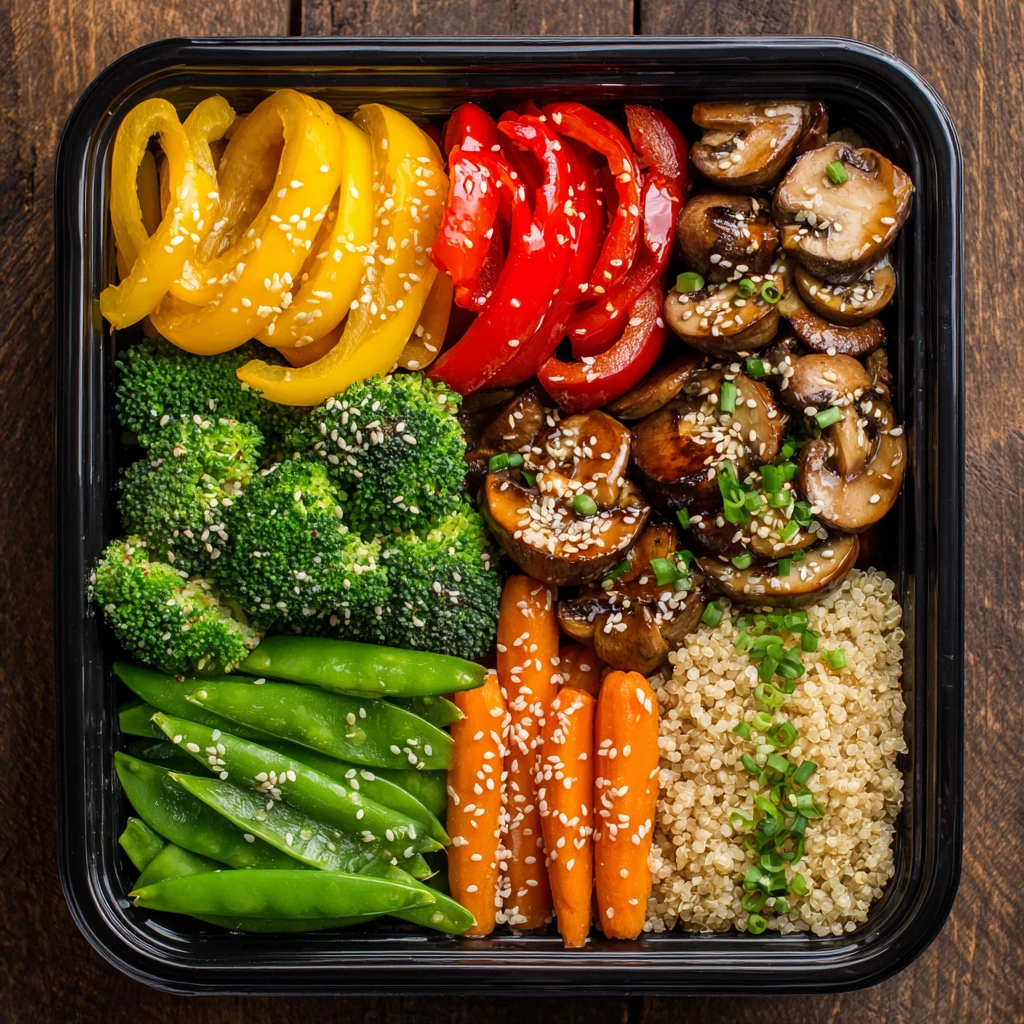
9. Divide the cooked quinoa or brown rice into meal prep containers.
10. Top the rice with the veggie stir-fry.
11. Garnish with sesame seeds and green onions, if desired.
12. Allow the meal prep containers to cool completely before sealing and refrigerating.
Making the Most of Your Asian Veggie Stir-Fry Meal Prep
### Choosing Your Vegetables
The beauty of a veggie stir-fry is its adaptability.
Feel free to swap out or add vegetables based on your preferences and what’s in season.
Some other great options include bok choy, spinach, zucchini, and bean sprouts.
Consider using frozen vegetables for added convenience, but make sure to thaw and drain them well before stir-frying to avoid excess moisture.
### Perfecting the Sauce
The sauce is the heart of any good stir-fry.
Adjust the sweetness, saltiness, and spice levels to suit your taste.
For a thicker sauce, add a bit more cornstarch.
If you prefer a tangier sauce, add a splash more rice vinegar.
Experiment with different flavors by adding ingredients like oyster sauce (if not vegetarian), hoisin sauce, or sriracha.
### Storing and Reheating
Proper storage is key to maintaining the freshness and flavor of your meal prepped stir-fry.
Ensure the containers are airtight to prevent the vegetables from drying out.
Store the meal prep containers in the refrigerator for up to 4-5 days.
When reheating, you can microwave the stir-fry for 1-2 minutes, or until heated through.
Alternatively, you can reheat it in a skillet over medium heat. Add a splash of water if needed to prevent sticking.
Tips for a Delicious and Healthy Stir-Fry
### Achieving the Right Texture
The ideal stir-fry has vegetables that are tender-crisp, not mushy.
To achieve this, avoid overcrowding the wok or skillet, as this will lower the temperature and steam the vegetables instead of stir-frying them.
Cook the vegetables in batches if necessary.
Also, be mindful of cooking times for different vegetables. Add vegetables that take longer to cook, like carrots and broccoli, first, followed by quicker-cooking vegetables like snap peas and mushrooms.
### Choosing a Healthy Base
While white rice is a common choice for stir-fries, opting for brown rice or quinoa adds more fiber and nutrients to your meal.
Cauliflower rice is another great low-carb option.
You can also serve the stir-fry over noodles, such as soba noodles or udon noodles.
Consider adding some protein to your stir-fry, such as tofu, tempeh, or edamame, to make it a more complete and satisfying meal.
### Meal Prep Efficiency
Meal prepping can save you time and effort throughout the week.
To streamline the process, consider prepping your vegetables and sauce ahead of time.
You can chop the vegetables and store them in airtight containers in the refrigerator for up to 2-3 days.
The sauce can also be made in advance and stored in a jar or container in the refrigerator for up to a week.
Cooking a large batch of rice or quinoa at the beginning of the week will also save you time when assembling your meal prep containers.
Variations on the Classic Stir-Fry
### Spicy Stir-Fry
Add a generous pinch of red pepper flakes or a drizzle of sriracha to the sauce for a spicy kick.
You can also add sliced chili peppers to the stir-fry while cooking the vegetables.
### Tofu Stir-Fry
Press firm or extra-firm tofu to remove excess water, then cube it and stir-fry it along with the vegetables.
Toss the tofu in cornstarch before stir-frying for a crispier texture.
### Peanut Stir-Fry
Add a tablespoon or two of peanut butter to the sauce for a nutty and flavorful twist.
Garnish with chopped peanuts for added crunch.
### Lemon Garlic Stir-Fry
Omit the soy sauce and rice vinegar from the sauce. Instead, use lemon juice, minced garlic, and a touch of honey.
This variation offers a brighter and more refreshing flavor profile.
Health Benefits of Veggie Stir-Fry
### Rich in Vitamins and Minerals
Vegetable stir-fries are packed with essential vitamins and minerals, depending on the vegetables used.
Bell peppers are a good source of vitamin C, while broccoli is rich in vitamin K and folate.
Carrots are known for their high beta-carotene content, which is converted to vitamin A in the body.
### High in Fiber
The vegetables in a stir-fry provide a good source of dietary fiber, which aids digestion and promotes feelings of fullness.
Choosing brown rice or quinoa over white rice further increases the fiber content of the meal.
### Low in Calories and Fat
When prepared with minimal oil and lean protein sources, veggie stir-fries can be a low-calorie and low-fat meal option.
This makes them a great choice for those looking to manage their weight or maintain a healthy diet.
### Customizable to Dietary Needs
Stir-fries are easily adaptable to various dietary needs and preferences.
They can be made vegetarian, vegan, gluten-free, and low-carb by simply adjusting the ingredients.
This makes them a versatile and inclusive meal option for a wide range of individuals.
Common Mistakes to Avoid
### Overcrowding the Pan
As mentioned earlier, overcrowding the pan will lower the temperature and steam the vegetables instead of stir-frying them.
This will result in mushy, rather than crisp-tender, vegetables.
### Using Too Much Oil
Using too much oil can make the stir-fry greasy and unhealthy.
Use just enough oil to lightly coat the pan and prevent the vegetables from sticking.
Sesame oil has a strong flavor, so a little goes a long way.
### Overcooking the Vegetables
Overcooking the vegetables will result in a mushy and less flavorful stir-fry.
Cook the vegetables until they are tender-crisp, meaning they are still slightly firm to the bite.
### Not Preparing Ingredients in Advance
Stir-fries cook quickly, so it’s important to have all your ingredients prepped and ready to go before you start cooking.
This includes chopping the vegetables, measuring out the sauce ingredients, and cooking the rice or quinoa.
FAQ About Asian Veggie Stir-Fry Meal Prep
Can I use frozen vegetables for stir-fry?
Yes, you can absolutely use frozen vegetables. Just make sure to thaw them completely and pat them dry before stir-frying to avoid a soggy stir-fry.
How long does stir-fry last in the fridge?
Properly stored in airtight containers, stir-fry can last for 3-4 days in the refrigerator.
Can I freeze stir-fry for meal prep?
While you can freeze stir-fry, the texture of the vegetables might change slightly upon thawing. It’s best to use fresh vegetables for the best results. If you do freeze it, use it within 2-3 months.
What kind of protein can I add to stir-fry?
Tofu, tempeh, chicken, shrimp, and beef are all great protein options for stir-fry.
Is stir-fry healthy?
Yes, stir-fry can be a very healthy meal, packed with vitamins, minerals, and fiber. It’s important to use healthy oils and control the amount of sodium and sugar in the sauce.