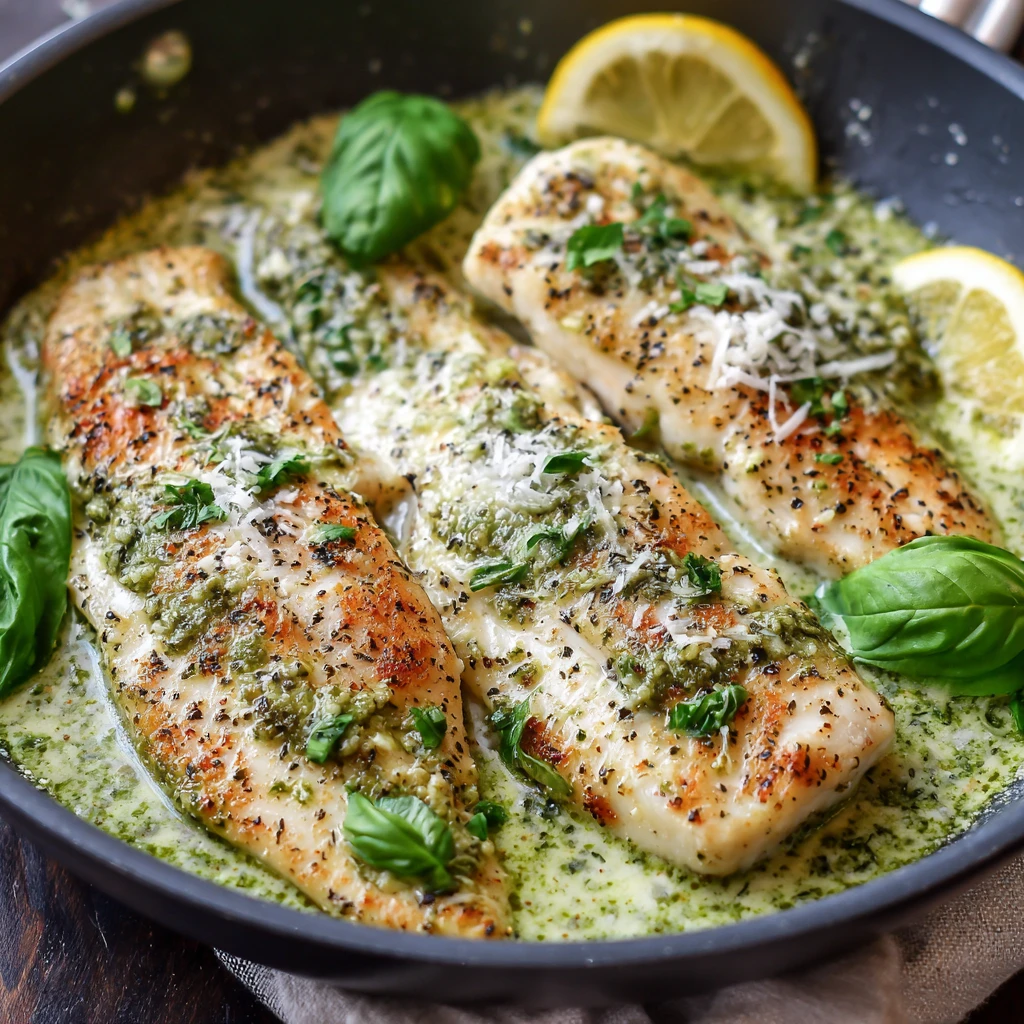
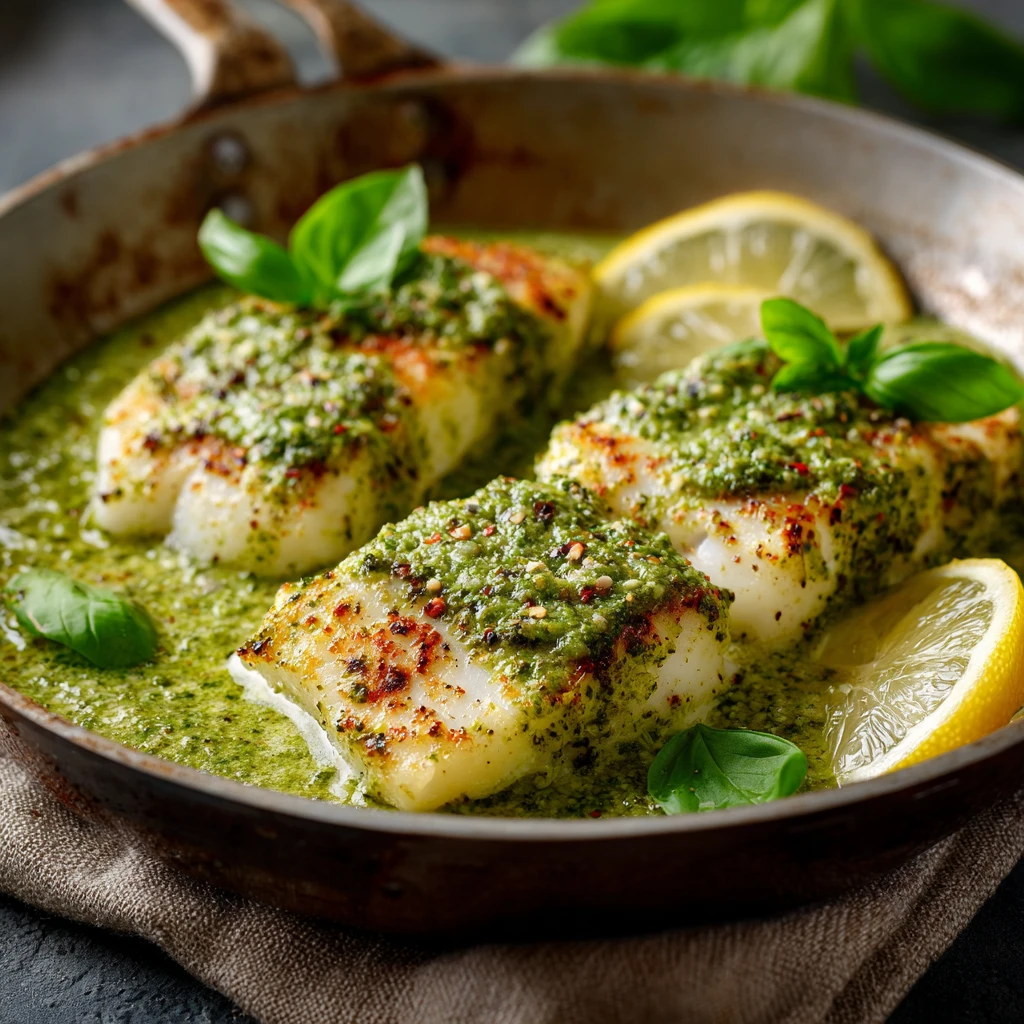
Creamy Pesto Fillet Easy Dinner Ingredients 4 white fish fillets (cod, haddock, or tilapia recommended) 1/2 cup prepared pesto (store-bought or homemade) 1/4 cup heavy cream 2 tablespoons olive oil 1 clove garlic, minced 1/4 cup grated Parmesan cheese Salt and pepper to taste Optional: Lemon wedges for serving Optional: Fresh basil leaves for garnish…
Creamy Pesto Fillet Easy Dinner
Ingredients
- 4 white fish fillets (cod, haddock, or tilapia recommended)
- 1/2 cup prepared pesto (store-bought or homemade)
- 1/4 cup heavy cream
- 2 tablespoons olive oil
- 1 clove garlic, minced
- 1/4 cup grated Parmesan cheese
- Salt and pepper to taste
- Optional: Lemon wedges for serving
- Optional: Fresh basil leaves for garnish
Step-by-Step
1. Preheat your oven to 400°F (200°C).
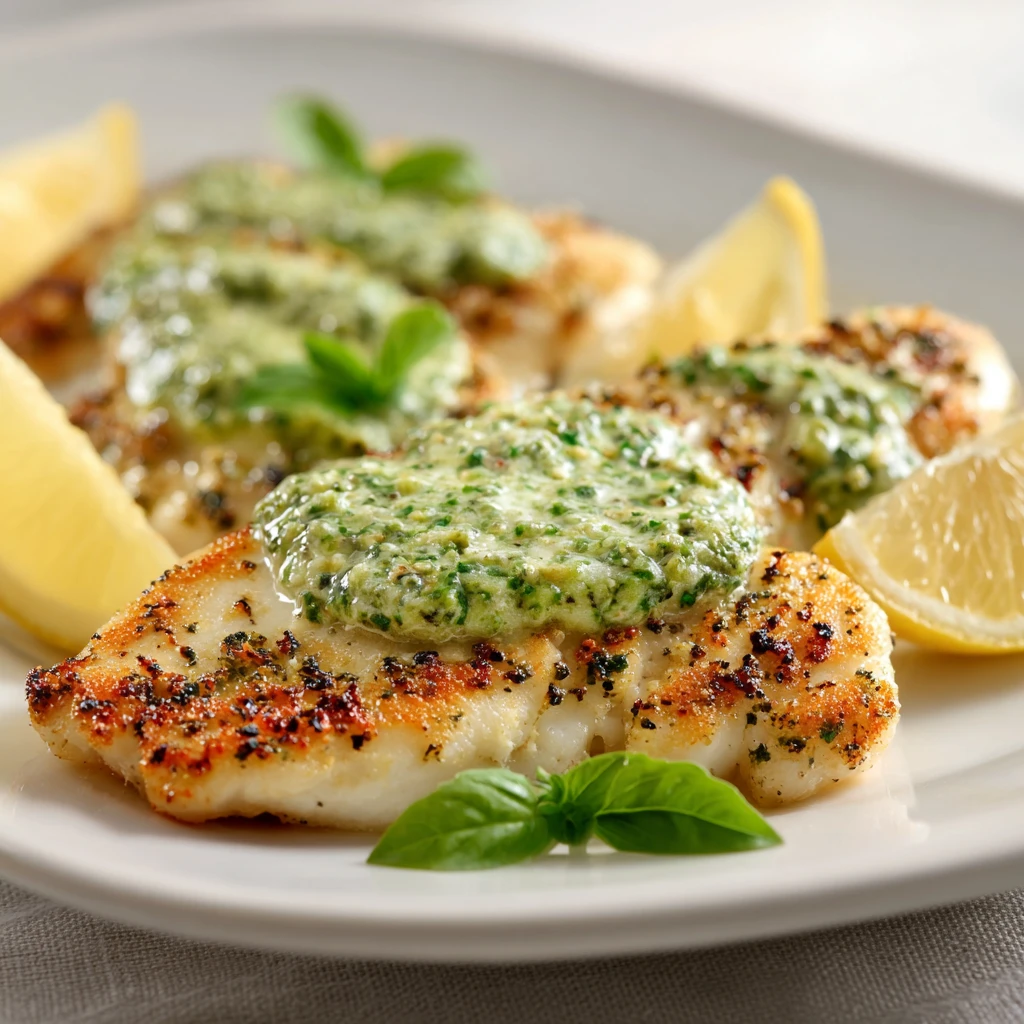
2. Prepare the creamy pesto sauce: In a small bowl, combine the pesto, heavy cream, minced garlic, and Parmesan cheese. Mix well until smooth and creamy.
3. Lightly grease a baking dish with olive oil.
4. Place the fish fillets in the prepared baking dish.
5. Season the fish fillets with salt and pepper.
6. Spoon the creamy pesto sauce evenly over each fillet.
7. Drizzle the remaining olive oil over the fish.
8. Bake for 12-15 minutes, or until the fish is cooked through and flakes easily with a fork. Cooking time will vary depending on the thickness of the fillets.
9. Optional: Broil for the last 1-2 minutes to lightly brown the top. Watch carefully to prevent burning.
10. Garnish with fresh basil leaves and serve immediately with lemon wedges, if desired.
Choosing the Right Fish and Pesto
H3: Selecting the Best Fish Fillet
The success of this creamy pesto fillet dinner starts with choosing the right fish. Opt for white fish varieties like cod, haddock, or tilapia.
These fish have a mild flavor that complements the robust taste of the pesto. Their flaky texture also allows them to absorb the creamy sauce beautifully.
When selecting your fish, look for fillets that are firm, moist, and free of any fishy odor. Fresh is always best, but frozen fillets can also work well if properly thawed.
Ensure the fish is completely thawed before cooking for even cooking and optimal texture. Pat dry with paper towels to remove excess moisture.
H3: Homemade vs. Store-Bought Pesto: A Flavor Showdown
Pesto is the heart and soul of this dish. You have two main options: homemade or store-bought. Both can work wonderfully, but they offer different advantages.
Homemade pesto allows you to control the ingredients and tailor the flavor to your liking. Fresh basil, pine nuts, garlic, Parmesan cheese, and olive oil create a vibrant, aromatic sauce.
Store-bought pesto is a convenient option for busy weeknights. Look for high-quality brands with a good balance of flavors. Check the ingredient list for added preservatives or fillers you might want to avoid.
Experiment with different pesto varieties, such as sun-dried tomato pesto or kale pesto, to add a unique twist to your dish.
Perfecting the Creamy Pesto Sauce
H3: Achieving the Ideal Creamy Consistency
The creamy pesto sauce is what elevates this dish from simple to sublime. The combination of pesto, heavy cream, garlic, and Parmesan cheese creates a rich and flavorful coating for the fish.
The key to a perfect creamy consistency is to use heavy cream. This will create a luxurious texture that clings beautifully to the fish.
If you prefer a lighter sauce, you can substitute half-and-half or milk, but the sauce will be less thick. Adjust the amount of cream to your liking, depending on how creamy you want the sauce.
H3: Enhancing the Flavor Profile
Don’t be afraid to experiment with different flavors in your creamy pesto sauce. A squeeze of lemon juice can add a bright, zesty note.
A pinch of red pepper flakes can add a subtle kick of heat. A sprinkle of garlic powder can enhance the garlicky flavor.
Taste the sauce before adding it to the fish and adjust the seasonings as needed. Remember that the sauce will intensify in flavor as it bakes in the oven.
Baking Techniques for Flaky Fish
H3: Oven Temperature and Cooking Time Mastery
Baking the fish at the right temperature for the right amount of time is crucial for achieving a flaky and moist result. An oven temperature of 400°F (200°C) is ideal for cooking the fish evenly without drying it out.
The cooking time will vary depending on the thickness of the fillets. Generally, thinner fillets will cook in 12-15 minutes, while thicker fillets may require 15-20 minutes.
Keep a close eye on the fish while it’s baking and check for doneness by gently flaking it with a fork. The fish should be opaque and flake easily when it’s done.
H3: Preventing Dry Fish: Tips and Tricks
Nobody wants dry, overcooked fish. To prevent this, consider a few key tips.
First, avoid overbaking the fish. Overcooked fish becomes tough and dry.
Second, consider covering the baking dish with foil for the first half of the cooking time to help retain moisture. Remove the foil for the last few minutes to allow the fish to brown slightly.
Third, drizzling a bit of olive oil over the fish before baking will help keep it moist and flavorful.
Serving Suggestions and Side Dish Pairings
H3: Complementary Side Dishes
This creamy pesto fillet is a versatile dish that pairs well with a variety of side dishes. Consider serving it with roasted vegetables, such as asparagus, broccoli, or zucchini.
A simple green salad with a light vinaigrette is another great option. Quinoa or rice pilaf can also make a satisfying accompaniment.
For a heartier meal, try serving the fish with mashed potatoes or creamy polenta. The richness of the potatoes or polenta complements the creamy pesto sauce beautifully.
H3: Presentation is Key
Presentation can elevate any meal, even a simple weeknight dinner. Garnish the finished dish with fresh basil leaves and a lemon wedge.
Arrange the fish fillets artfully on the plate and serve with your chosen side dishes. A drizzle of olive oil and a sprinkle of Parmesan cheese can add a final touch of elegance.
Consider serving the dish on warmed plates to keep the food hot and inviting.
Health Benefits and Dietary Considerations
H3: Nutritional Value of Fish
Fish is a nutritional powerhouse, packed with protein, omega-3 fatty acids, and essential vitamins and minerals. Incorporating fish into your diet can have numerous health benefits, including improved heart health, brain function, and immune system function.
White fish varieties like cod, haddock, and tilapia are particularly lean and low in calories, making them a great choice for those watching their weight.
Omega-3 fatty acids, found in fish, are essential for maintaining healthy cholesterol levels and reducing the risk of heart disease.
H3: Modifying for Dietary Needs
This creamy pesto fillet recipe can easily be modified to accommodate various dietary needs. For a gluten-free version, simply ensure that your pesto is gluten-free.
For a dairy-free version, you can substitute the heavy cream with a dairy-free alternative, such as coconut cream or almond milk. The sauce may be slightly less thick, but it will still be delicious.
If you’re watching your sodium intake, choose a low-sodium pesto or make your own with less salt. You can also use a low-sodium Parmesan cheese.
FAQ Section
Can I use frozen fish fillets?
Yes, frozen fish fillets work perfectly well. Just make sure to thaw them completely before cooking and pat them dry with paper towels to remove excess moisture.
Can I make this ahead of time?
You can prepare the creamy pesto sauce ahead of time and store it in the refrigerator for up to 2 days. However, it’s best to bake the fish just before serving for the best flavor and texture.
What other vegetables can I use?
Feel free to experiment with other vegetables, such as cherry tomatoes, bell peppers, or onions. Roast them alongside the fish for a complete and flavorful meal.
Can I grill the fish instead of baking it?
Yes, you can grill the fish instead of baking it. Preheat your grill to medium heat and grill the fish fillets for 4-5 minutes per side, or until cooked through.
How do I know when the fish is done?
The fish is done when it’s opaque and flakes easily with a fork. The internal temperature should reach 145°F (63°C).