Greek Salad Meal Prep Ideas: Your Guide to Delicious & Healthy Lunches Greek salad, also known as Horiatiki salad, is a vibrant and refreshing dish packed with fresh vegetables, salty olives, creamy feta cheese, and a zesty vinaigrette. It’s a fantastic choice for meal prepping due to its simplicity, nutritional value, and satisfying flavors. This…
Greek Salad Meal Prep Ideas: Your Guide to Delicious & Healthy Lunches
Greek salad, also known as Horiatiki salad, is a vibrant and refreshing dish packed with fresh vegetables, salty olives, creamy feta cheese, and a zesty vinaigrette. It’s a fantastic choice for meal prepping due to its simplicity, nutritional value, and satisfying flavors. This article will guide you through creating the perfect Greek salad meal prep, ensuring you have healthy and delicious lunches ready to go throughout the week.
Why Greek Salad is Perfect for Meal Prep
Greek salad is more than just a tasty lunch option; it’s a nutritional powerhouse. Here’s why it’s ideal for meal prepping:
- Nutrient-rich: Packed with vitamins and minerals from fresh vegetables like tomatoes, cucumbers, and bell peppers, Greek salad provides essential nutrients for overall health.
- Healthy fats: The olive oil and feta cheese contribute healthy fats that promote satiety and support heart health.
- High in fiber: The vegetables provide a good source of fiber, aiding digestion and helping you feel full and satisfied.
- Customizable: You can easily adapt the ingredients to suit your taste preferences and dietary needs. Add protein like grilled chicken or chickpeas for a more substantial meal.
- Easy to prepare: Greek salad requires minimal cooking, making it a quick and convenient meal prep option.
- Naturally gluten-free and vegetarian: This salad naturally fits gluten-free and vegetarian diets.
However, successful Greek salad meal prep requires a few key considerations to prevent sogginess and maintain freshness. We’ll cover these in the next section.
Mastering the Art of Greek Salad Meal Prep: Tips & Tricks
The key to successful Greek salad meal prep lies in preventing the vegetables from becoming soggy and preserving the overall freshness. Follow these tips for optimal results:
Separating Wet and Dry Ingredients
This is the most important rule! The dressing is the biggest culprit when it comes to soggy salads. Keep the vinaigrette separate from the vegetables until you’re ready to eat. Here’s how:
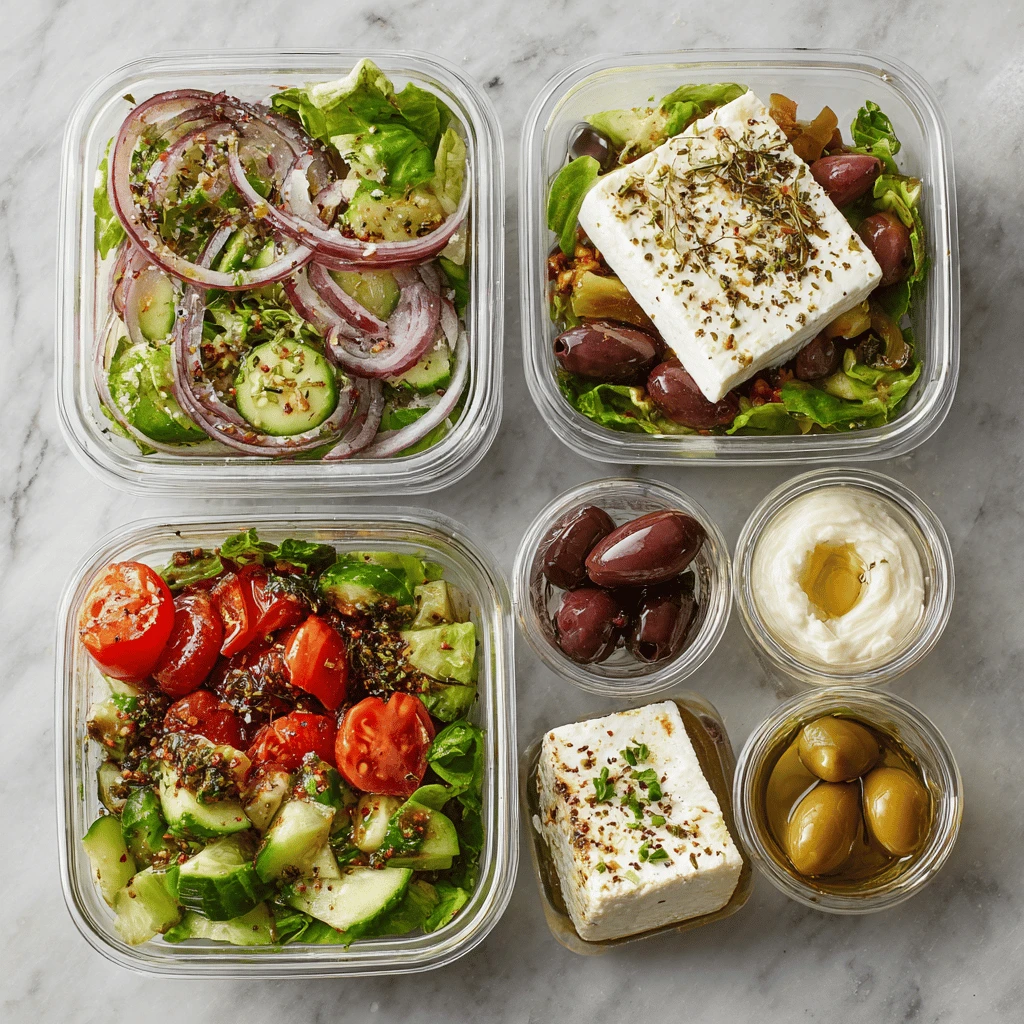
- Two-container method: Use a large container for the salad base (vegetables, olives, feta) and a smaller container or a dressing container for the vinaigrette.
- Layering method: If using a single container, place the heavier, less absorbent ingredients at the bottom (e.g., cucumbers, bell peppers), followed by the more delicate ones (e.g., tomatoes, onions). Place feta and olives on top. Pour dressing in a small zip-top bag and place on top. This will keep the dressing separate and help prevent sogginess.
Choosing the Right Vegetables
Some vegetables hold up better than others when prepped in advance.
- Best choices: Cucumbers, bell peppers, red onion, and olives are excellent choices as they maintain their texture well. Choose firm, ripe tomatoes. Cherry or grape tomatoes generally hold up better than larger varieties.
- Considerations: Leafy greens like lettuce are not traditionally part of Greek salad, but if you want to add them, do so just before eating.
Preparing the Feta Cheese
Feta cheese can also contribute to sogginess if it’s too wet.
- Choose a drier feta: Opt for a block of feta in brine rather than pre-crumbled feta, as it tends to be less moist.
- Pat it dry: Before adding the feta to your salad, gently pat it dry with a paper towel to remove excess moisture.
Perfecting the Vinaigrette
A well-made vinaigrette is essential for a delicious Greek salad.
- Classic ingredients: Extra virgin olive oil, red wine vinegar, lemon juice, dried oregano, salt, and pepper are the foundation of a traditional Greek salad vinaigrette.
- Emulsify: Whisk the ingredients together vigorously or shake them in a jar to create an emulsion. This will prevent the oil and vinegar from separating.
- Adjust to taste: Taste and adjust the seasoning as needed. You may want to add a touch of Dijon mustard for extra emulsification and flavor.
Storage Tips
Proper storage is crucial for maintaining the freshness of your meal-prepped Greek salad.
- Airtight containers: Use airtight containers to prevent the salad from drying out or absorbing odors from the refrigerator.
- Refrigeration: Store the salad in the refrigerator for up to 4-5 days.
- Avoid freezing: Greek salad is not suitable for freezing, as the vegetables will become mushy upon thawing.
Delicious Greek Salad Meal Prep Recipes
Now that you know the secrets to successful Greek salad meal prep, here are a few delicious recipe variations to try:
Classic Greek Salad Meal Prep
This is the foundation.
-
- Ingredients:
Cucumbers, peeled, seeded, and chopped
Tomatoes, chopped
Red onion, thinly sliced
Bell peppers (green, red, or yellow), chopped
Kalamata olives, pitted
Feta cheese, cubed or crumbled
Olive oil
Red wine vinegar
Dried oregano
Salt and pepper
-
- Instructions:
1. Prepare the vegetables according to the ingredients list.
2. Divide the vegetables, olives, and feta cheese among your meal prep containers.
3. In a separate container or small zip-top bag, whisk together the olive oil, red wine vinegar, oregano, salt, and pepper.
4. Store the containers in the refrigerator.
5. When ready to eat, drizzle the vinaigrette over the salad and enjoy.
Greek Salad with Grilled Chicken Meal Prep
Adding grilled chicken transforms this into a protein-packed meal.
-
- Ingredients:
Classic Greek salad ingredients (as listed above)
Grilled chicken breast, sliced or cubed
-
- Instructions:
1. Prepare the classic Greek salad ingredients.
2. Grill or bake chicken breast until cooked through. Let it cool slightly and slice or cube.
3. Divide the salad base and grilled chicken among your meal prep containers.
4. Store the vinaigrette separately and add it when ready to eat.
Greek Salad with Chickpeas Meal Prep (Vegan Option)
A plant-based protein boost makes this suitable for vegan diets.
-
- Ingredients:
Classic Greek salad ingredients (as listed above, omit feta or use vegan feta)
Cooked chickpeas, drained and rinsed
-
- Instructions:
1. Prepare the classic Greek salad ingredients.
2. Divide the salad base and chickpeas among your meal prep containers. If using a vegan feta, add it now.
3. Store the vinaigrette separately and add it when ready to eat.
Greek Quinoa Salad Meal Prep
Adding quinoa increases the fiber and protein content.
-
- Ingredients:
Classic Greek salad ingredients (as listed above)
Cooked quinoa
-
- Instructions:
1. Prepare the classic Greek salad ingredients.
2. Cook quinoa according to package directions. Let cool.
3. Divide the salad base and quinoa among your meal prep containers.
4. Store the vinaigrette separately and add it when ready to eat.
Greek Pasta Salad Meal Prep
A heartier option with added pasta.
-
- Ingredients:
Classic Greek salad ingredients (as listed above)
Cooked pasta (rotini, penne, or orzo work well)
-
- Instructions:
1. Prepare the classic Greek salad ingredients.
2. Cook pasta according to package directions. Let cool.
3. Divide the salad base and pasta among your meal prep containers.
4. Store the vinaigrette separately and add it when ready to eat.
Variations and Add-ins for Greek Salad Meal Prep
The beauty of Greek salad is its versatility. Feel free to experiment with different ingredients and flavor combinations to create your perfect meal prep salad. Here are some ideas:
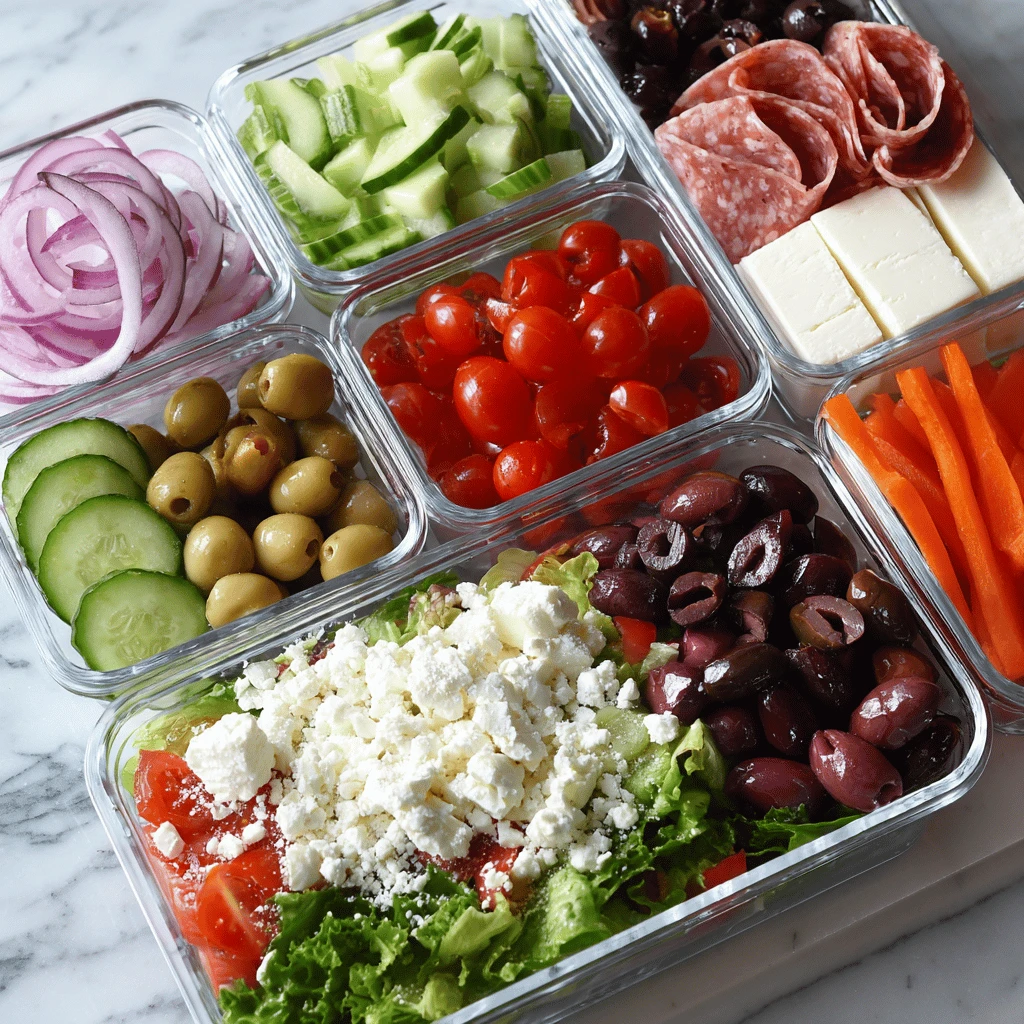
- Different cheeses: Try using halloumi cheese (grilled or pan-fried), goat cheese, or a crumbled cheese blend.
- Fresh herbs: Add fresh mint, dill, or parsley for extra flavor.
- Different vegetables: Add avocado (added right before eating), sun-dried tomatoes, or roasted red peppers.
- Spicy kick: Add a pinch of red pepper flakes to the vinaigrette.
- Lemon zest: Add lemon zest to the vinaigrette for a brighter flavor.
- Protein additions: Besides chicken and chickpeas, consider adding hard-boiled eggs, grilled shrimp, or white beans.
Frequently Asked Questions (FAQs) about Greek Salad Meal Prep
- Can I make Greek salad the night before? Yes, you can assemble the salad base (vegetables, olives, feta) the night before. Just be sure to store the vinaigrette separately and add it right before eating.
- How long does Greek salad last in the fridge? Properly stored Greek salad can last for up to 4-5 days in the refrigerator.
- Will the tomatoes get soggy? Using firmer tomatoes and storing the vinaigrette separately will help prevent sogginess. Cherry or grape tomatoes tend to hold up better than larger varieties.
- What kind of feta cheese is best for Greek salad? Block feta in brine is generally preferred over pre-crumbled feta, as it tends to be less moist and has a richer flavor.
- Can I add lettuce to my Greek salad? While not traditional, you can add lettuce. Add it just before eating to prevent it from wilting.
- Can I freeze Greek salad? Freezing is not recommended, as the vegetables will become mushy upon thawing.
- How do I prevent my Greek salad dressing from separating? Ensure your vinaigrette is well-emulsified by whisking vigorously or shaking in a jar. Adding a touch of Dijon mustard can also help keep it emulsified.