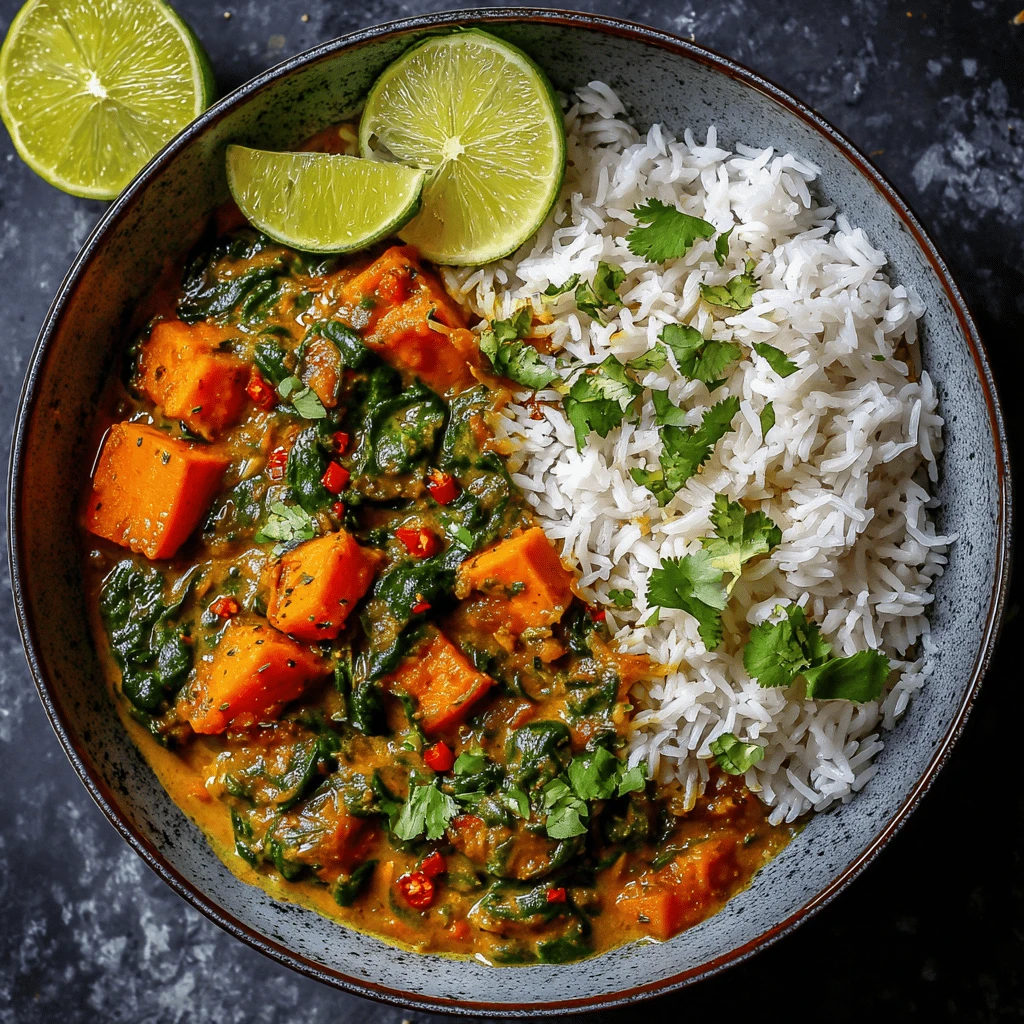
Spinach and Sweet Potato Curry: A Flavorful and Nutritious Delight Curry is a culinary staple enjoyed worldwide, offering a comforting blend of spices and vibrant flavors. This Spinach and Sweet Potato Curry recipe combines the earthy sweetness of sweet potatoes with the leafy goodness of spinach in a creamy, spiced coconut milk base. This dish…
Spinach and Sweet Potato Curry: A Flavorful and Nutritious Delight
Curry is a culinary staple enjoyed worldwide, offering a comforting blend of spices and vibrant flavors. This Spinach and Sweet Potato Curry recipe combines the earthy sweetness of sweet potatoes with the leafy goodness of spinach in a creamy, spiced coconut milk base. This dish is not only delicious but also packed with nutrients, making it a healthy and satisfying meal option for vegetarians and meat-eaters alike.
The Appeal of Spinach and Sweet Potato Curry
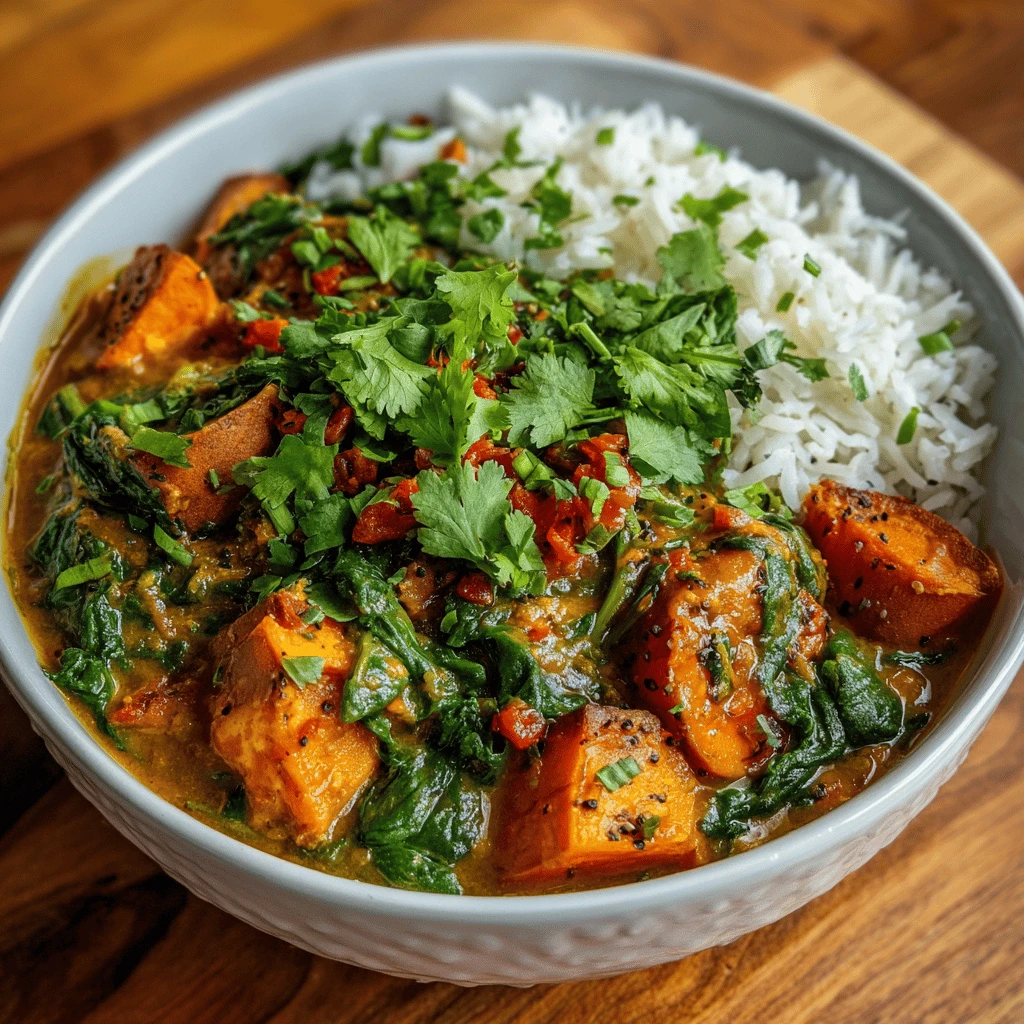
This curry stands out for several reasons. First, it’s incredibly versatile. You can easily adjust the spice level to suit your preferences and add or substitute other vegetables based on what you have on hand. Second, it’s relatively quick and easy to prepare, making it perfect for weeknight dinners. Finally, it’s naturally gluten-free and can be made vegan by ensuring your vegetable broth is plant-based. The combination of textures, from the tender sweet potatoes to the slightly wilted spinach, creates a delightful culinary experience. The creamy coconut milk ties everything together, resulting in a harmonious and flavorful dish.
Nutritional Benefits
Beyond its delicious taste, this curry is a nutritional powerhouse. Spinach is a fantastic source of vitamins A, C, and K, as well as iron and antioxidants. Sweet potatoes are rich in beta-carotene, fiber, and potassium. Coconut milk provides healthy fats, and the spices used in curry offer their own unique health benefits. Turmeric, for example, is known for its anti-inflammatory properties. This curry is a great way to incorporate more vegetables and essential nutrients into your diet.
Variations and Adaptations
One of the best things about curry is its adaptability. Feel free to experiment with different vegetables, such as cauliflower, chickpeas, or bell peppers. You can also add protein sources like tofu or lentils for a more substantial meal. For a spicier curry, increase the amount of chili powder or add a fresh chili pepper. If you prefer a sweeter curry, you can add a touch of honey or maple syrup. The possibilities are endless, so don’t be afraid to get creative and make it your own!
Preparing Your Spinach and Sweet Potato Curry
Let’s break down the process of making this delightful curry. This section will guide you through each step, from gathering ingredients to serving the final dish.
Gathering Your Ingredients
A well-prepared curry starts with fresh, high-quality ingredients. Here’s a list of what you’ll need:
- Sweet Potatoes: Choose firm sweet potatoes with smooth skin. You’ll need about 1-2 medium-sized sweet potatoes, peeled and cubed.
- Spinach: Fresh spinach is ideal, but frozen spinach can also be used in a pinch. If using frozen, thaw and squeeze out any excess water.
- Onion: A yellow or white onion will provide a flavorful base for the curry.
- Garlic and Ginger: Freshly minced garlic and ginger are essential for adding depth and complexity to the flavor.
- Coconut Milk: Full-fat coconut milk will create a richer and creamier curry, but you can use light coconut milk for a lower-fat option.
- Vegetable Broth: Use a good-quality vegetable broth to add moisture and flavor to the curry.
- Curry Powder: A blend of curry powder will provide the characteristic curry flavor. You can also use individual spices like turmeric, cumin, coriander, and chili powder to create your own custom blend.
- Other Spices: Depending on your preference, you can add spices like garam masala, paprika, or cayenne pepper for extra flavor and heat.
- Oil: Coconut oil or vegetable oil is ideal for sautéing the vegetables.
- Lime Juice: A squeeze of fresh lime juice at the end will brighten the flavors.
- Salt and Pepper: To taste.
Step-by-Step Cooking Instructions
Now that you have all your ingredients ready, let’s start cooking!
1. Sauté the Aromatics: Heat the oil in a large pot or Dutch oven over medium heat. Add the chopped onion and sauté until softened, about 5 minutes. Add the minced garlic and ginger and cook for another minute until fragrant.
2. Add the Spices: Stir in the curry powder and any other spices you’re using. Cook for about 1 minute, stirring constantly, to toast the spices and release their aroma.
3. Add the Sweet Potatoes: Add the cubed sweet potatoes to the pot and stir to coat them with the spices.
4. Add the Liquids: Pour in the vegetable broth and coconut milk. Bring the mixture to a simmer, then reduce the heat and cover the pot.
5. Simmer Until Tender: Simmer for about 15-20 minutes, or until the sweet potatoes are tender.
6. Add the Spinach: Stir in the spinach and cook until it’s wilted, about 2-3 minutes.
7. Season and Serve: Season the curry with salt and pepper to taste. Stir in the lime juice. Serve hot over rice or with naan bread.
Tips for Perfecting Your Curry
- Don’t Overcook the Sweet Potatoes: You want them to be tender but not mushy.
- Adjust the Spice Level: Start with a small amount of chili powder and add more to taste.
- Use Fresh Spices: Freshly ground spices will have a more intense flavor.
- Toast the Spices: Toasting the spices before adding the other ingredients will enhance their flavor.
- Simmer Gently: Simmering the curry slowly will allow the flavors to meld together.
Serving and Enjoying Your Curry
Spinach and Sweet Potato Curry is a versatile dish that can be enjoyed in many ways.
Serving Suggestions
- Over Rice: Serve it over a bed of fluffy basmati rice or brown rice.
- With Naan Bread: Enjoy it with warm naan bread for dipping and scooping.
- As a Side Dish: Serve it as a side dish with grilled chicken or fish.
- With Lentils or Chickpeas: Add cooked lentils or chickpeas for a heartier meal.
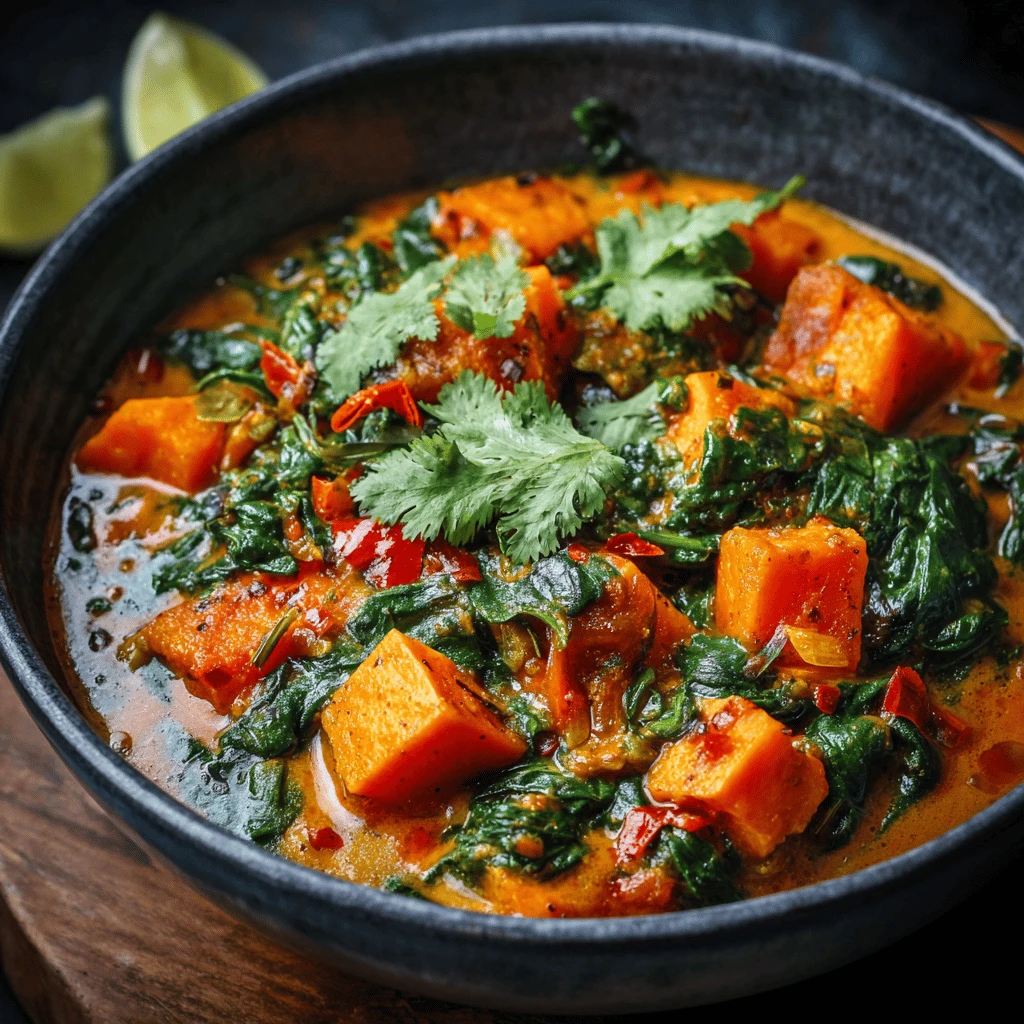
- Garnish: Garnish with fresh cilantro, a dollop of yogurt, or a sprinkle of chopped nuts.
Pairing with Other Dishes
This curry pairs well with other Indian-inspired dishes like vegetable samosas, raita, or mango chutney. It also complements simple side dishes like steamed greens or a fresh salad. A light, crisp white wine like Sauvignon Blanc or Pinot Grigio would be a great wine pairing.
Storage and Reheating
Leftover curry can be stored in an airtight container in the refrigerator for up to 3 days. To reheat, simply warm it up in a pot over medium heat or in the microwave. You may need to add a splash of water or broth if it becomes too thick.
Health Benefits in Detail
Spinach and sweet potato curry is more than just a delicious meal; it’s a nutritional powerhouse packed with vitamins, minerals, and antioxidants.
Vitamins and Minerals
- Spinach: Rich in vitamins A, C, K, and folate, as well as iron, magnesium, and potassium. Vitamin K is crucial for blood clotting and bone health, while vitamin C boosts the immune system. Iron is essential for carrying oxygen in the blood, preventing fatigue.
- Sweet Potatoes: An excellent source of beta-carotene, which the body converts into vitamin A. They also provide vitamin C, vitamin B6, potassium, and fiber. Beta-carotene is a powerful antioxidant that protects against cell damage. Potassium helps regulate blood pressure.
- Coconut Milk: Provides medium-chain triglycerides (MCTs), a type of healthy fat that may promote weight loss and improve heart health.
- Spices: Turmeric contains curcumin, a compound with potent anti-inflammatory and antioxidant effects. Ginger also has anti-inflammatory properties and can aid digestion. Cumin and coriander are good sources of iron and antioxidants.
Antioxidant Properties
The combination of spinach, sweet potatoes, and spices in this curry provides a wealth of antioxidants that help protect the body against free radical damage. Free radicals are unstable molecules that can contribute to aging and chronic diseases like cancer and heart disease. Antioxidants neutralize free radicals, reducing their harmful effects.
Fiber Content
Both spinach and sweet potatoes are good sources of fiber, which is essential for digestive health. Fiber helps regulate bowel movements, prevents constipation, and promotes a feeling of fullness, which can aid in weight management. Fiber also helps lower cholesterol levels and stabilize blood sugar levels.
Anti-Inflammatory Benefits
The spices used in curry, particularly turmeric and ginger, have strong anti-inflammatory properties. Chronic inflammation is linked to a variety of health problems, including arthritis, heart disease, and Alzheimer’s disease. Consuming anti-inflammatory foods like this curry can help reduce inflammation and protect against these diseases.
Frequently Asked Questions (FAQ)
Let’s address some common questions about Spinach and Sweet Potato Curry.
Can I make this curry ahead of time?
Yes, you can definitely make this curry ahead of time. In fact, the flavors often meld together even more when the curry sits overnight. Store it in an airtight container in the refrigerator for up to 3 days.
Can I freeze this curry?
Yes, this curry freezes well. Allow it to cool completely before transferring it to a freezer-safe container. Freeze for up to 2-3 months. Thaw it in the refrigerator overnight before reheating.
Can I use frozen spinach instead of fresh?
Yes, you can use frozen spinach. Thaw it completely and squeeze out any excess water before adding it to the curry.
Can I substitute other vegetables?
Absolutely! Feel free to add or substitute other vegetables based on what you have on hand. Cauliflower, chickpeas, bell peppers, and green beans are all great additions.
How can I make this curry spicier?
To make it spicier, you can add more chili powder, cayenne pepper, or a fresh chili pepper. Start with a small amount and add more to taste.
Is this curry vegan?
Yes, this curry is naturally vegan as long as you use a plant-based vegetable broth.
Is this curry gluten-free?
Yes, this curry is naturally gluten-free.
Can I use light coconut milk instead of full-fat?
Yes, you can use light coconut milk to reduce the fat content. However, full-fat coconut milk will create a richer and creamier curry.
What kind of rice should I serve with this curry?
Basmati rice is a classic choice, but brown rice, jasmine rice, or even quinoa also work well.
How long does it take to make this curry?
It typically takes about 30-40 minutes to make this curry, from start to finish.