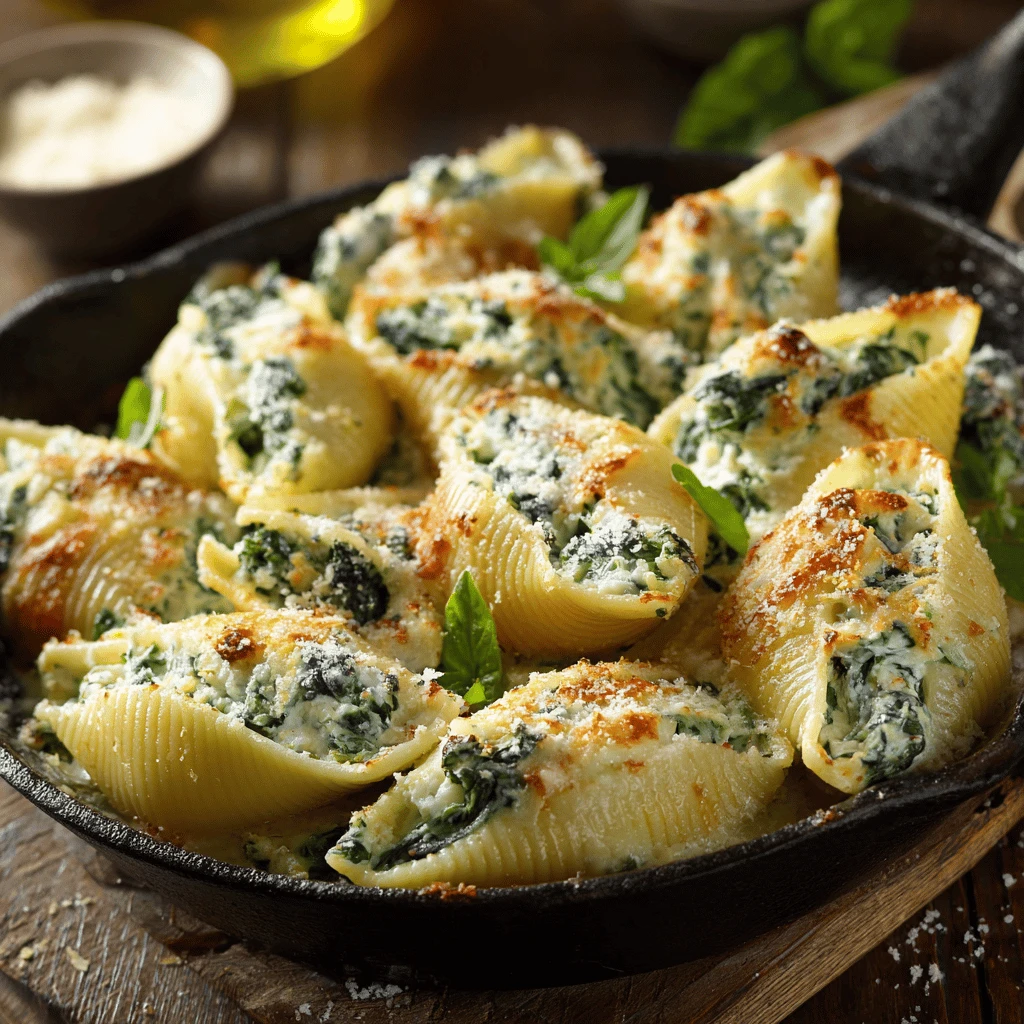
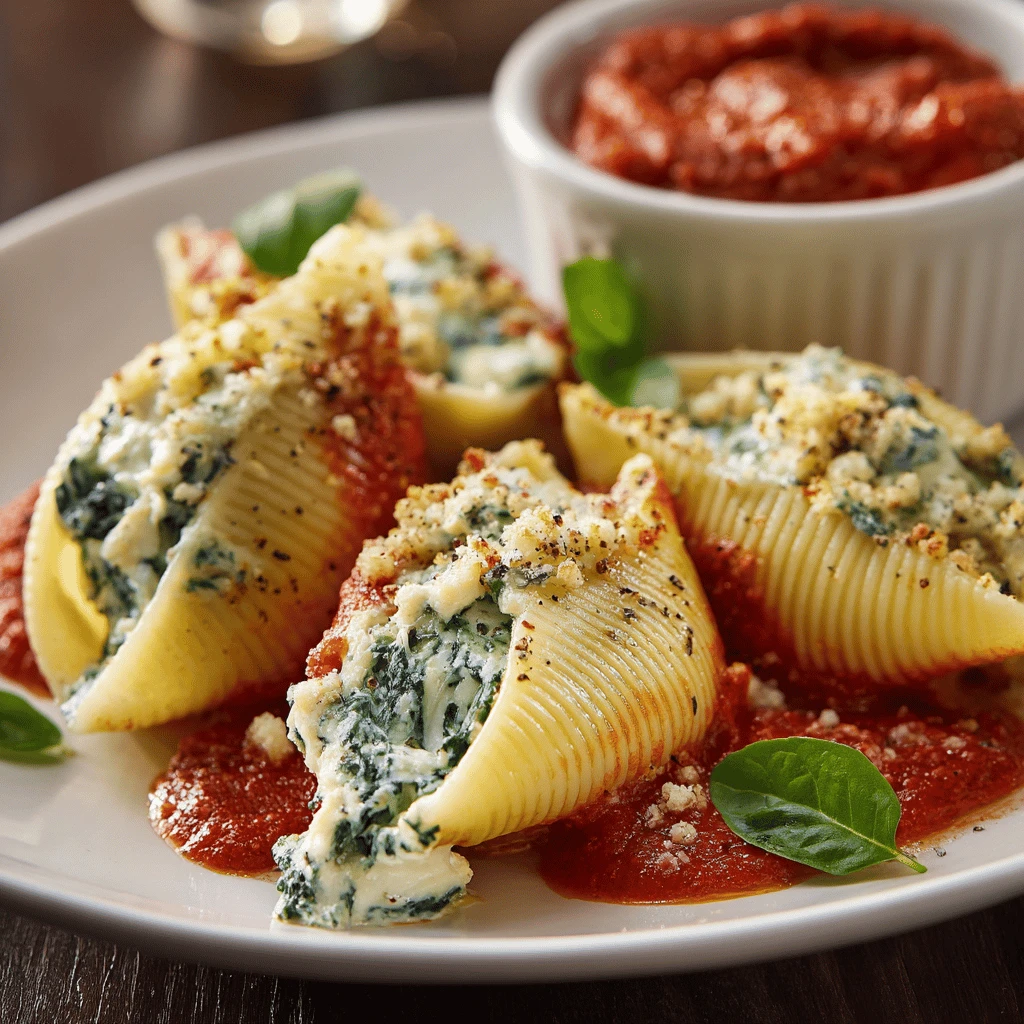
Spinach and Ricotta Stuffed Pasta Shells Ingredients 1 (12-ounce) package jumbo pasta shells 1 tablespoon olive oil 1 small onion, finely chopped 2 cloves garlic, minced 1 (10-ounce) package frozen spinach, thawed and squeezed dry 15 ounces ricotta cheese 1/2 cup grated Parmesan cheese 1 large egg, lightly beaten 1/4 teaspoon nutmeg Salt and black…
Spinach and Ricotta Stuffed Pasta Shells
Ingredients
- 1 (12-ounce) package jumbo pasta shells
- 1 tablespoon olive oil
- 1 small onion, finely chopped
- 2 cloves garlic, minced
- 1 (10-ounce) package frozen spinach, thawed and squeezed dry
- 15 ounces ricotta cheese
- 1/2 cup grated Parmesan cheese
- 1 large egg, lightly beaten
- 1/4 teaspoon nutmeg
- Salt and black pepper to taste
- 24 ounces jarred marinara sauce
- 1/2 cup shredded mozzarella cheese (optional)
- Fresh basil leaves, for garnish (optional)
Step-by-Step
1. Preheat oven to 375°F (190°C).
2. Cook pasta shells according to package directions until al dente. Drain well and set aside to cool slightly.
3. While pasta is cooking, heat olive oil in a skillet over medium heat.
4. Add onion and cook until softened, about 5 minutes.
5. Add garlic and cook for 1 minute more, until fragrant.
6. Stir in squeezed-dry spinach and cook for another 2-3 minutes. Remove from heat.
7. In a large bowl, combine ricotta cheese, Parmesan cheese, egg, and nutmeg.
8. Add the spinach mixture to the ricotta mixture and mix well. Season with salt and pepper to taste.
9. Spread a thin layer of marinara sauce in the bottom of a 9×13 inch baking dish.
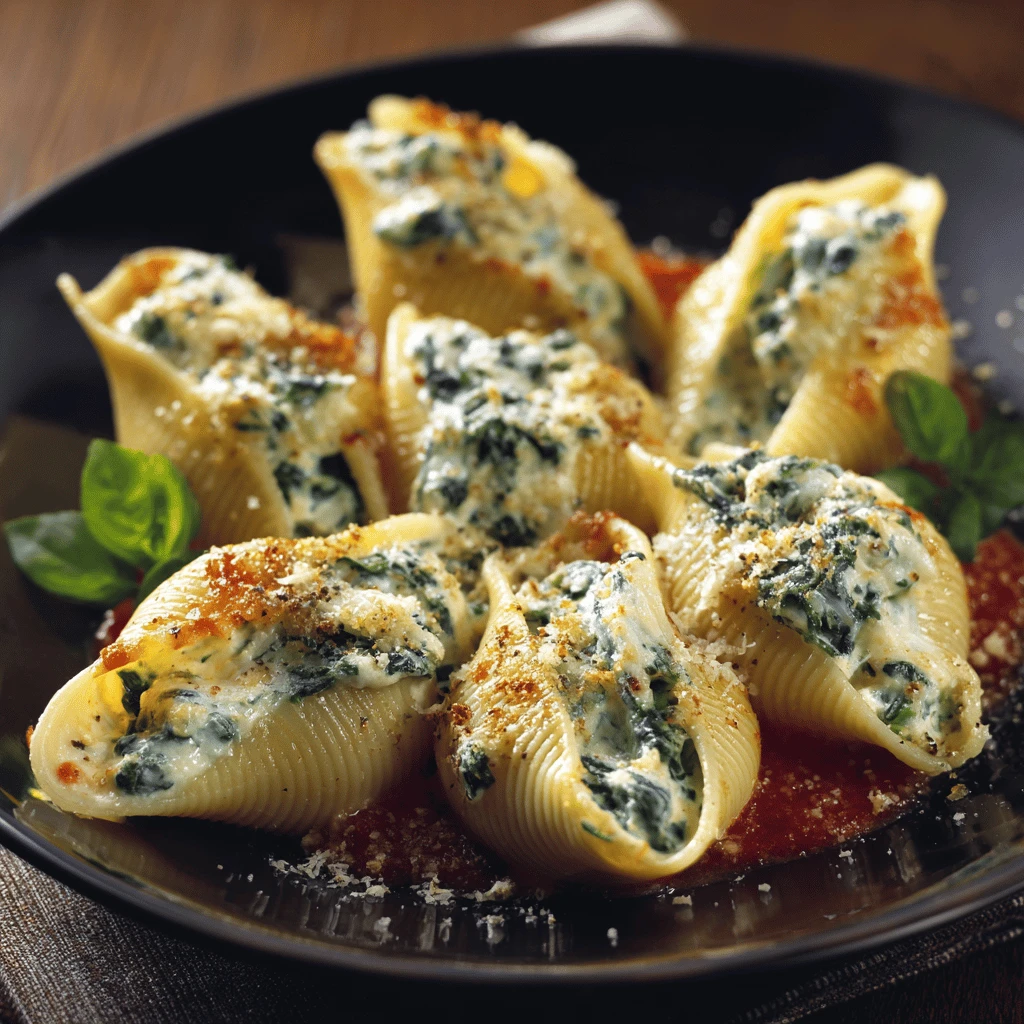
10. Stuff each cooked pasta shell with the spinach-ricotta filling and arrange them in the baking dish, seam-side up.
11. Pour the remaining marinara sauce over the stuffed shells.
12. Sprinkle with mozzarella cheese, if desired.
13. Cover the baking dish with foil and bake for 20 minutes.
14. Remove the foil and bake for an additional 10-15 minutes, or until the cheese is melted and bubbly (if using) and the sauce is heated through.
15. Let stand for a few minutes before serving. Garnish with fresh basil leaves, if desired.
Mastering the Filling: Flavors and Textures
The heart of stuffed shells lies in the filling. A well-balanced filling elevates this dish from simple pasta to a culinary experience.
Achieving the Perfect Ricotta Blend
Ricotta is the star of the show here. Use a good quality whole-milk ricotta for the best flavor and texture. Drain the ricotta well to prevent a watery filling. You want a creamy, not runny, consistency. Consider adding a touch of lemon zest to brighten the flavors. A little zest adds a surprising burst of freshness.
Spinach Preparation is Key
Squeezing out all the excess moisture from the thawed spinach is crucial. Excess water will make the filling soggy. Use your hands or a clean kitchen towel to thoroughly squeeze the spinach dry. Don’t skip this step!
Seasoning Sensibly
Don’t be shy with seasoning. Salt and pepper are essential, but nutmeg adds a warm, comforting note. Taste the filling before stuffing the shells and adjust seasonings as needed. You can also experiment with other herbs like dried oregano or Italian seasoning. A pinch of red pepper flakes can add a touch of heat.
Elevating the Sauce: From Jar to Gourmet
While a good jarred marinara sauce works perfectly well, there are easy ways to enhance it and make it your own.
Sauce Customization Techniques
Sautéing some extra garlic and onions in olive oil before adding the sauce can create a richer flavor base. You can also add a splash of red wine for depth. Simmer the sauce for a longer period to allow the flavors to meld together. Consider adding a pinch of sugar to balance the acidity of the tomatoes. Fresh herbs like basil or oregano, added towards the end of simmering, can make a big difference.
Homemade Marinara: The Ultimate Indulgence
For a truly special meal, consider making your marinara sauce from scratch. Use high-quality canned tomatoes (San Marzano are a great choice). Sauté aromatics like garlic, onions, and carrots in olive oil. Add the tomatoes and simmer for at least an hour, stirring occasionally. Season to taste with salt, pepper, and your favorite herbs.
Incorporating Meat: A Savory Twist
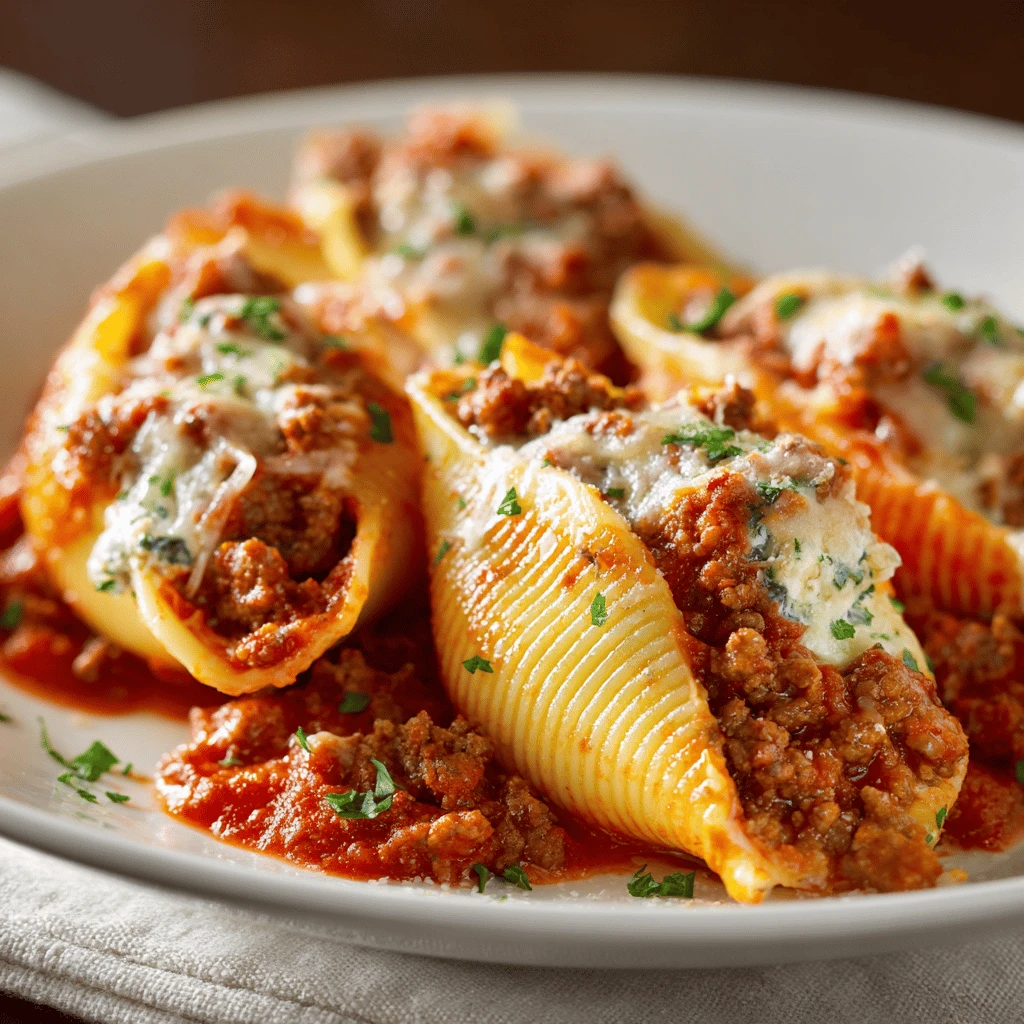
For meat-lovers, adding browned Italian sausage or ground beef to the marinara sauce creates a hearty and satisfying dish. Cook the meat separately and drain off any excess grease before adding it to the sauce.
Perfecting the Pasta: Cooking and Stuffing
The pasta shells are the vessel for the delicious filling, and getting them right is essential for a successful dish.
Achieving Al Dente Perfection
Cook the pasta shells until they are al dente, meaning “to the tooth.” They should be slightly firm and not mushy. Overcooked shells will fall apart during stuffing. Follow the package directions, but start testing for doneness a minute or two before the recommended time.
Cooling and Handling with Care
After cooking, drain the pasta shells well and rinse them with cold water to stop the cooking process. This also prevents them from sticking together. Allow them to cool slightly before stuffing, so they are easier to handle.
Efficient Stuffing Techniques
Use a small spoon or a piping bag to stuff the pasta shells with the filling. Be generous with the filling, but don’t overstuff them, or they may burst during baking. Gently press the filling into the shells to ensure they are evenly filled.
Baking and Presentation: The Final Touches
The baking process brings everything together, melting the cheese and heating the sauce to create a harmonious dish.
Choosing the Right Baking Dish
Use a 9×13 inch baking dish for this recipe. This size allows the shells to be arranged in a single layer. A ceramic or glass dish works well.
Baking Time and Temperature
Bake the stuffed shells at 375°F (190°C) for 20 minutes covered with foil, then remove the foil and bake for another 10-15 minutes, or until the cheese is melted and bubbly (if using) and the sauce is heated through. Covering the dish with foil prevents the shells from drying out.
Presentation Matters
Garnish the finished dish with fresh basil leaves for a pop of color and flavor. A sprinkle of extra Parmesan cheese adds a salty, savory note. Serve the stuffed shells hot, and enjoy!
Variations and Dietary Considerations
This recipe can be easily adapted to suit different dietary needs and preferences.
Vegetarian and Vegan Options
This recipe is naturally vegetarian. To make it vegan, substitute the ricotta cheese with a plant-based ricotta alternative. Use a flax egg or other egg substitute to bind the filling. Ensure the marinara sauce is also vegan-friendly.
Gluten-Free Adaptation
Use gluten-free jumbo pasta shells to make this dish gluten-free. There are many high-quality gluten-free pasta options available.
Low-Carb Modifications
While pasta is naturally high in carbs, you can reduce the carb content by using zucchini or eggplant slices instead of pasta shells. Hollow out the zucchini or eggplant slices and stuff them with the spinach-ricotta filling.
FAQ
Can I make these ahead of time?
Yes, you can assemble the stuffed shells ahead of time and store them in the refrigerator for up to 24 hours before baking. Add a few extra minutes to the baking time if baking from cold.
Can I freeze stuffed pasta shells?
Absolutely. Assemble the shells, then freeze them on a baking sheet until solid. Transfer to a freezer-safe container or bag. Bake from frozen, adding about 20-30 minutes to the baking time.
What can I substitute for ricotta cheese?
If you don’t have ricotta cheese, you can use cottage cheese or cream cheese as a substitute. Make sure to drain the cottage cheese well before using it.
How do I prevent the shells from sticking together after cooking?
Rinsing the cooked shells with cold water helps to remove excess starch and prevent them from sticking together. Also, tossing them lightly with olive oil can help.
Why are my stuffed shells watery?
The most common reason for watery stuffed shells is excess moisture in the spinach or ricotta cheese. Make sure to thoroughly squeeze the spinach dry and drain the ricotta cheese well before using it.