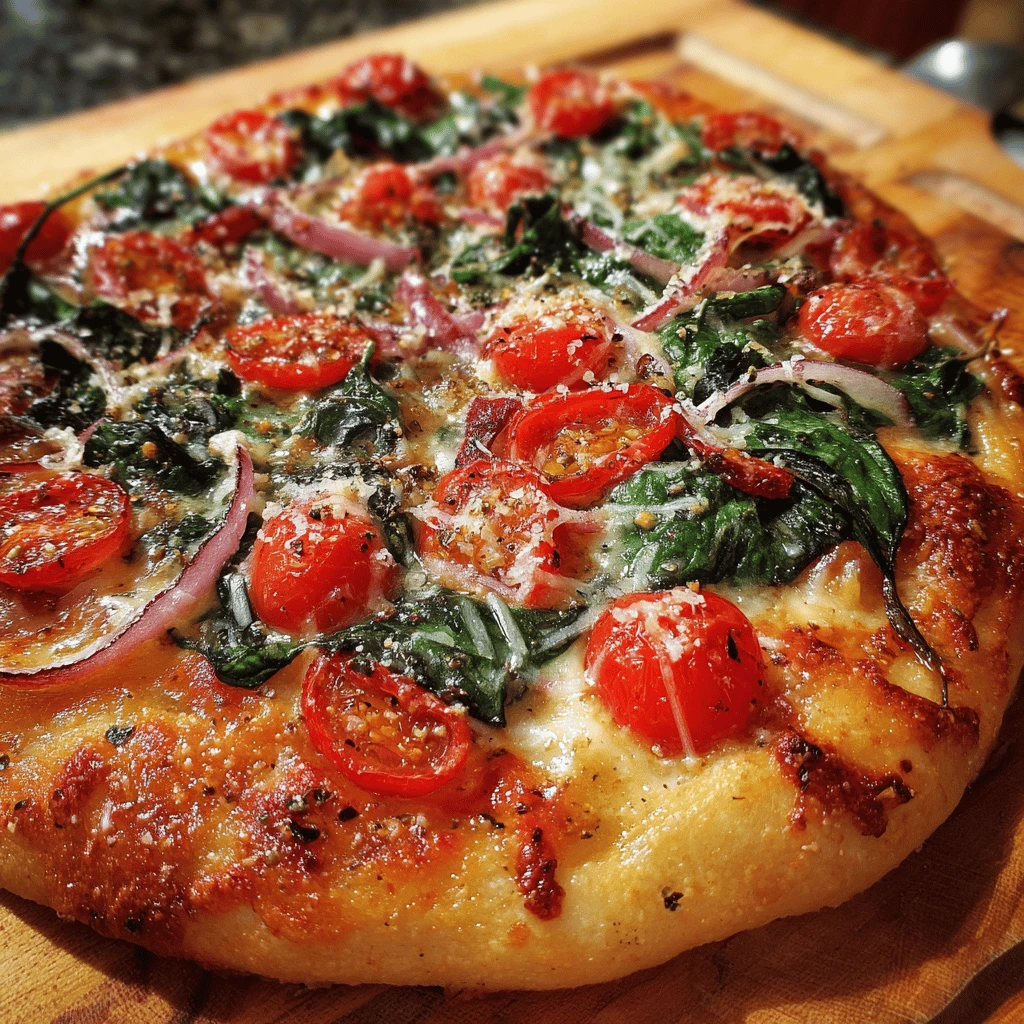
Spinach and Tomato Pizza Ingredients 1 pound pizza dough (store-bought or homemade) 1 cup pizza sauce (your favorite brand or homemade) 2 cups fresh spinach, washed and chopped 1 cup cherry tomatoes, halved 1/2 cup red onion, thinly sliced 1 clove garlic, minced 1 teaspoon olive oil 1/2 teaspoon dried oregano 1/4 teaspoon red pepper…
Spinach and Tomato Pizza
Ingredients
- 1 pound pizza dough (store-bought or homemade)
- 1 cup pizza sauce (your favorite brand or homemade)
- 2 cups fresh spinach, washed and chopped
- 1 cup cherry tomatoes, halved
- 1/2 cup red onion, thinly sliced
- 1 clove garlic, minced
- 1 teaspoon olive oil
- 1/2 teaspoon dried oregano
- 1/4 teaspoon red pepper flakes (optional)
- 2 cups shredded mozzarella cheese
- 1/4 cup grated Parmesan cheese
- Salt and pepper to taste
Step-by-Step
1. Preheat your oven to 450°F (232°C). If you have a pizza stone, place it in the oven while it preheats.

2. Lightly flour a clean surface. Roll out or stretch the pizza dough to your desired shape and thickness.
3. Carefully transfer the dough to a pizza peel or baking sheet.
4. In a small bowl, combine the chopped spinach, minced garlic, olive oil, oregano, red pepper flakes (if using), salt, and pepper. Toss to coat.
5. Spread the pizza sauce evenly over the dough, leaving a small border for the crust.
6. Sprinkle half of the mozzarella cheese over the sauce.
7. Distribute the spinach mixture evenly over the cheese.
8. Add the halved cherry tomatoes and sliced red onion.
9. Top with the remaining mozzarella cheese and the grated Parmesan cheese.
10. If using a pizza stone, carefully slide the pizza onto the hot stone. If using a baking sheet, place the baking sheet in the preheated oven.
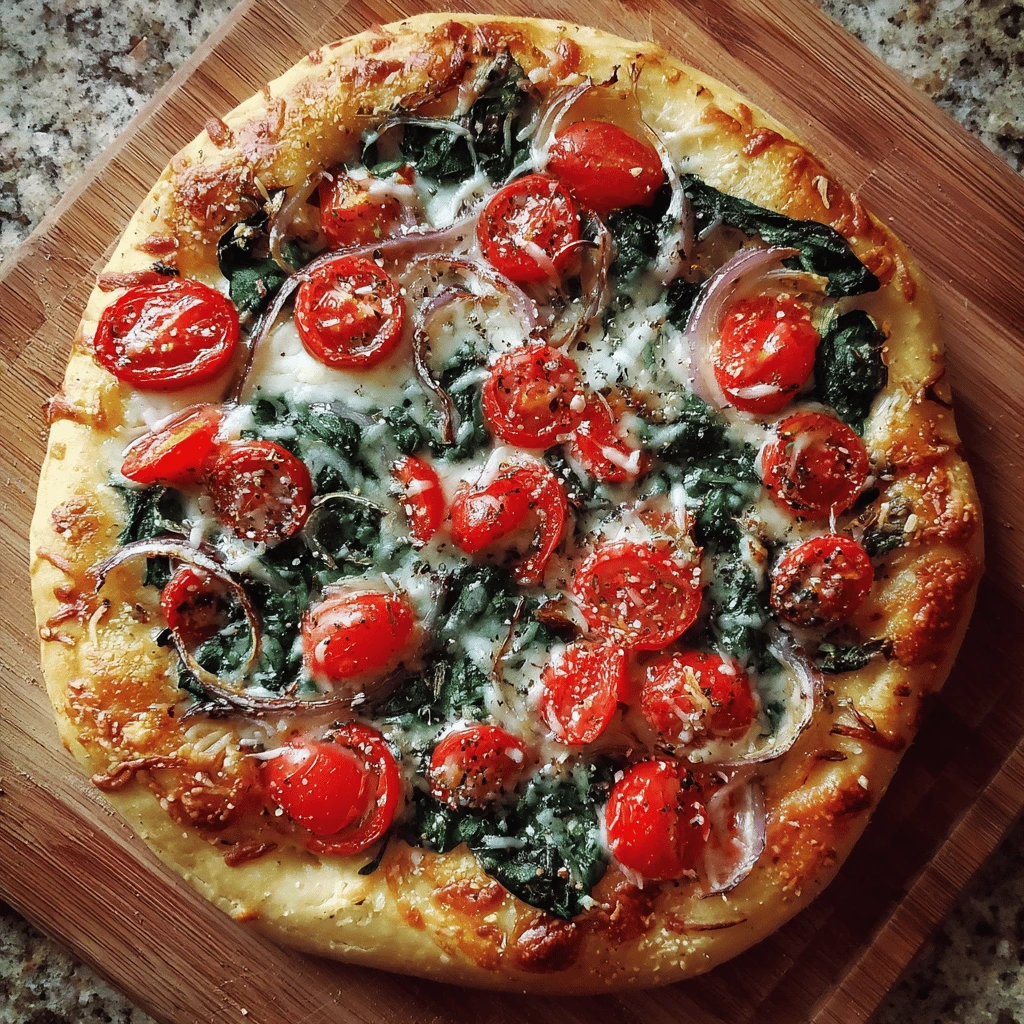
11. Bake for 12-15 minutes, or until the crust is golden brown and the cheese is melted and bubbly.
12. Remove the pizza from the oven and let it cool slightly before slicing and serving.
Variations and Enhancements
Cheese Choices
Mozzarella is a classic choice, but don’t be afraid to experiment!
Consider using fresh mozzarella for a creamier texture.
Provolone adds a slightly sharper flavor, while ricotta cheese can be dolloped on for a richer taste.
A blend of cheeses can create a more complex flavor profile.
Fontina offers a nutty and slightly sweet taste.
Vegetable Additions
While this recipe focuses on spinach and tomatoes, other vegetables can complement these flavors.
Roasted red peppers add a smoky sweetness.
Mushrooms, especially cremini or shiitake, bring an earthy note.
Artichoke hearts provide a tangy and slightly briny flavor.
Arugula, added after baking, offers a peppery bite.
Sun-dried tomatoes deliver an intense burst of flavor.
Meat Options
For those who enjoy meat on their pizza, several options pair well with spinach and tomatoes.
Italian sausage, crumbled and cooked, adds a savory and spicy element.
Prosciutto, added after baking, provides a salty and slightly sweet flavor.
Cooked chicken or turkey can be a leaner protein option.
Pepperoni, though not traditional, can still be a tasty addition.
Bacon, crispy and crumbled, adds a smoky and salty crunch.
Making the Dough and Sauce
Homemade Pizza Dough
Making your own pizza dough is easier than you might think.
It allows you to control the ingredients and customize the flavor and texture.
A basic recipe typically includes flour, water, yeast, olive oil, and salt.
Experiment with different types of flour, such as bread flour or semolina flour.
Allow the dough to rise for at least an hour, or even longer for a more complex flavor.
Homemade Pizza Sauce
Homemade pizza sauce is also a simple and rewarding endeavor.
Canned crushed tomatoes, tomato paste, garlic, oregano, basil, olive oil, salt, and pepper are the basic ingredients.
Simmer the sauce for at least 30 minutes to allow the flavors to meld.
For a smoother sauce, use an immersion blender or food processor.
Adjust the seasoning to your liking, adding a pinch of sugar if needed.
Store-Bought Shortcuts
If you’re short on time, store-bought dough and sauce are perfectly acceptable.
Look for high-quality options with minimal additives.
Consider purchasing dough from a local pizzeria for a more authentic flavor.
Enhance store-bought sauce by adding fresh herbs, garlic, or a splash of balsamic vinegar.
Cooking Techniques and Tips
Oven Temperature and Baking Time
The ideal oven temperature for pizza is typically between 450°F (232°C) and 500°F (260°C).
A higher temperature will result in a crispier crust.
Baking time will vary depending on the thickness of the dough and the oven temperature.
Keep a close eye on the pizza to prevent burning.
A pizza stone or baking steel can help to achieve a crispy crust.
Preparing the Vegetables
Properly preparing the vegetables is crucial for the best flavor and texture.
Wash and dry the spinach thoroughly to prevent a soggy pizza.
Halve the cherry tomatoes to release their juices and concentrate their flavor.
Thinly slice the red onion to ensure it cooks evenly.
Mince the garlic finely to prevent overpowering the other flavors.
Preventing a Soggy Crust
A soggy crust is a common pizza problem.
To avoid it, pre-bake the crust for a few minutes before adding the toppings.
Avoid using too much sauce or moisture-laden vegetables.
Drain any excess liquid from the spinach and tomatoes.
Use a pizza stone or baking steel to help absorb moisture.
Health Benefits and Nutritional Information
Spinach: A Nutritional Powerhouse
Spinach is packed with vitamins, minerals, and antioxidants.
It is an excellent source of vitamin A, vitamin C, vitamin K, and folate.
Spinach is also a good source of iron, calcium, and potassium.
It is low in calories and carbohydrates.
Spinach may help to improve eye health, boost the immune system, and protect against chronic diseases.
Tomatoes: Lycopene and Antioxidants
Tomatoes are rich in lycopene, a powerful antioxidant that may help to protect against cancer.
They are also a good source of vitamin C, potassium, and fiber.
Tomatoes are low in calories and fat.
They may help to improve heart health and reduce the risk of certain types of cancer.
Pizza: A Balanced Meal
Pizza can be a part of a healthy diet when made with wholesome ingredients.
Choose whole-wheat crust for added fiber.
Use lean proteins and plenty of vegetables.
Control the amount of cheese and sauce to reduce calories and fat.
Opt for homemade versions to avoid processed ingredients and excessive sodium.
Serving and Storage
Serving Suggestions
Spinach and tomato pizza is delicious on its own or with a side salad.
A simple green salad with a light vinaigrette complements the flavors of the pizza.
Serve with a glass of red wine or a refreshing beverage.
Cut the pizza into slices and arrange on a platter for easy serving.
Garnish with fresh basil or parsley for added visual appeal.
Storage Instructions
Leftover pizza can be stored in the refrigerator for up to 3-4 days.
Wrap the pizza slices individually in plastic wrap or place them in an airtight container.
Reheat in the oven, microwave, or skillet.
For best results, reheat in the oven at 350°F (175°C) for 5-10 minutes.
Freezing pizza is also an option.
Wrap the pizza tightly in plastic wrap and then in foil.
Freeze for up to 2-3 months.
Thaw overnight in the refrigerator before reheating.
Reheating Methods
Reheating pizza in the oven yields the best results.
The crust will become crispy and the cheese will melt evenly.
Microwaving pizza can result in a soggy crust.
To avoid this, place a paper towel under the pizza slice.
Reheating in a skillet can also produce a crispy crust.
Heat a lightly oiled skillet over medium heat and cook the pizza for a few minutes per side.
FAQ
Can I use frozen spinach instead of fresh spinach?
Yes, you can use frozen spinach. Be sure to thaw it completely and squeeze out any excess water before adding it to the pizza.
Can I make this pizza ahead of time?
You can prepare the dough and sauce ahead of time. However, it is best to assemble and bake the pizza just before serving.
How do I prevent the crust from sticking to the pizza stone?
Make sure your pizza stone is preheated and lightly dusted with flour or cornmeal before adding the pizza.
Can I use different types of tomatoes?
Yes, you can use different types of tomatoes. Roma tomatoes, grape tomatoes, or even canned diced tomatoes can be used. Adjust the amount as needed.
What if I don’t have a pizza stone?
If you don’t have a pizza stone, you can use a baking sheet. Preheat the baking sheet in the oven before adding the pizza.